
Boston’s Rising Tide Isn’t Dampening Development
Downtown buyers don’t seem to mind that their condos will be underwater in 50 years.
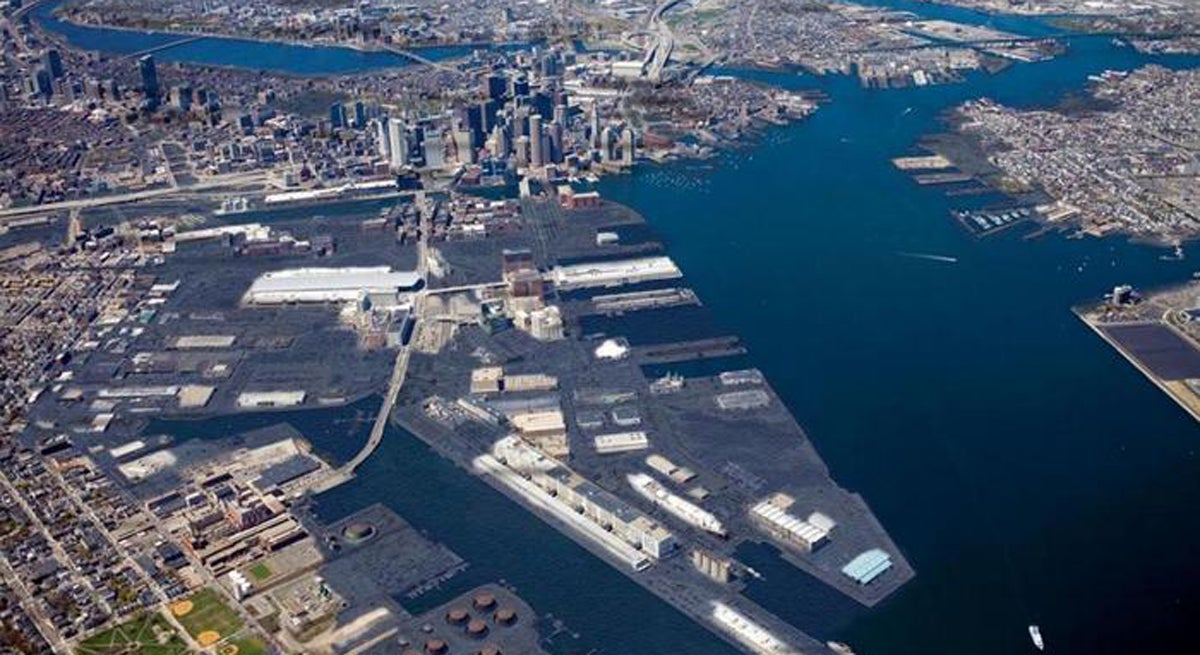
Surging sea levels may eventually give the term “underwater condo’’ a whole new meaning in Boston.
Still, the Urban Land Institute’s much-touted report warning of a Boston half under water in the decades to come shows no signs of slowing down a hot market, one in which multi-million dollar condo sales are routine and a new luxury tower is seemingly going up on every corner.
Buyers fret about “whether the developer is going to finish the project, how strong is the project financially, and am I going to get what I paid for, but nothing remotely related to environmental issues,’’ said Michael Carucci, president of Group Boston Real Estate in the Back Bay.
Nor are developers heading for the exits, despite an increasingly dire series of warnings from ULI and other groups, including the Boston Harbor Association. The BHA has warned that Super Storm Sandy, had it hit during high-tide, would have put much of downtown Boston under water.
“We have not seen any lessening in the desire to develop on the waterfront,’’ said Vivien Li, executive director of the Boston Harbor Association. “What we have seen is a great concern on part of developers to have their consultants look at how they can protect their future investments.’’
In fact, Fan Pier developer Joe Fallon is close to selling out his new waterfront condo tower, with one of the units fetching nearly $2,000 a square foot. And the proposals keep coming, with Don Chiofaro looking to build a pair of twin towers on the waterfront where the Harbor Garage now stands and with new rental high-rises taking shape in the Seaport within a stone’s throw of the harbor.
While no one wants to be the killjoy, there might be reason for at least a smidgeon of worry given the waterlogged future ULI has forecast for Boston. Billions in new condo, apartment and office towers are set to open up over the next few years in the Back Bay and the Seaport/Innovation District.
Both neighborhoods, two of the hottest in the city, will find themselves directly in the path of rising sea levels. The ULI report contends that sea levels around Boston could rise by a staggering 7.5 feet by the end of the century and a formidable 2.5 feet in the next few decades.
Without strong action, such as canals and sea walls, much of the Seaport/Innovation District and Back Bay could face a watery future, the report warns. By way of comparison, the Charles River Dam was built in the 1970s with the capacity to deal with a half inch of sea level rise per century, the report noted.
Still, while buyers have tuned out or are simply unaware of environmental affects, Boston developers can hardly be charged with sticking their heads in the sand. In fact, major property owners in New York got a taste of the future firsthand during Superstorm Sandy in October 2012 and are already taking steps to make their new towers as waterproof as possible, Li said.
One top Boston Properties executive routinely urges developers to keep copies of key building records off-site should power go out and the information become impossible to access electronically, she said. Boston tower builders are also starting to move mechanical systems from the basements of their buildings to several stories above the street, ensuring power and other vital systems keep running if sea waters come raging in, Li added.
Builders are looking to other innovations as well, including raised lips or barriers around garages to help divert flood waters. Developers ask “how can we insulate the buildings so it’s basically leak proof,’’ Li said. Other grander, long-term solutions include a canal system that would turn parts of Boston and Cambridge into a New England version of Venice or Amsterdam. All of this is chronicled in “The Urban Implications of Living with Water,’’ a report officially released Wednesday by the New England chapter of the Urban Land Institute.
But talk of rising oceans over the coming decades is too remote for most buyers, Carucci noted. In a heated market where competition for available units is fierce, especially for condos with waterfront views, buyers already have their hands full, he said.
Seaport condos “are moving at a very rapid pace – they are selling north of a thousand dollars a square foot,’’ Carucci said.



To comment, please create a screen name in your profile
To comment, please verify your email address
Conversation
This discussion has ended. Please join elsewhere on Boston.com