
Why condo prices in Mass. are now running neck and neck with the cost of single-family homes
The gap between the prices of homes and condos has narrowed overall since 1991, but it fluctuates from year to year.
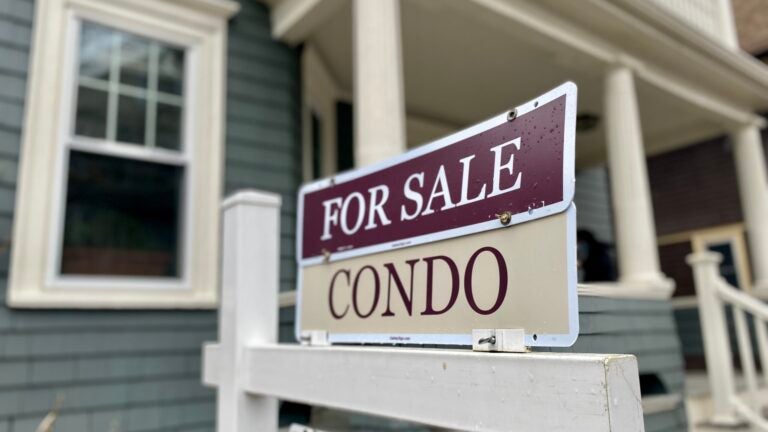
In the 1990s, many home buyers generally saw condominiums as an affordable stepping stone, a place to start out and build equity until they could afford a single-family house in the suburbs. But since then, the gap between the median sale prices of condos and single-families has been shrinking.
In 1991, the median sale price of a single-family in Massachusetts was $144,900, according to data from The Warren Group., a data analytics firm and publisher of Banker & Tradesman. For a condo, it was $102,380, or 29.3 percent less.
Fast forward 30 years to 2021, when the median sale price of a single-family was $510,000, and a condo was $454,000. So condos sold for just 11 percent less.
The gap between the prices of homes and condos has narrowed overall since 1991, but it fluctuates from year to year. In 2012, for example, the median sale price of a condo in Massachusetts was just 4.14 percent less than that of a single-family.
Albert Saiz is an economist and the director of the MIT Center for Real Estate. He proposed three possible reasons for the shrinking gap between home and condo sale prices.
“My first hypothesis is just an apples-and-oranges kind of thing,” he said. “When you use statewide data, you’re comparing things that are not really comparable. In economics, it’s called the ‘composition effect’: The things you’re comparing don’t have the same composition.”
For example, the number of multimillion-dollar condos in Boston has exploded in the past 10 years, and there aren’t many single-families in the same neighborhood with which to compare them.
But, Saiz said, that probably doesn’t fully account for the overall trend.
“The value of condos is also going up because they’re generally located closer to downtown,” he said, relating his second hypothesis. “As you get further from the cities, where real estate is less expensive, you see fewer condos and more single-family homes, and prices reflect that.”
Of course, this was also true in 1991.
“There has also been a trend of people increasingly wanting to live in the city, close to amenities,” he said. “People now appreciate much more being downtown. Has COVID changed that? We don’t know. If so, maybe in the next four or five years we will see that condo prices go down.”
Rich Rosa, cofounder and co-owner of the Buyers Brokers Only real estate firm, posited that the historically low inventory of properties for sale may be a contributing factor and offers a ray of hope for condo buyers in the future.
“I suspect that the lack of inventory has played a role in narrowing the price gap between condominiums and single-family homes,” Rosa said. “With fewer single-family home choices in recent years, I think more prospective home buyers have considered condos, thus reducing the number of units available and raising median condo prices. When single-family inventory increases, I suspect condo inventory will rise more quickly, and the price gap between houses and condominiums will widen.”
Anthony Lamacchia, broker and owner of Lamacchia Realty, said that since town houses are lumped into the condo data, recent larger such developments may have skewed the numbers. He also said buyers’ attitudes are changing: Condos and town homes are no longer seen as stepping stones to single-family homeownership.
“Life has gotten busy for people in general with both spouses working,” Lamacchia said. “People put a higher value on living in a place that they don’t need to keep up with the property as much. There is no denying that single-family homeownership requires more upkeep than living in a condo in most cases. I think that has definitely had an impact as well.”
Jim Morrison can be reached at [email protected]. Subscribe to the Globe’s free real estate newsletter — our weekly digest on buying, selling, and design — at pages.email.bostonglobe.com/AddressSignUp. Follow us on Twitter @GlobeHomes.




To comment, please create a screen name in your profile
To comment, please verify your email address
Conversation
This discussion has ended. Please join elsewhere on Boston.com