
Push to limit short-term rentals shakes Nantucket for a second season
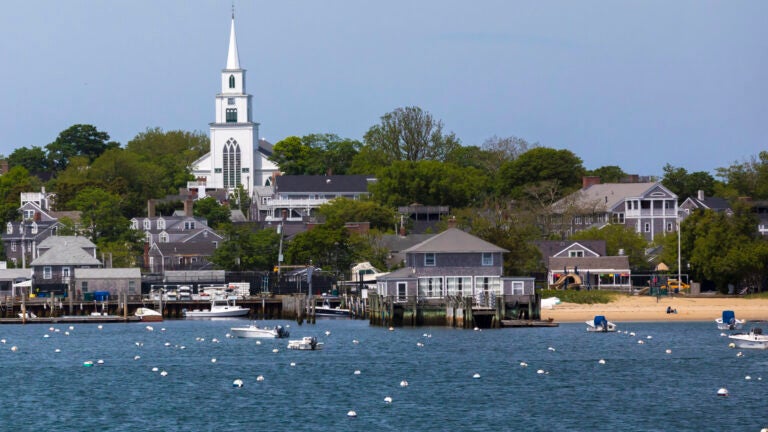
A year after residents overwhelmingly voted against restrictions on short-term rentals, a measure to do just that is on the docket at Nantucket’s Annual Town Meeting, scheduled for Monday.
Last year’s initiative, which lost by more than 2-to-1 margin, pitted the wealthy against the uber-wealthy, with both sides touting their support of year-round residents, who rely on both affordable housing options and business from tourists.
Last year, the advocacy group known as ACK Now put forward the proposal, which sought to bar non-residents on the island from renting their property for more than 45 nights in a year or for less than a week at a time, saying that such a law would prevent investors from scooping up much of the town’s already dwindling housing stock.
“Each day that goes by, more investors are buying homes to turn them into short-term rental businesses,” Tobias Glidden, ACK Now executive chairman, wrote last year in a letter posted on the organization’s website. “We need to do something to stop Nantucket from turning into a Disneyland where no one lives (or wants to live).”
This year, ACK Now has proposed similar legislation. Known as Article 43, the measure would prohibit non-residents from using their property for short-term rentals unless they receive a special permit from the Zoning Board. If passed, the law would take effect next year, but would not apply to full-time residents or to rentals of 30 days or more.
Those in favor of the legislation argue that it will help ease Nantucket’s housing crunch. “It will help stabilize home prices for year-round residents, like teachers, firefighters, and tradespeople, to purchase or rent homes,” ACK Now’s website says.
But opponents, including those at the political action group Nantucket Together, say it will instead curb the tourism upon which those residents rely. “Nantucket now has a new source of revenue ($8M annually) paid by visitors who enjoy staying in our homes on the island,” Nantucket Together’s website says, “and 80-85% of the lodging on the island is provided by short-term rentals, as they have for over a century.”
In addition to Article 43, there are two other proposals regarding short-term rentals — Article 39 and Article 42 — up for discussion at the meeting. The least contentious of the lot, Article 39, would require renters to get approval from the Board of Health before listing their home on sites like Airbnb and VRBO. In February, the Nantucket Planning Board voted to endorse this article, which also aims to address noise and parking issues associated with short-term rentals.
Article 42, like Article 43, hopes to address a recent state court decision, Styller v. Lynnfield, which found that zoning bylaws do not protect short-term rentals in areas zoned residential. Article 42 looks to amend one of Nantucket’s bylaws to make short-term rentals legal unless explicitly prohibited by the Planning Board.
It’s clear housing affordability is a major issue on the island, where the median listing price hit $3.5 million last month, according to realtor.com. With limited rental inventory, and short-term rentals regularly going for tens of thousands of dollars a month during the summer season, those seeking affordable options are increasingly frozen out of the market. But how to solve the problem is yet to be determined.
“Nantucket will regulate short-term rentals,” Glidden told the Globe after the results of last year’s vote were tallied. “It’s not a question of if, but when.”
On Monday, the island’s residents will get a chance to decide whether the time is now.
Subscribe to the Globe’s free real estate newsletter — our weekly digest on buying, selling, and design — at pages.email.bostonglobe.com/AddressSignUp. Follow us on Twitter @GlobeHomes and Boston.com on Facebook.





To comment, please create a screen name in your profile
To comment, please verify your email address
Conversation
This discussion has ended. Please join elsewhere on Boston.com