
Designing personality into Boston’s luxury buildings
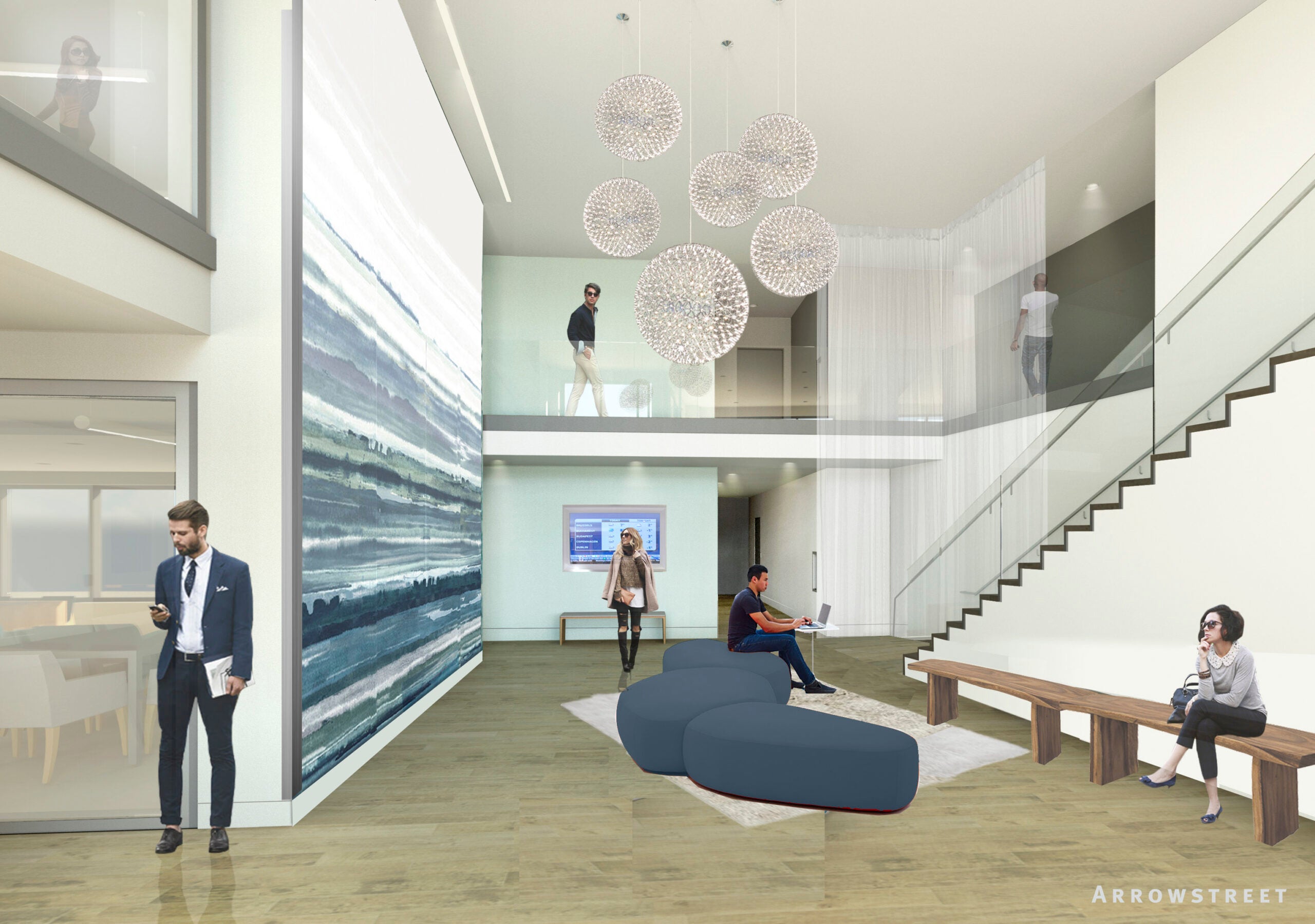
With luxury residential developments popping up all over Greater Boston, competition is stiff for the right class of renters and buyers. Buildings have been known to offer all kinds of freebies to get people to sign on the dotted line.
But the effort to attract tenants begins well before empty units hit the market. Luxury developments are designed from the earliest stage to project a particular lifestyle. In order to craft a successful image, architects and interior designers need to make sure their buildings stand out, while at the same time fit in with the neighborhood.
David Bois, a principal at architecture and design firm Arrowstreet, and Sallyann Thomas, the director of interior design at Arrowstreet, work together with the rest of their team to make sure all of this happens.
We visited Bois and Thomas in their office to chat about some of the projects they are working on in and around Boston, and to see how luxury buildings get their personality.
From the outside in
They both spoke about the importance of luxury residential “brands.” With so many new luxury buildings being constructed throughout the area, a unique design or set of amenities is necessary to get residents interested.
“People want to buy into a lifestyle,” Thomas said. She works with the architects to make sure a project’s exterior and interior designs go together.
“There is a lot of interest from the developer and the design team to make sure the projects look the same from the outside in,” she said. “What is the design intent for the interior and how does it relate to the demographic they are trying to attract?”
Not only do Thomas and her team think of what color palette to use, but they also make decisions like what appliances to put in and what amenities to highlight.
“People really don’t want to live in that sterile environment. People want it to feel more like home,” Thomas said. “People don’t want to live in apartments that don’t have that sense of home.”

A whole wall in the Arrowstreet office is filled with what looks like the design materials for a beach house in Nantucket. But tacked up among color swatches that range from sky blue to dark blue and carpet samples in varying shades of beige, are renderings of a large-scale residential building.
Arrowstreet is working on a project at 650 Ocean Avenue in Revere, which is a part of Waterfront Square, a 3.5-mile stretch of land being developed along Revere Beach.
The 650 Ocean Avenue project, which is still under construction and set to open sometime in winter 2016/2017, has 230 residential apartments ranging from studios to one- and two-bedroom units with balconies. Amenities will include a roof deck, an outdoor pool and courtyard, and views of the water.
That access to the outdoors is key to the theme of the project.

Thomas noted that this community is trying to get young professionals living in Boston to move out to Revere. Though the building has many amenities Boston luxury buildings have, its vibe is really playing off the idea of the ocean, more specifically Revere Beach.
“People have old memories,” Bois said. “Or handed down memories [of Revere Beach].”
Which is why Thomas is considering including vintage photos of the beach throughout the apartment building, along with pieces of abstract artwork that give residents a beach-like feel. She wants the carpet to look like it’s a beach blanket.
“There will be a fitness center and yoga rooms with views of the beach,” Bois added.
But this is not the only project Arrowstreet it currently working on. Walk a few steps away from the Revere wall and there’s a table with a model of another residential project by the water — this time it is in Boston’s Seaport neighborhood.

Parcel K is a mixed-use project bringing residential units, a boutique hotel, office space, restaurants, and retail to the neighborhood. The residential units are planned to include tiny “innovation units,” studios, and one- and two-bedroom apartments.
While Parcel K might also be on the water, but it definitely does not have the same beach feel as the Revere project.
“It is much more like a resort hotel,” Bois said.
The apartment building will be right next to the hotel building, bringing a “synergy” between the two, Bois added. This includes common themes among the high-end materials Thomas is using to outfit the residential units and the hotel rooms.
Thomas noted that 10 years ago there was no way designers could use the materials she now uses to do the interior decorating — they used to be just for hospitality. She noted she would be using “similar materials with a different color palette in studios to penthouses.”
Some of the units would have color pops of teal and lime green, complemented by more traditional brown beige colors. Other units would just stick with the neutral colors.
“Empty nesters are used to a different level of finish,” Thomas said, referring to those moving from the suburbs into the city. “They still want that level in a city, but a level of finish that still has a sense of home.”





To comment, please create a screen name in your profile
To comment, please verify your email address
Conversation
This discussion has ended. Please join elsewhere on Boston.com