

Address newsletter
Get the latest news on renting, selling, buying, home design, and more.
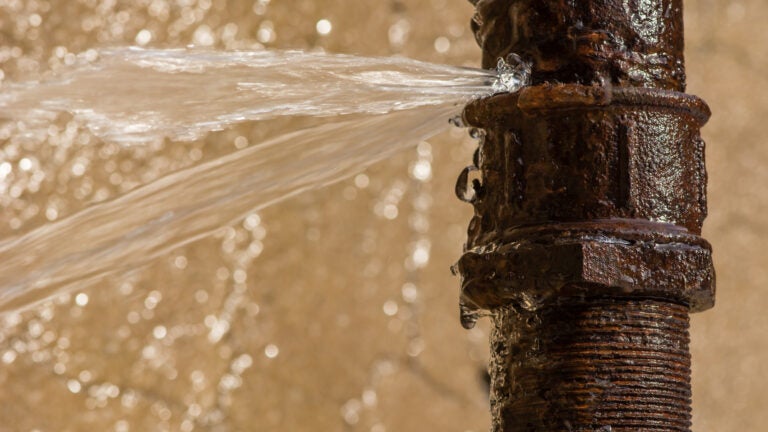
Are you facing a rodent infestation, a toilet that isn’t flushing, or a combination of the two: a rodent in your toilet? You can should ask your landlord, and maybe law enforcement, for assistance.
Renters’ consumer complaints filed with the Massachusetts attorney general’s office ballooned in 2022, outpacing those from used car buyers for the first time, according to the Consumer Advocacy Report the office released in March 2023.
State Sanitary Code requires landlords to keep rentals safe and habitable, according to the Office of Consumer Affairs and Business Regulation. That means heating that works, functioning appliances, a cockroach-free living space. The list goes on.
Deferring maintenance can often lead to larger hazards, so how do you get things fixed? What do you do if your landlord isn’t making repairs?
🚧 Thinking about being Bob the Builder? Hit the brakes.
Do-it-yourself fixes can be costly, and they’re often not your responsibility.
Gary Allen, a lawyer who focuses on tenant rights and consumer protection, said renters can run into trouble if they make repairs that their landlord never signed off on.
Massachusetts tenants may make emergency repairs and withhold up to four months’ rent to pay for them, but there are conditions, the office says on its Tenant Rights webpage.
A repair-and-deduct law takes effect only after a landlord refuses to make a repair, said Allen, who’s also the supervising attorney of the Harvard Tenant Advocacy Project. Renters who make repairs without approval shouldn’t expect their landlords to reimburse them.
“So a tenant shouldn’t just go buy a new stove or buy a new refrigerator and then take it out of their rent,” Allen said. “They should tell the landlord and give the landlord a reasonable amount of time to make the repair.”
So it’s best that you ask your landlord to make repairs first. How you ask matters, though.
Instead of calling, you should ask your landlord to make a repair through a written message, such as a text, email, or even a letter you photocopy. Allen said renters should create a detailed paper trail.
“It’s important that if you’re going to go seek relief, particularly in court, that you can tell a judge that the landlord absolutely knew about this and didn’t take care of it,” Allen said.
Laws bar landlords from retaliating if a tenant asks for a repair, Allen said.
“Tenant says: ‘Hey, my heat doesn’t work. Can you fix it?’” Allen said. “Landlord turns around, says, ‘It’s funny you said that because I was gonna ask you to leave the apartment anyhow.’ That’s still retaliation unless the landlord can prove otherwise.”
❌What if the landlord doesn’t budge?
Relief depends on the renter’s “appetite for confrontation and the severity of the need for repairs,” Allen said.
Renters can call their local health department’s housing inspector and ask for a sanitary code compliance inspection of their home, according to Allen. He pointed to UptoCode as a helpful resource.
The website — funded by the Legal Services Corporation and Massachusetts nonprofits — allows users to access their local inspector’s contact information. It also allows renters to read the sanitary code.
In Boston, a complaint with the housing division of the city’s Inspectional Services Department triggers “a comprehensive investigation,” Regina Hanson, assistant director of the division, said in an email to Boston.com. The inspector will serve the landlord an “Order to Correct,” which includes a time frame for repairs, according to Hanson.
“Once the compliance time is lapsed,” Hanson said, “the inspector will come back to the unit to see if the violations have been corrected. If compliance is not achieved, the inspector can move the case into Housing Court.”
In court, tenants can recover up to three months’ rent and attorney fees if they can prove to a judge that their “quiet enjoyment” was breached, Allen said.
And your landlord can’t retaliate if a maintenance dispute escalates, he said. According to the state regulatory agency, it’s considered retaliation if a landlord attempts to raise your rent or end your lease within six months of your complaint with the local inspector.
“It doesn’t mean the landlord can’t defend themself,” Allen said. “But the landlord has an uphill battle, because there’s a presumption in place just because the tenant called the health department.”
Get the latest news on renting, selling, buying, home design, and more.




To comment, please create a screen name in your profile
To comment, please verify your email address
Conversation
This discussion has ended. Please join elsewhere on Boston.com