
What it was like to search for a Boston apartment in the 1960s
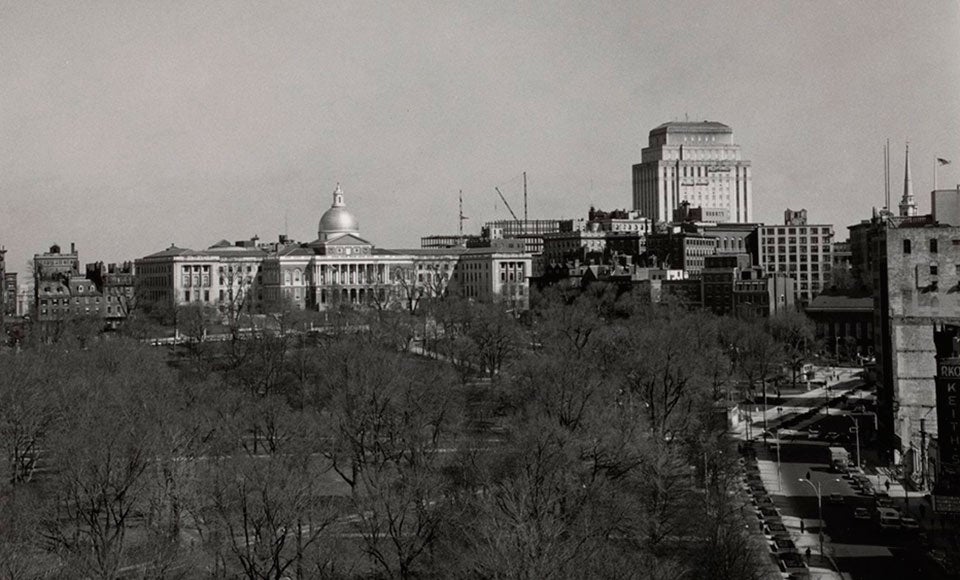
We know the time is coming (or here) to start searching for your September 1 apartment, and you might get varying opinions on what you need to do to start the process of acquiring new digs.
We looked through The Boston Globe archives to find what people wondered about and paid attention to while searching for an apartment in the 1960s, the beginning of Boston’s last big building boom.
Though some tricks have stayed the same, times have changed quite a bit, maybe not always for the better.
(Note: Hyperlinks will bring you to the Globe’s archives where subscribers should be able to sign in.)
April 29, 1962

In this 1962 Globe story with nine apartment hunting tips, written by a Bostonian who had been renting in the city for 40 years, the first few are pretty relatable: a conveniently located apartment, a building that is well kept, and a friendly landlord.
But tip No. 4 is where you can see a change over the past 50-plus years in the Hub:
“In seeking an apartment home, I am naturally interested in the amount of rent, but this is not the primary consideration,” the author writes. “If it were I would be looking for the cheapest run-down dilapidated place I could find.”
Renters still try to avoid run-down dilapidated places, no doubt, but with skyrocketing prices, many probably consider “the amount of rent” to be a primary consideration nowadays.
May 3, 1964

As with today, luxury apartments were being built all over the city in the 1960s. Also like today, it was not always clear who got to define what “luxury” meant.
Realtors around city talked to Boston.com last March about luxury homes. Some said anything over a certain price point qualified as luxury, while others said it wasn’t dependent on price, but more on the finishes and amenities.
In 1964, the Globe wrote about a survey of greater Boston rental executives asking what people in luxury units can expect. The main three answers were above average location and view, above average services, and above average living and storage space.
While that definition still holds, what qualifies as “above average” has changed in some respects.
At the time, the Tremont on the Common building was under construction, and set to become the city’s tallest luxury residential tower at 28 stories. (Rents were estimated to range between $200 and $450 a month.) Now, the Millennium Tower is set to include a penthouse on the 60th story. Talk about an “above average” view.
August 2, 1964

“What should you look for in an apartment? That’s a question facing thousands of Americans these days, as we become more and more of an apartment-dwelling nation,” a 1964 Boston Globe article began.
The amount of closet space, the number of electrical outlets, a “comfortable layout in the kitchen,” and air conditioning are all things the Globe told future tenants to look out for.
The Globe also noted for the women in the home: “Parquet flooring, which seems to have the greatest appeal for the woman of the house, is preferable for area carpets, carpeting, and tiling.
June 5, 1966

The September 1 rent turnover in Boston is not new at all. When this article was written in 1966, 60 percent of local leases expired on that date, close to the predicted amount in 2016.
Today, real estate experts warn renters to start looking for apartments by April if they want to move in September, but back in 1966 that was not the case.
The executive director of the Rental Housing Association told the Globe in 1966 that July and August were the best months for apartment hunting in metro Boston – which for modern day renters should seem a little late to the game.
And there was another very noteworthy difference in this article:
“Have apartment prices gone up in the last 10 years? No greater than prices in other fields. Today’s apartment dollar gets air-conditioning and wall-to-wall carpeting. It also has increased taxes levied upon it.” … “‘But prospective tenants are shopping these days,’ DeLuse confesses. ‘And you really cant blame them, either – it is a renter’s market.”
Not so much anymore, renters.
November 3, 1968

A 1968 survey found that the one thing apartment dwellers agreed on was the “need for improved noise control.” Renters wanted “sound conditioning material” installed in their apartments and were willing to pay an extra $5 per month for it.
Single apartment residents “showed strong preference for luxuries such as fireplaces, draperies and wall-to-wall carpeting.”





To comment, please create a screen name in your profile
To comment, please verify your email address
Conversation
This discussion has ended. Please join elsewhere on Boston.com