
City Will Inspect Off-Campus Student Apartments, And It’s Legal
The city will inspect off-campus student apartments that may be overcrowded and unsafe, and it’s legal.
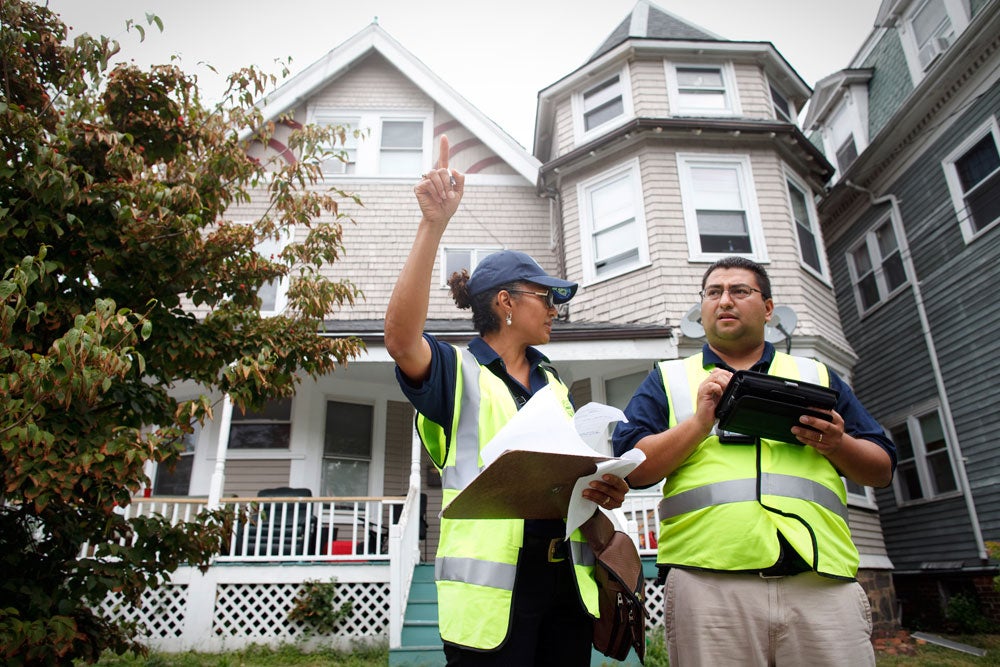
In the coming weeks, Boston college students living off-campus may be greeted by city inspection officers at their doors. Don’t be alarmed.
This is because 31 local colleges and universities have sent the City of Boston addresses of their students who live off-campus. Of the 25,000 addresses it received, the city’s Inspectional Services Department (ISD) will pay visits to the 580 it deems to be suspect of violating zoning codes.
They’ll primarily be looking for issues related to overcrowding. There are over 45,000 undergraduate and graduate students living off-campus in Boston, according to The Boston Globe. A 2008 city ordinance prohibits more than four undergraduates living together in one apartment.
Big reforms have come at the heels of Binland Lee’s tragic death in 2013. The Boston University student died when a fire blazed in her overcrowded Allston apartment, and flames blocked the staircase from the third floor — her only egress.
Scofflaw landlords and poorly managed units unsafe for students were the subject of the Globe’s “Shadow Campus’’ investigation last year. Now, an ordinance requires colleges to provide a list of where students live off-campus every semester. Another requires private rental units to register their properties annually, and inspections are performed every five years.
While it is always good to ensure the safety of students living in Boston apartments — and everyone agrees, something needs to be done — some students are conflicted about inspectors knocking on their doors without much notice.
“One of the attractive qualities of living off-campus is that you don’t have to abide by the same rules and restrictions [as on-campus living],’’ said Chelsea Quezergue, who graduated from Boston University last May. “There are probably things students wouldn’t want their schools and the city to know about.’’
Violation of Privacy?
The city only asked for students’ addresses, not names, which does not put it in violation of the federal Family Educational Rights and Privacy Act. FERPA protects institutions that receive any funding from the federal government. The act states:
“Schools may disclose, without consent, ‘directory’ information such as a student’s name, address, telephone number, date and place of birth, honors and awards, and dates of attendance.’’
FERPA also requires schools to allow parents and students a “reasonable amount of time to request that the school not disclose directory information about them.’’
“Most universities talk about privacy rights during orientation sessions, and I’m sure many students don’t pay much attention to it,’’ said Nancy Kelly, a partner at Boston-based Governo Law Firm. “So I’m sort of surprised that the onus is on the student here.’’
Kelly, who specializes in data protection and privacy, was also surprised that FERPA is so “liberal’’ with regards to directory information. “That is all pretty personal information that tells a lot about a person.’’
She added that Massachusetts has some of the strictest statutory frameworks in place for protecting personally identifiable information.
Universities, after clearing privacy concerns, are in support of the city inspections. Private four-year colleges including Boston College, BU, Harvard, and Northeastern have obliged, and University of Massachusetts Boston will do so in the next week.
“The city hasn’t asked for names, what we think is the defining issue relative to identification and privacy here,’’ said Ed Lambert, Vice Chancellor at UMass. Lambert said the university notified its 17,000 undergraduate students before distributing the list.
The ‘No-More-Than-Four’ Ordinance
After taking weeks to sort through the data — this is the first time they’ve ever collected it from schools — city officials have identified about 580 addresses that are listed by more than four students. They will check out these places for potential overcrowding and other safety violations.
They know the data is not perfect. They don’t have addresses for everyone, many omit unit numbers in a large building complex, and sometimes, the school only has the parent’s address on file.
William Christopher, ISD commissioner, says students can decline the inspection, but if the city senses there’s truly something dangerous going on, they could get a court warrant to proceed with the inspection.
Though the city says they attend numerous fairs and info sessions at local universities to educate students on the rules, students are still unaware and are often in violation of the ‘no-more-than-four’ ordinance.
“I didn’t know that was the law, and I did live in violation of it for two years,’’ said Raymond Kober, who graduated from BU in May and lived off-campus for two years in Allston. “It kind of occurred to me that that might be the law when the landlord said we could only put four names on the lease, and it was a five bedroom apartment.’’
“The property I was renting definitely had other health and fire code violations. It was pretty run-down,’’ he added.
If the city finds violations, it will try to work with the tenants or landlords to fix the issue. If things can’t be resolved, officials will then write up the violation and use more severe enforcement tactics, Christopher said. He added that the building owner would be responsible, and ISD will never write a violation toward a student for an overcrowding situation.
“If we go to a big Victorian house with eight bedrooms, and more than four undergrads, we’ll explain to the residents and the landlords it’s a zoning violation and work with both the schools and the landlords to work it out,’’ he said.
“If we go to a place that has one bedroom and seven people living there, we won’t leave until we have found alternative living situations,’’ he added.
Many choose to live with more roommates to drive down each individual’s share of the rent. Quezergue is skeptical how much the city could actually help when it comes to cost. “It’s expensive living off-campus, and if you don’t mind sharing your space and want to save money, you want as many people as possible.’’
“They would have to subsidize rent, or help students find a place they can afford. There would have to be a new program with funding and all that,’’ she said, “That’s not something that can happen overnight.’’
The no-more-than-four rule has always been somewhat suspect, arbitrary, and tough to enforce, according to Richard Vetstein, founding partner of Vetstein Law Group, which specializes in real estate law. Though neighbors do complain about late-night parties and loud college students, “not all undergrads are troublemakers,’’ he said.
“Undergrads are not a protected class under any discrimination laws, and they’re transient, so it’s not like they’re going to come up with a lobbyist or fight for their rights in that way,’’ he said. “Colleges don’t want to get in trouble and they know they won’t get much pushback from Boston’s student body.’’




To comment, please create a screen name in your profile
To comment, please verify your email address
Conversation
This discussion has ended. Please join elsewhere on Boston.com