
Your Apartment. Whose Problem?
Renting your first apartment can be confusing. What are your responsibilities? What are your landlord’s?
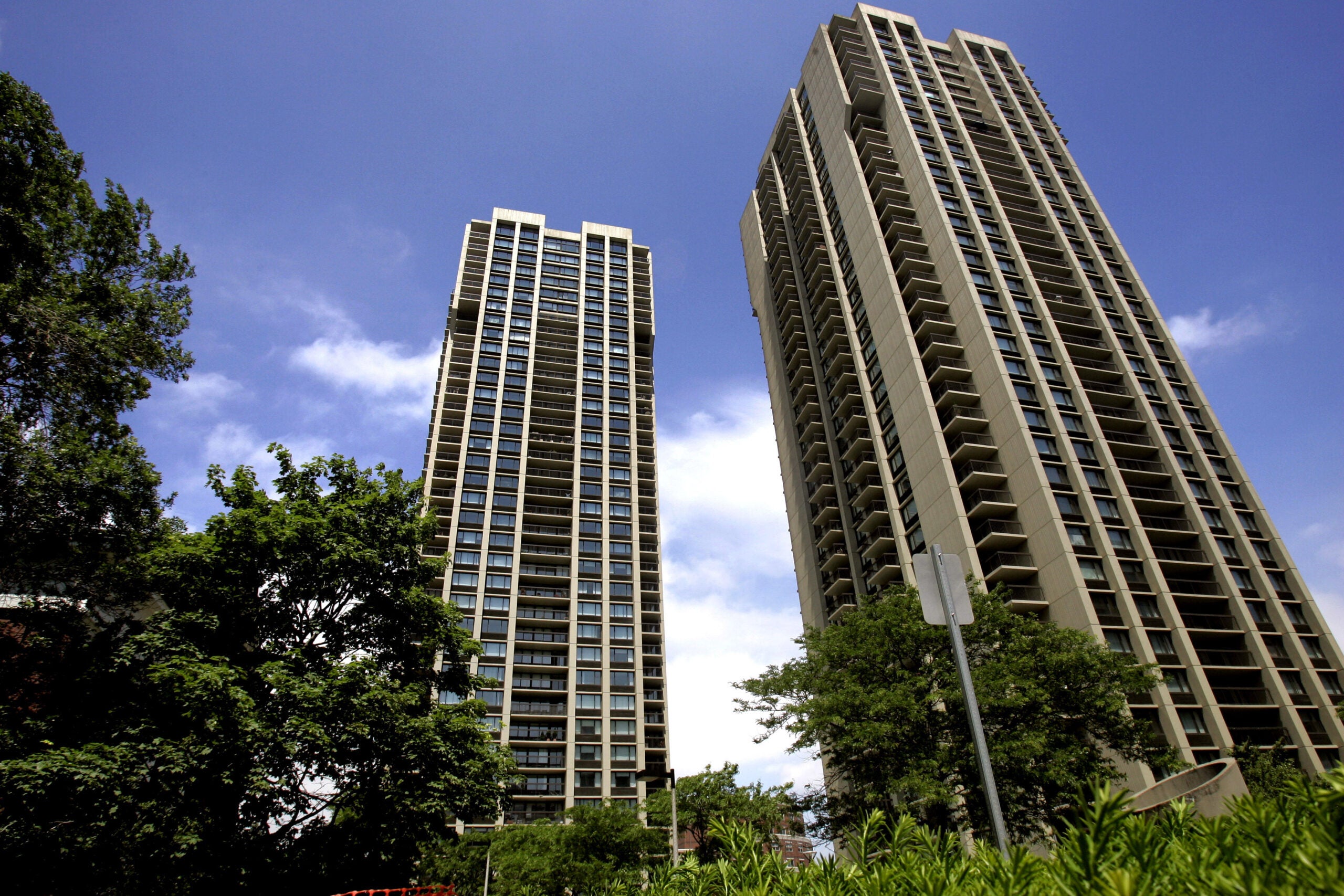
It’s your second week in your new apartment and your bathroom light goes out. The following week, your neighbor decides to become a drummer. Then, some mice take up residency in your stove. Do you have to fight them back on your own? Or can you call on your landlord to save the day?
Renting your first apartment can be confusing. What are your responsibilities? What are your landlord’s?
We spoke with some Boston realty companies to find the protocol for renting etiquette in a variety of sticky situations that might arise:
Carbon monoxide/smoke detectors:
Michael DiMella, owner of Charlesgate Realty Group, said the Massachusetts state safe and sanitary code requires that carbon monoxide detectors and smoke detectors be installed and tested when an apartment turns over. So they should definitely be in working condition when you move in.
But if one of your detectors starts beeping due to a low battery, DiMella said it might be your job to replace it. “There’s no set protocol, but good management companies tend to have policies to replace those batteries,’’ DiMella said. Just check your lease.
Mark Pardis, a realtor with Bulfinch Boston Realty, mentioned that if your detector’s battery starts beeping and you get frustrated and decide to rip it off your wall, it’s on you if there’s a fire and your apartment burns down.
“I have someone sign a document that says I gave them a working smoke detector and carbon monoxide detector,’’ Pardis said. “We tested it together. That way, if a few weeks later, some college kid pulls it off the wall, that’s their fault.’’
Light bulbs:
Pardis, said when you move in, you shouldn’t have to put in all new light bulbs. Your landlord should do that prior to your arrival.
“But once you’re in your apartment and the light bulbs burn out, it’s not your landlord’s responsibility,’’ Pardis said. They just have to turn the apartment over to you in “working condition.’’
But DiMella said there’s no standard when it comes to replacing light bulbs.
“Anything that would burn out like a light bulb with normal use is up to the tenant to replace,’’ DiMella said. “In certain circumstances, if a landlord or management company knows something is very difficult to replace, a landlord might help.’’
So basically, if your lights burn out, you have to go buy new light bulbs and put them in yourself. However, if your light is located in a cathedral ceiling, your landlord might be nice enough to lend a hand. Just ask.
Annoying neighbor:
This issue actually had a variety of different responses.
DiMella called it “a tricky one.’’
“If you’re in an apartment building and all the apartments are owned by one landlord, it may be his responsibility to deal with the noisy neighbor or talk to both tenants to solve the problem,’’ DiMella said. “If the apartments are owned by two different landlords, there’s not much he can do in that case.’’
Pardis, however, said your landlord is not a police officer.
He said if one of his tenants made a noise complaint, he’d tell them to call the cops. “He could call the tenant up and threaten to not renew the lease, but that’s not really grounds for throwing him out,’’ Pardis said. “Your best bet is the police.’’
Still, other property managers urged resolving the issue by talking to the neighbor yourself.
Wendy Heyman, owner of SGH Property Management, said, “You have to live with this person, so your best course of action is to try and resolve it in a friendly way so there’s not an uncomfortable feeling moving forward.’’ Once you involve your landlord or the police, she added, “you know you and that person are never going to be friends.’’
Basically, you’ll have to weigh how annoying this person is with your method of resolving the situation. Maybe first try a friendly knock on the door, followed by a note, then landlord involvement, and finally, the police. Then you can say, “Hey, I tried.’’
Broken appliance:
If in the course of regular wear and tear, something malfunctions with your refrigerator, oven, washer, dryer, freezer, etc., it is up to your landlord to fix the problem, Heyman said.
But say your best friend has one too many glasses of wine and sticks her phone down your garbage disposal. That’s on you, my friend.
“If you clog the toilet and we have to snake it out, that’s on you,’’ Heyman said. “But if your flusher stops working, that’s on your landlord.’’
It can be a fine line between what’s your responsibility and what’s your landlord’s when it comes to appliances, but the bottom line is: don’t be an idiot, and don’t do anything to your appliances that you wouldn’t want to pay for.
Infestations:
Bedbugs, roaches, mice, oh my! Pardis said if you have an infestation, your landlord is required to exterminate the critter and eradicate the problem.
But say your landlord isn’t responding to your 1,000 phone calls about the rat family in your fireplace.
Pardis said it’s a good idea to keep track of the emails you send your landlord about issues like this. “Calling him on the phone might not do it, but an email is proof that you sent it,’’ Pardis said. “Keep a paper trail.’’
Locks:
Broken locks on your window or door are entirely on your landlord to fix, DiMella said. “Anything having to do with safety or sanitary issues falls under your landlord’s responsibility.’’
But much like appliances, it’s up to the tenant to maintain what is provided. So no punching holes in your window.
Stolen parking spot:
Heyman said this is another situation where the best course of action is to first attempt to talk to your neighbor. Obviously, this only works if you know who is stealing your parking spot.
But if a friendly note or knock on the door isn’t working, Heyman said you have every right to “call a towing company or the police if someone is parked in your spot.’’
Mold:
Hopefully, you never have to deal with the green and black gunk creeping up your bathroom walls. But if you do, Pardis said it’s the landlord’s responsibility to get rid of it.
Pardis said mold is often a preventable problem, though. “College kids will get lazy and hang wet towels on the back of their bathroom door and it stays wet 24/7,’’ he said. “It becomes moldy. They don’t care because they aren’t living there. Six months go by, and soon, there’s mold everywhere.’’
Mold is gross and it’s unhealthy to breathe spores – it can lead to chronic cough and allergies. Be a courteous tenant. If it’s 100 degrees outside and you’re taking a shower, open a window or turn a fan on.
Heat/AC:
If heat and air conditioning are provided to you in your lease agreement, and one or the other breaks, DiMella said it is your landlord’s responsibility to fix it.
But if you have a window AC unit that you installed yourself, it is your responsibility to install it and remove it properly.
Water leak:
This also falls under the state sanitary and safety code, and is most definitely your landlord’s responsibility to resolve.
Other fun tips:
-If you live on the first floor, your landlord should provide you with blinds, Pardis said. But if you choose to rip them off and let the whole neighborhood watch you dance to “Shake It Off,’’ that’s really your prerogative.
-You are guaranteed two “means of egress,’’ or escape. This means that if you have a stairwell near the entrance of your second-floor apartment, you should also have an unblocked fire escape or some other way of getting out in the event of a fire or other emergency. If you lack this, speak up!
“The key for apartment living, or in any relationship, is to have good lines of communication,’’ DiMella said. “It goes a long way to fixing issues fast. Not every property out there is in the best shape or condition unfortunately. But hopefully, the right policies are in place to fix anything that needs to be fixed.’’




To comment, please create a screen name in your profile
To comment, please verify your email address
Conversation
This discussion has ended. Please join elsewhere on Boston.com