
A Southie native reflects on his changing Boston neighborhood, touches a nerve
There are currently 39 development projects in the planning or approval stage, under construction, or recently constructed in South Boston, according to the Boston Redevelopment Authority.
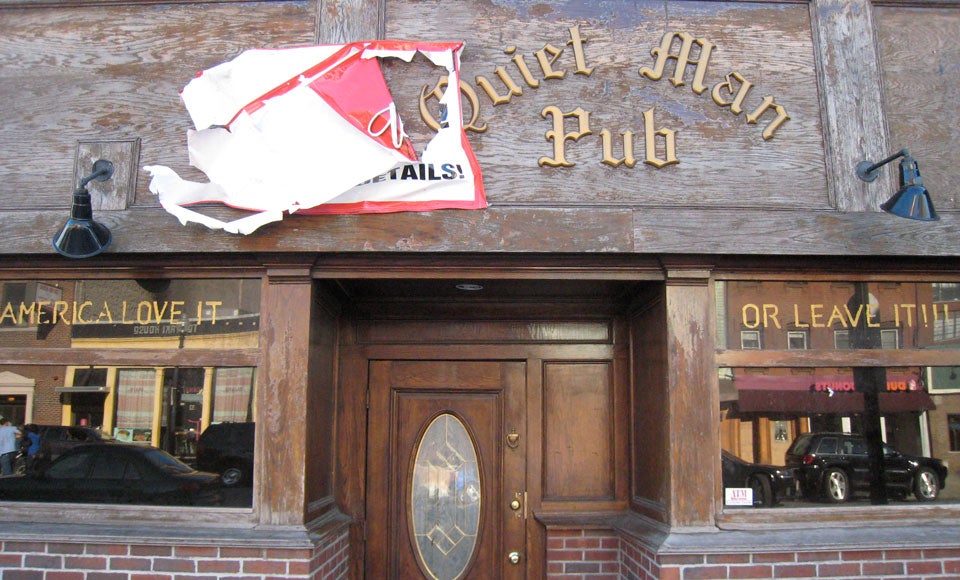
Born and raised in South Boston, 24-year-old Jay Kenney can still remember the taste of steak tips from the Quiet Man Pub, formerly located near Broadway Station. It closed in 2007. A Starbucks sits in its place.
The loss of the pub shouldn’t be too surprising – even though it sat at one of the industrial ends of the neighborhood, where, according to The Boston Globe, “Gillette workers, Irish mobsters, and daytime drinkers went to act up’’ – because Southie has been awash with change for the past decade. It still is.
“Old neighborhood businesses are closing and newcomers are opening faster than one can keep up with,’’ Kenney wrote in a recent blog post about his transforming neighborhood. Referring to his family as “The Last of the Mohicans,’’ Kenney told Boston.com many Southie families he grew up with are long gone from the area, fleeing to “greener pastures’’ in suburbs with cheaper housing and better parking.
The post seemed to strike a chord with Kenney’s neighbors. It received over 3,000 page views, and Kenney said comments on the South Boston Community Bulletin Board have reflected shock and awe at the neighborhood’s change.
Kenney relayed one commenter’s reaction to his post: “Some of these pics made me cry…so many sweet and wonderful memories visiting my Nana, and especially on St. Paddy’s Day…we had a BIRD’S EYE VIEW OF THE PARADE! My husband gets very emotional each time we drive by St. Peter and Paul Church, which has been converted to condos…such a shame.’’
“Evolving at the speed of light’’
There are currently about 39 development projects in the planning or approval stage, under construction, or recently constructed in South Boston, according to the Boston Redevelopment Authority’s map of the city’s development scene. Some are shiny new retail and residential complexes, while others are historic buildings that have been converted for apartments and parking. The Gate of Heaven Church gymnasium, which dates back to 1863, has recently been transformed into a four-story apartment building with 26 rental units and 40 parking spaces.
While many of these complexes are quite beautiful and arguably help to meet the city’s dire housing needs, Southie natives like Kenney are concerned over the neighborhood’s rapid change.
“The demographics of the neighborhood and the shape/architecture of how it has been built is evolving at the speed of light,’’ Kenney wrote. “What was once a tight-knit, blue-collar community has become a younger, more affluent crowd without children.’’
Kenney describes the beaches of Southie and Castle Island as retaining much of their “rowdier’’ flavor, but the luxury condos dotting large swaths of the area have gentrified the community, forcing many multigenerational Southie families to confront a neighborhood with a brand-new identity. The new Southie may be cleaner, but Kenney said natives miss their old watering holes like Cornerstone Pub and Quencher Tavern, and quirky little corner shops like Calnan’s Jewelers that used to sell Irish-themed jewelry.
Some developments have met staunch resistance from locals.
The proposed conversion of the Gate of Heaven Catholic school, which closed in 2008 into condominiums was tabled last summer after residents called it “emblematic of South Boston’s gentrification.’’ Despite an informal door-to-door survey showing 85 percent of nearby residents opposed putting condos in the building, the BRA approved the project in March 2015 after failing to find a new school tenant.
“People wonder why there is so much negativity toward newcomers,’’ Kenney wrote. “Look no further. The average resident has been ignored far too often during this extraordinary and unprecedented period of growth.’’
According to Zillow, the median rent price in South Boston is $2,900 per month, higher than the Boston median of $2,400, while the median home value for the area is $491,200. While this is close to Boston’s median home value of $449,400, some of the newer residential complexes on the waterfront are selling luxury condos for as much as $3 million. “The people who made Southie what it is today can’t afford to live there,’’ Kenney said.
“How ironic is that?’’
Kenney addressed Fort Point’s building boom in his post:
“The new skyscrapers and buildings down in the Seaport are in the same areas that our grandfathers worked day after day as longshoreman (mine being one of them) to put food on the table for their families. The Seaport was once one of the biggest shipping hubs in all of America. Just because new people move into the neighborhood, doesn’t simply mean it’s no longer Southie or something has changed. The rebranding needs to end.’’
Story continues after gallery.
The changing landscape of the Seaport:
Southie’s development has also caused parking and infrastructure concerns. In addition to Gate of Heaven’s closure, St. Peter School and St. Augustine’s have also been shuttered in recent years – there simply aren’t enough children left. Residents of Old Harbor Street are currently fighting a condominium complex planned to take the spot of a quaint garden and statue of the Virgin Mary, because “the new housing will make their longstanding parking problems even worse,’’ the Globe writes.
Kenney said he appreciates some of the new aesthetics in Seaport and Broadway, and has accepted South Boston will never again look like the Southie of his childhood. He also recognizes the silver lining: “The popularity and explosion of growth that the neighborhood has recently experienced is a nice change from only being mislabeled and misidentified as a racist area full of gangbanging Irishmen,’’ Kenney added.
He hopes some sort of bridge can be formed between the old and new neighborhood, writing, “I hope we see businesses continue to blossom and the affordability of the neighborhood stay or stabilize at reasonable levels.’’
But Kenney also understands why so many people want to live there.
There may be no more Quiet Man Pub, Quencher Tavern, or Triple O’s, the notorious hangout favored by James “Whitey’’ Bulger and his friends, but Southie natives that have stayed cling to their roots.
“Southie is truly ‘God’s Country,’’’ Kenney told Boston.com. “Amenities are available and close by, easy access to the #1 city in America (I’m not biased at all), and great people make the neighborhood what it is.’’
Here are some Google Maps screenshots that show just how much Southie has changed since 2007:


More before and after photo’s of Southie can be viewed here.



To comment, please create a screen name in your profile
To comment, please verify your email address
Conversation
This discussion has ended. Please join elsewhere on Boston.com