
New City Rule Could Make Somerville Housing More Affordable
A proposal calls for 20 percent of tall towers near T stops to be at below-market rents.
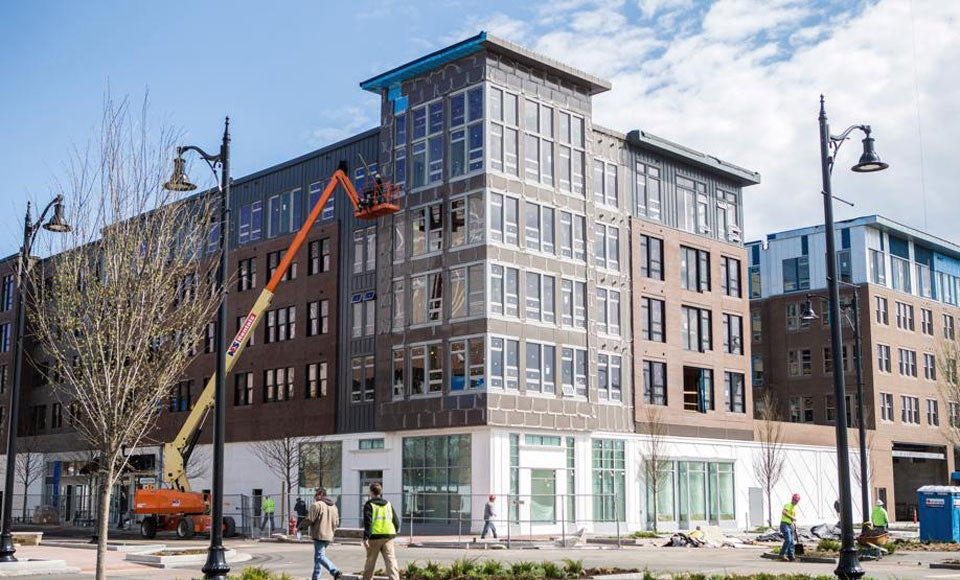
Somerville city officials want developers to offer more apartments at below-market rents.
A proposal backed by zoning officials and the city’s mayor calls upon developers constructing taller buildings near T stations to raise the number of affordable units in their projects to 20 percent of the total, up from 12.5 percent now.
It also asks developers to offer some affordable units targeted at middle-class renters for the first time, expanding the traditional focus on those with lower than average incomes.
The affordable housing requirements are part of a larger overhaul of Somerville’s zoning code, which dictates what can be built where in the city.
“The citywide zoning rules we have in place today aren’t going to get us where we need to go in terms of the 21st century,’’ said George Proakis, Somerville’s director of planning.
The new 20 percent affordability rules — aimed at developers putting up multistory buildings with some height near T stations in Somerville — are likely to cover an ever-growing number of new apartments given the city’s real estate boom.
Future phases of the giant Assembly Square project would be covered under the 20 percent rule, as well as hot spots like Davis Square.
Then there is all of the new development expected to take shape as the Green Line is extended through Somerville, a project that became a reality last year after the federal government committed $1 billion to it.
The area around Somerville’s Magoun Square is expected to see more development in the future, with not one, but two nearby T stops planned — Ball Square and Lowell Street.
Winter Hill will have its own stop with the planned Gilman Square T station.
The decision to require developers to add affordable units for middle class families came after a consultant hired by the city found that even renters with above average earnings were being squeezed out of the city’s housing market, Proakis said.
In order to meet the requirement, developers would have to reserve some affordable units for middle class renters making 110 percent of median income. In Somerville, where the median income is $62,133, that would be about $70,000 a year. The remaining affordable units would go to renters making 50 or 80 percent of median income.
Still, the new affordability requirements are far from a sure thing. They are embedded in the proposed overhaul of Somerville’s zoning code that is expected to face months of hearings and scrutiny by the Board of Aldermen.
“This is a pretty significant thing for Somerville and we all want to get it right,’’ Proakis said.
Not everyone is happy, though.
There is pressure from housing advocates seeking to make the 20 percent requirements the standard for all projects in Somerville, not just for tall buildings near T stations.
Meanwhile, Federal Realty, the developer of Assembly Square, has pushed back from the opposite direction, arguing the new requirement could kill plans to add hundreds of more residential units down the line.
Federal could not be reached for comment. But Greg Vasil, chief executive of the Greater Boston Real Estate Board, said that requiring developers to build more affordable units could be difficult in Somerville, which has high building costs like Boston but somewhat lower rents.
“It’s a problem,’’ Vasil said. “It almost costs you the same to build and your rent is slightly less. If Federal is saying it’s not easy, I wouldn’t doubt it.’’
But Proakis countered that the 20 percent requirement has been rolled out successfully before in other projects near T and commuter rail stations in the Boston area.
“Taller buildings next to transit can handle more affordable housing,’’ he said.





To comment, please create a screen name in your profile
To comment, please verify your email address
Conversation
This discussion has ended. Please join elsewhere on Boston.com