
Cambridge Residents Hope Climate Change Assessment Shapes Development
Cambridge residents say they hope the assessment’s projections for higher temperatures and increased precipitation will shape city planning and development.
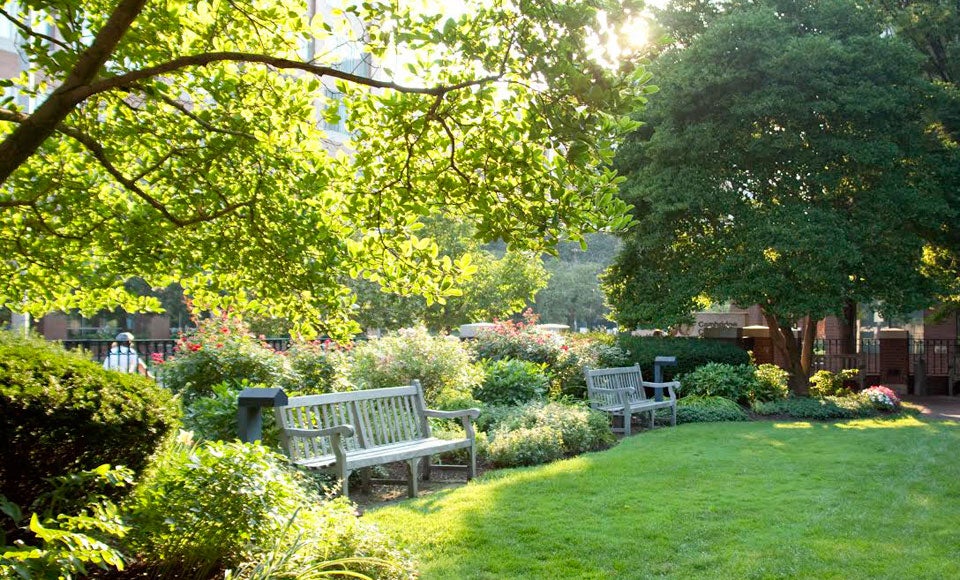
By 2070, it will be “almost impossible’’ to avoid a continuous heat wave in the summer, said Lisa Dickson, sustainability expert with the Cambridge-based engineering and architecture consulting firm Kleinfelder. And because a warmer atmosphere can hold more moisture, she cautioned, there will also be more frequent episodes of extreme rain and snow (like we saw this winter in Boston.)
These were just some of the sobering interim results of Cambridge’s long-awaited Climate Change Vulnerability Assessment, revealed by city planners and Kleinfelder consultants at a public meeting Tuesday, March 17.
“Extreme heat events are likely to increase in frequency, intensity, and duration,’’ Dickson said to the crowd gathered at MIT’s Kirsch Auditorium. According to the assessment, severe precipitation and flooding events will also become more common.
Directed by multiple city departments and outside consultants, the climate change project involves two corresponding parts: executing an assessment and creating a preparedness plan. The now mostly-complete assessment was driven by a study of how Cambridge’s population, buildings, and businesses would handle the higher temperatures, more powerful storms, and increased flooding associated with climate change.
As Cambridge moves into the second phase of the plan, project leaders will use the data from the assessment to develop a preparedness and resilience plan to deal with climate change. This portion will begin this summer and be completed over the next several years, John Bolduc, environmental planner for the city, said.
“The assessment identified the physical assets like infrastructure and critical buildings, as well as more vulnerable populations that need to be prioritized,’’ Bolduc said. “As we do the planning, we’ll look at everything from protecting MBTA stations from flooding, to providing ways for people to shelter in place in the event of a storm.’’
Cambridge residents and activists said they hope the city uses the new information to immediately shape city planning and development.
“We are in the midst of a building boom and it would be very unfortunate if the buildings and infrastructure currently being rapidly planned, permitted, and built go ahead without taking this good information into account,’’ Cambridge resident and meeting attendee Alison Field-Juma said, mentioning that this could involve the city revising its zoning ordinances and guidelines. Over 1,000 luxury apartments were constructed in Alewife in 2014 alone, and another 1,500 units are slated for construction in that part of the city in 2015.
Quinton Zondervan, president of Green Cambridge, echoed Field-Juma, saying that while he found the interim results “disturbing,’’ he’s hopeful that the city will acknowledge the dangers related to climate change, and factor them into planning and zoning guidelines for the Cambridge Master Plan, a growth policy document for the city.
“Overall, the city has not done a very good job planning,’’ Zondervan said. “It’s been very piecemeal in specific locations and we definitely need to change that, not just because of climate change, but also because a lot of people have not been happy with the results of that kind of process.’’
In Alewife, for example, the amount of development that was anticipated in city documents between 2006 and 2024 was exceeded in 2014, and many residents criticized the city’s oversight.
But meeting attendees also said they were ultimately pleased that the city is actively engaging the community on climate change concerns, and said they hope to see this kind of involvement continue as the project moves forward.
“Overall, I was very impressed with the team they put together and the thought and care,’’ Jan Devereux, Cambridge resident and founder of Fresh Pond Residents Alliance (FPRA), a neighborhood group formed in 2014 in response to Alewife’s rapid development, said. “It was a good turnout in the room and there were lots of suggestions about continued neighborhood meetings to raise awareness.’’
There were roughly 130 attendees at the March 17 presentation. Owen O’Riordan, commissioner of the Cambridge Department of Public Works, said he thought attendees seemed pleased with the study’s thoroughness.
“There may be some impatience moving forward toward the preparedness plans,’’ O’Riordan said. “But overall, they seem happy with the progress made so far and the extent to which we’ve looked at things.’’
City planners gave participants handouts to capture data on their demographics, as well as get attendees’ feedback on key issues related to climate change in Cambridge.
O’Riordan said over the next few months, project leaders will hold community meetings with smaller groups of people “to take a deeper dive’’ into what Cambridge residents thought of the assessment.
The information revealed at the March 17 meeting will be publically available online by the end of April, officials said.



To comment, please create a screen name in your profile
To comment, please verify your email address
Conversation
This discussion has ended. Please join elsewhere on Boston.com