
Melrose Plans Condo Developments, Business District Improvements for 2015
A decade ago residents put up a fierce fight against condo development that was built anyway. Now, attitudes appear to have shifted and there are a number of similar projects underway.
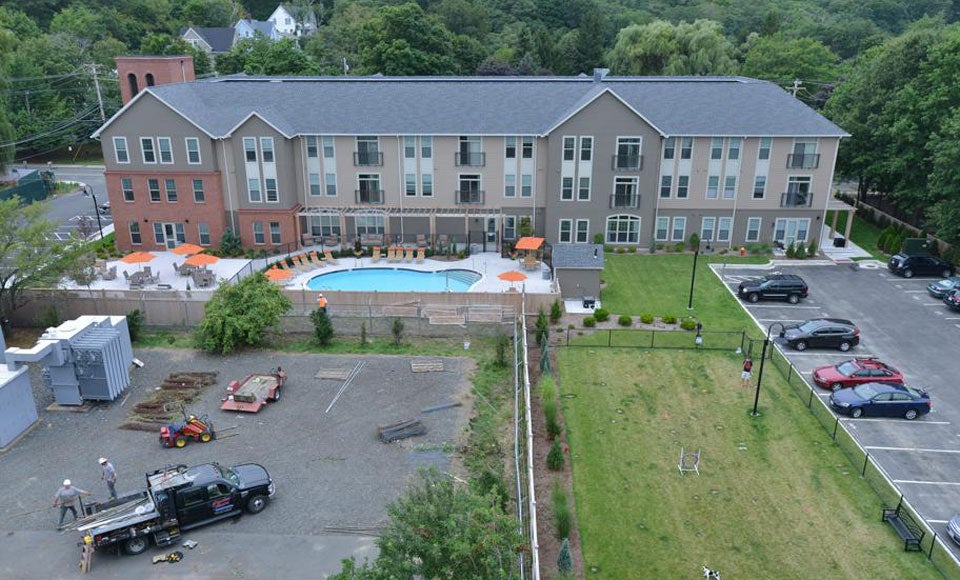
Melrose, the small suburb seven miles to Boston’s north, has a slate of development projects scheduled for 2015 – an indication that the city is embracing, or at least tolerating, Mayor Robert Dolan’s push to modernize the community, which was first incorporated as a town in 1850.
Dolan laid out the projects in his State of the City address on February 25, which include condominium developments at 2 Washington Street and 130 Tremont Street that will combine for 120 one- and two-bedroom units.
Melrose also has plans to update roads and infrastructure in two key business districts with the help of nearly $1.5 million of funding from the commonwealth’s MassWorks program.
“Melrose is a hidden secret in the greater Boston area,’’ said Adelaide Grady, director of the Boston office of Wood Partners, the developer behind the 94-unit complex at 2 Washington Street. She expects the project to be finished this summer.
Wood Partners has already developed a 4-building, 212-unit complex known as Alta Stone Place just down the street from 2 Washington Street. The final condos there will be available for lease in the coming weeks, Grady said.
In the short stretch of road between its two current projects, Wood Partners is in the early stages of developing the unoccupied 37 Washington Street into more residential units.
“We believe in that location,’’ Grady said.
The interest from condo developers is not surprising given the area’s easy access to Boston.
Melrose was founded on the Boston & Maine Railroad line, a history that left the 28,000-resident city with three commuter rail stations. The Oak Grove T stop on the orange line is within walking distance of all three Wood Partners developments, just a few hundred yards over the Malden border.
“It’s all the trains,’’ Mayor Dolan said in an interview about the surge in development. “It’s really been the lifeblood of the community.’’ But Melrose has also abutted the 2,200-acre Middlesex Fells Reservation since the land trust was created in the late 19th-century, and residents are not keen to give up the connection to nature that has become part of the town’s identity, Dolan said.
“Melrose has always been almost afraid of the more industrialized cities around us. ‘We don’t want that, it’s bad for our communities,’’’ Dolan said, paraphrasing the sentiments he often heard when arguing for earlier development projects. “It’s almost like they had a caricature in their heads of what could happen.’’
When Dolan took office in 2002, he inherited a contentious debate over Oak Grove Village, a proposed 579-unit mixed-use complex straddling the Melrose-Malden border.
Chris Sullivan, the then-chairman of the Citizens Alliance for Responsible Development, brought a lawsuit against the planning board that was settled in 2004 when the developer agreed to reduce the amount of retail space and number of units, donate money to town projects, and involve residents throughout the construction process.
Oak Grove Village was built in 2007 with 550 units.
“This is the most significant real estate development in the history of the city,’’ Dolan was quoted as saying in a May 7, 2007 article in the Boston Globe.
Today, he credits the project’s success with turning the tide of public opinion toward development in Melrose. “As soon as Oak Grove happened, people realized, ‘Hey, this is really nice,’’’ Dolan told Boston.com. “People started saying, “Let’s give it a chance.’’’
Chris Sullivan, who still works in civil litigation and lives in Melrose but has largely given up the fight against developers, has a different theory for why residents have been quieter about subsequent condo construction.
“You get outgunned every single time,’’ Sullivan said.
The imbalance between professional developers and concerned-but-busy citizens makes for a grueling and sometimes expensive fight, Sullivan said. He thinks people seem less willing to take up that fight today than they did before Oak Grove Village was erected.
“There’s been a change in the residents in general, that they seem to be less involved in community matters, less involved in the minutia of zoning,’’ Sullivan said, noting that people are getting ever busier. “Zoning changes and developments are way down at the bottom of the priority list.’’
Meeting minutes from public hearings of the Melrose Planning Board show there were at least a few citizens asking questions about 130 Tremont Street, the most recent site to be approved for residential development. But the minutes contain nothing like the three hour and 45-minute airing of grievances the Globe reported during a December 4, 2002 public hearing on Oak Grove Village.
Whether residents are actually enthusiastic about the new construction planned for 2015 or are just too busy to bother with it might not matter that much for the future of Melrose development.
Mayor Dolan says lack of available space beyond the upcoming 2 Washington Street and 130 Tremont Street sites makes big new construction projects unlikely.
“There’s not a ton,’’ Dolan said. “Most of the land is used.’’
Instead, he’s turning his sights toward reenergizing commercial areas near train stations.
“There’s a lot of re-gentrification opportunities in our older business districts for mixed used,’’ Dolan said. “The Highlands I believe is going to be the next big area.’’





To comment, please create a screen name in your profile
To comment, please verify your email address
Conversation
This discussion has ended. Please join elsewhere on Boston.com