
Post Recession, ‘Intense Demand’ for New Developments in Watertown
Sometimes the best laid plans do work out. In the case of Watertown’s push to turn empty old industrial buildings into shiny new residential, office, and retail projects, it just took a little longer than anticipated.
Sometimes the best laid plans do work out. In the case of Watertown’s push to turn empty old industrial buildings into shiny new residential, office, and retail projects, it just took a little longer than anticipated.
Nearly a decade ago, Watertown officials embarked on an ambitious plan to redevelop the Pleasant Street corridor. Once packed with factories and warehouses serving big companies like Raytheon, the area was in need of a reboot amid changing economic times.
So town officials passed a zoning amendment that would open the Pleasant Street area to offices, shops, and apartments.
The only problem was the timing. It was June 2008, three months before the collapse of Lehman Brothers triggered a global financial crisis and the Great Recession that followed.
It took a few years for the real estate market to get back on its feet, with the recession freezing all new development for a time, not just in Watertown, but across the region and the country.
“I think from the town’s perspective regarding economic development, we need to grow,’’ said Steve Magoon, the town’s planning director. “Having investment in the town is a good and positive thing and something that can do a lot of good things for the town.’’
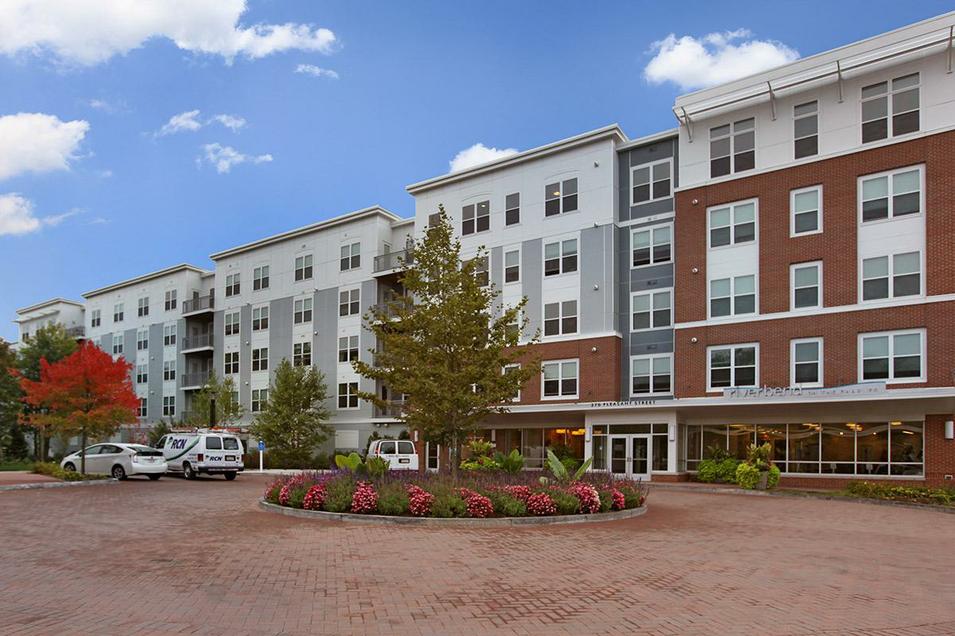
Today, the Pleasant Street corridor is fast becoming unrecognizable, with a bevy of new upscale apartment developments.
More than 700 new apartments have been built in the Pleasant Street area over the past few years; new projects include Repton Place, Riverbend on the Charles, Alta at the Estate, and Acadia on the Charles.
The development frenzy is also taking hold on the mile-long Arsenal Street corridor, home to a mishmash of commercial strip retail in need of reinvention.
Hundreds of additional new apartments and new hotel, restaurant, and retail developments are poised to reshape this key piece of Watertown.
A mixed-used complex featuring 300 apartments, a grocery store, and other retail is set to break ground this spring at 202-204 Arsenal Street, down the street from the Arsenal on the Charles and the Arsenal Mall.
A proposal for another 300 residential units and retail space at Arsenal and Irving Streets is now under review by town planning officials.
A new 150-room Marriott Residence Inn is expected to break ground this spring at Arsenal and Elm with another hotel being proposed for a separate location on Elm Street.
The new apartments aren’t cheap, with one-bedroom’s going for $2,000 a month or more and well over $3,000 a month for a three-bedroom.
Meanwhile, three years after athenahealth acquired the Arsenal on the Charles office and research complex for $168 million, the company is moving ahead with expansion plans that call for parks, a beer garden and restaurant space, walking and bike paths to the Charles River, among other things. Incubator space for start-ups is in the works as well.
So what’s made Watertown such a hub for new apartments and other new development?
First, there is intense regional demand for all types of housing, including apartments, Magoon said. Overall, Greater Boston is in need of tens of thousands of new homes, condos, and apartments over the next decade, various studies have indicated.
Second, Watertown is attractive to new apartment and housing developers for its convenient location, next door to biotech and life science booming Cambridge and a short hop to Boston as wel, Magoon said.
The emphasis so far, at least in the big new developments, has been on luxury rental apartments, not condos.
That is a product of both market demand and what banks and other lenders are ready to finance right now, with rental units seen as a safer bet, Magoon said.
“It’s more about the region than about Watertown,’’ he added.





To comment, please create a screen name in your profile
To comment, please verify your email address
Conversation
This discussion has ended. Please join elsewhere on Boston.com