
Mayor Promises Home Creation on City-Owned Parcels
Mayor Marty Walsh announced last week that the he plans to build homes on 250 city-owned parcels.
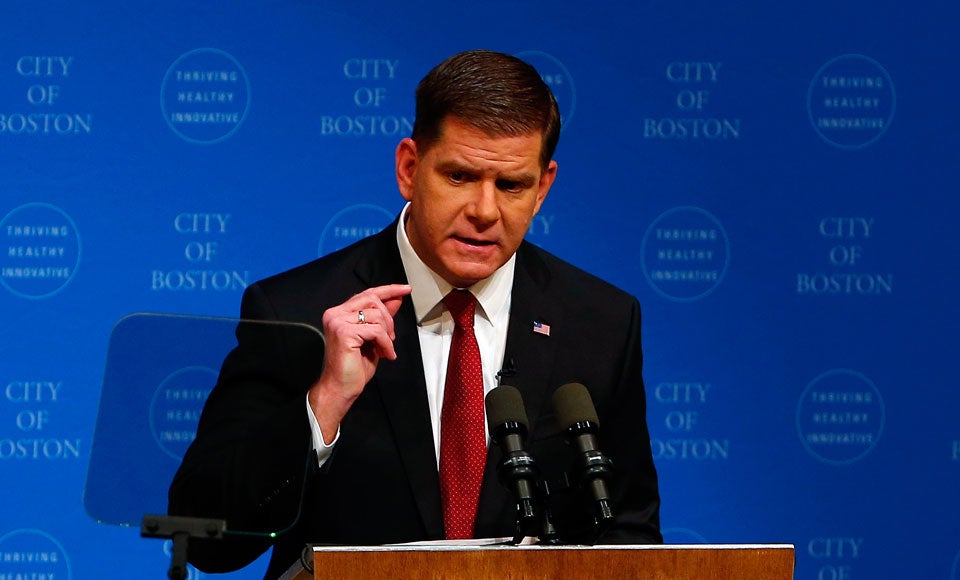
In his State of the City address on January 13, Mayor Marty Walsh promised to build affordable homes for low-to middle-income families on 250 city-owned parcels of land.
This comes after Walsh’s October announcement that he would allocate $20 million to affordable housing projects throughout the city.
The city-owned parcel project is still in its beginning stages, but the city promises it will be a unique project unlike anything Boston has done before. We talked with city housing officials and a community development expert to get a better understanding of the possibilities.
What is a “city-owned parcel’’?
A parcel is a piece of land that the city owns, often acquired after the previous homeowner was foreclosed on. Many of these lots used to have homes on them, some still do.
Lisa Pollack, Director of Media and Public Relations for the Department of Neighborhood Development said, “We did an analysis and these were the most easily developable. For the vast majority, there is not property on them.’’
According to Mayor Walsh’s chief of housing, Sheila Dillon, all of these projects will be built from the ground up with new buildings. “There are parcels around the City of Boston that are developable, but are not vacant so the goal is to bring parcels of land back to their highest use,’’ Dillon said.
Ezra Haber Glenn, a lecturer in community development at MIT is also on the board of the Somerville Community Corporation, a non-profit housing developer, and has seen Somerville do similar projects.
“Infill strategy can work well,’’ Glenn said. “They work within the existing urban fabric and help preserve the affordability we have traditionally had in our neighborhoods without changing the character.’’
“Infill strategy’’ is pretty much exactly what it sounds like.
“The idea is that you are filling in development on smaller sites within the existing urban fabric,’’ Glenn said. “Infill would be contrasted with large-scale or maybe transformative development, which occurs of large sites.’’
Where will the new homes be built?
Dillon said the city plans to build the majority of homes on parcels in Dorchester, Mattapan, Roxbury, Hyde Park, and a few in Jamaica Plain. The first two developments will be in Dorchester.
Glenn seemed to think Boston is a good place for a project like this.
“There are so many lots in this city that if you put your mind to it and did a whole bunch you could get a lot of affordability and it could make a difference,’’ Glenn said.
When will they be built?
“We think it will take several years to build all the properties,’’ Dillon said. Once a developer is assigned to a project, they will have one year to get their finances in order and break ground on the site.
Who will be building them?
Dillon said the city is advertising the projects to potential developers through neighborhood groups, and its lists of developers. Developers that are interested can then submit an application to work on one of the parcels. Dillon said two of the things they are looking for in developers are that they can provide reasonable costs and comparable experience.
Who can buy them?
Families with a low or moderate income who are first time homeowners will be able to purchase these homes. “Once homes are built we will then sell them through a lottery process to first time home buyers and they will live in them and they will be able to afford them,’’ Dillon said. “Then if they want to sell the unit, [it] will be sold to another buyer who has a low or moderate income.’’
Pollack said, “Homes will be priced in a range that we expect will run between $250,000 – $400,00, and be affordable to households with a combined income of between $60,000 – $100,000.’’
What will they look like?
“To make it easier for developers – [because] we want this to be efficient and we want the program to move quickly – we hired an outside architect,’’ Dillon said. The architect was asked to design a variety of homes so the city has some to choose from for each neighborhood.
“We are going to look at it and see which designs are most appropriate for that site,’’ Pollack said. “We have a slate of different housing choices so we could place homes in neighborhoods that were in context. We want neighbors to wake up and to be happy to see the new thing across the street.’’
Some units will be single-family homes, some will be town houses, and some are two family homes.
How much will this all cost?
Dillon said she cannot know the cost until her department gets back the applications from the potential developers.
“Once we get proposals back in, we will see the developers’ costs,’’ Dillon said. “We need to receive the proposals before we know the need for subsidies.’’
What effect can this have on the city?
“The mayor is very concerned about keeping families in the city of Boston and allowing them to purchase homes as the real estate market gets more expensive,’’ Dillon said.
Glenn said he believes it is “impressive to see him say that and to put those numbers out there.’’
“I would say it is very wise,’’ he said.
Want to know more information as things progress?
Mayor Walsh also announced that the Department of Neighborhood Development is partnering with coUrbanize, a tech start up that will make these city building projects more clear and give citizens up to date information.
“I encourage residents to use this innovative platform to stay connected and engaged as development on City-owned land is proposed and reviewed,’’ Mayor Walsh said in a statement. “My administration is committed to a transparent development process and this partnership with coUrbanize will help us to deliver on that promise.’’




To comment, please create a screen name in your profile
To comment, please verify your email address
Conversation
This discussion has ended. Please join elsewhere on Boston.com