
Five home design mistakes to avoid
After a house is built, it’s hard — if not impossible —to reconfigure a hallway or move a bathroom.
Before you spend hundreds of thousands of dollars building your own home, better make sure you are not putting the bathroom next to the front door or the mudroom where no one can find it.
James Roche, chief executive of Houseplans.com, has five major design flaws that do-it-yourself homebuilders tend to make, and they aren’t pretty. After all, once a house is built, it’s hard, if not impossible, to reconfigure a hallway or move a bathroom.
“Building a house is a very complicated set of decisions, many of which people have never made before,’’ Roche notes. “A house is a three dimensional puzzle.’’
At the top of Roche’s bad design list is the “front door to nowhere.’’
His pet peeves include doors that open into a tiny vestibule, with a wall often the first thing you see and a bathroom right near the front entrance.
Also on his no-no list are front doorways that lead into long, dim hallways, which Roche calls the “Alice in Wonderland’’ effect. Instead, when you open the front door, you should be greeted with a view of some sort, such as an inviting living room or window.
“First impressions matter and color the experience of the rest of the home,’’ Roche writes.
Second on Roche’s list: The claustrophobic “water closet.’’
Narrow guest bathrooms with no windows, where your knee is jammed against the toilet paper roll, aren’t all too charming. A little natural light goes a long way to liven up what could be an oppressively gloomy space.
Story continues after gallery.
Landscaping ideas and inspiration:
Roche’s third major pet peeve is a bathroom placed too close to the kitchen and dining areas.
(Of course, in New England, many older homes often put the bathroom right off the kitchen, but that was another century.)
Running your plumbing through a bedroom wall isn’t ideal either, he contends, but can work if you use a double wall and insulate “aggressively.’’
The “master cell’’ is next.
These are small, master bedrooms that can’t fit all the furniture and only have a measly window or two to let in light at different times of the day.
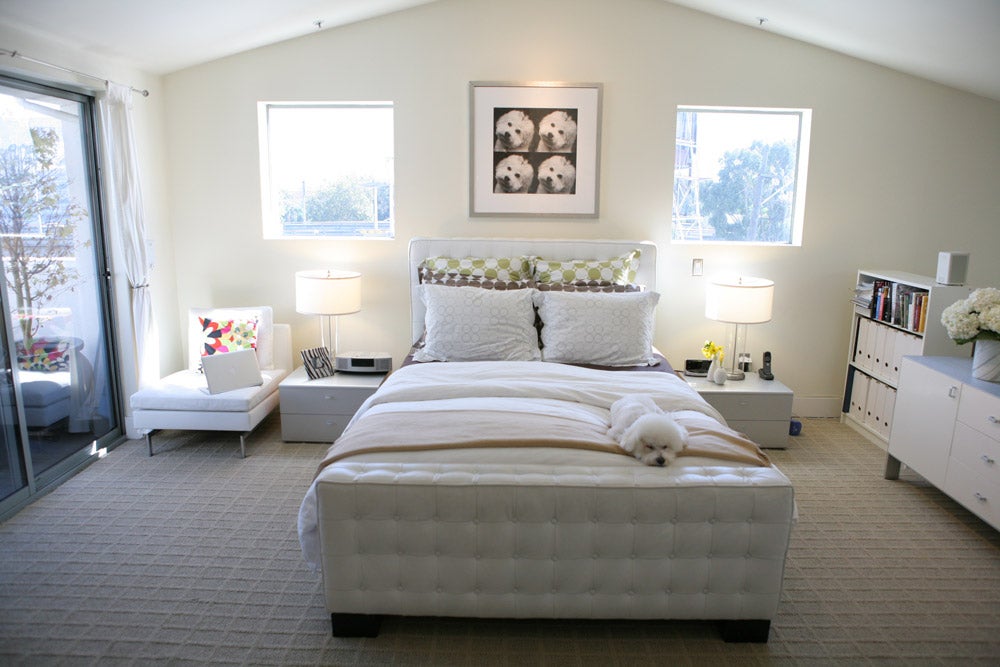
“Ideally the master bedroom should have windows on two walls, even if one wall contains high ‘transom’ windows above the bed. This allows air circulation and a variety of light throughout the day,’’ Roche writes. “Make sure that there is enough room for a queen or king bed and a dresser with room for two to circulate without bumping into each other.’’
And Roche’s fifth pet peeve? The “scullery’’ kitchen.
Back in the day when hired help was cooking up the meals, the kitchen was tucked away and meant to be a utilitarian workspace, not a social hub. Not so much anymore.
Avoid putting the kitchen off in a corner, away from the family room or great room. Huge peninsulas aren’t so hot either, making it tough to move around in the kitchen while you are cooking.
“The kitchen has become a primary room,’’ Roche writes. “It should have good light and air circulation with room for two to work.’’




To comment, please create a screen name in your profile
To comment, please verify your email address
Conversation
This discussion has ended. Please join elsewhere on Boston.com