
Brian Golden: ‘I’m a perpetual meet-er’
Brian Golden was named director of the Boston Redevelopment Authority this month.
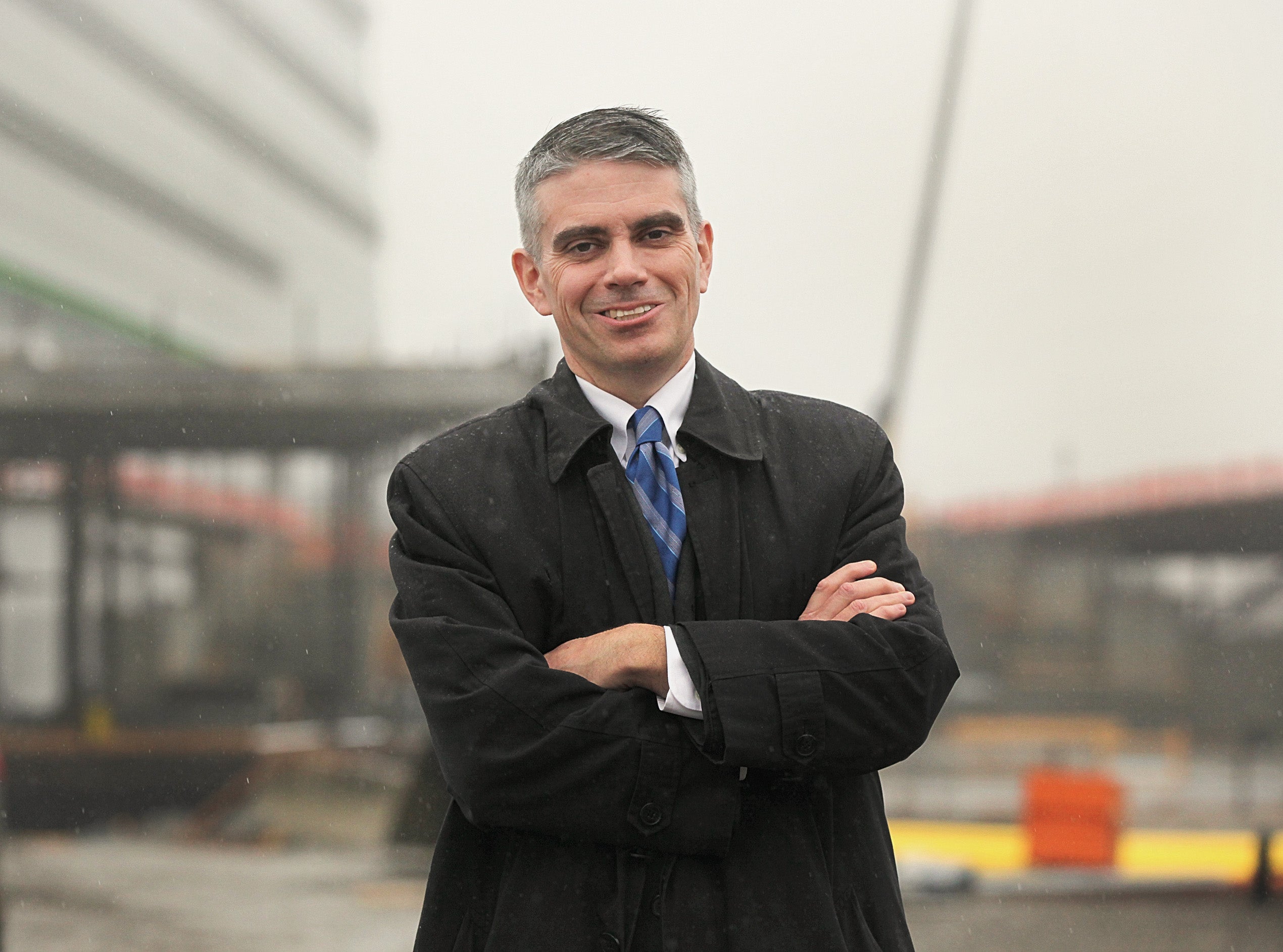
The large windows in Brian Golden’s corner office in City Hall give him a direct view of his realm of power in the city.
One window overlooks the Custom House tower with the illuminated clock. The adjacent one looks into Quincy Market, dressed up with lights and filled with carolers.
Golden, an alumnus of both Harvard and the College of William and Mary, has been acting director of the Boston Redevelopment Authority since January, but officially removed the dangling “acting’’ from his title this month. Born, raised, and still residing in Allston, Golden has held public office in the state legislature and has been with the BRA since 2009.
The BRA is a 200-employee organization with an annual budget of $53 million and has major impact on the daily life of Bostonians. The responsibility shows in Golden’s busy schedule.
The day I visited the BRA offices was an especially challenging day for Golden, who was running around preparing for the monthly Board of Director’s meeting. A last minute meeting with the mayor made him over half an hour late for our interview.
When we finally sat down, the garrulous Golden explained his plans for city development now that he’s here to stay for the foreseeable future. The interview has been edited for length and clarity.
Boston.com: In your own words, what is the scope of everything you oversee in the city?
Brian Golden: The BRA is charged with two core missions: large-scale real estate development (buildings over 50,000 square feet) and city planning. But a big piece of the story is also our assets – we pay for those two functions through the revenue generated by assets. We own a lot of property in the Marine Industrial Park, and some ground leases in Charlestown Navy Yard and downtown Boston. We also oversee Jobs & Community Services, [an agency promoting educational and employment aspirations].
Q: How would you summarize a typical day?
A: Meetings. I’m a perpetual meet-er. But I’ve got to do a better job of balancing meetings with follow-ups to meetings, as well as other demands. It’s difficult. It was one of the most important things I felt we needed to do this first year — be accessible, open, transparent, show that we will treat all people with real estate development proposals equally. But I can’t be in meetings all day, because then nothing gets done. Now that I know I’ll be here for the foreseeable future, I don’t have to be so focused on taking every meeting that comes my way as soon as possible. I need to recognize there are limitations.
Q: Can you elaborate on Mayor Walsh’s housing plan to create 53,000 affordable housing units by 2030? What’s your role in that?
A: We have a big role, because if you’re going to build a significant number of new units on a single project, you’re going to need our approval. We want to encourage creation of new units, and I think we have. We’ve had record numbers of new units in 2013 to 2014, and anticipate 2015 being similar.
We want to get as many units built, but in a fashion that is responsible and considerate to neighborhood needs and wishes and accommodates the needs of a growing population. We want units that are accessible to all of Boston’s residents, especially workforce housing – housing not for the very low income, but also not bona fide market rate. We want to make sure we’re achieving some balance and use the authority we have appropriately.
Q: Do you think the mayor’s numbers are possible?
A: Yes, I do. The 53,000 number is a big one, but it’s also reasonable given what we know from the past few years. But none of us know what the future can bring. It depends on the demographics, the economy, and when’s the next big recession coming.
Q: The latest theme in Boston seems to be luxury, luxury, luxury. While this is great for developers, it’s not great for local residents who are further priced out of the market. How do you balance those two interests?
A: There is an awful lot of high-end stock, and we’re very sensitive to that. We don’t want this to be a world where everything newly built is only for the affluent. That’s a problem. We want that type of development to occur, but to occur in balance with other needs. The Inclusionary Development Program (IDP), which has been around since 2000, extracts money from developers who are building market-rate housing so we can put it into developments that create workforce housing. The BRA has a role in creating funds for housing for people who can’t access strictly market-rate units. We will continue to think of creative ways to get revenue for affordable housing units.
Q: What aspect of your job keeps you going in tough times?
A: This place, historically, has had people stay here for a long time. People stay because you can see the concrete effects of your work. Look out the window. It wouldn’t be unusual for you to point to a building you had a distinct role in permitting.
We’re a controversial agency sometimes. There’s a politically contentious process associated with our permitting decisions. It causes a certain amount of stress, but that’s okay given the fact that in the aggregate, these are things that positively impact the city. That motivates us to always do better and heed the mistakes of the past.
Q: What’s an essential tenet of your leadership style?
A: I try hard to make sure the people who work in this organization feel like I care about them, about their life inside and outside the organization. That’s the beauty of the BRA — it’s a good size, not too big you can’t be personally involved in people’s day-to-day life. The majority of us are here on the 9th floor, but there are also two off-site locations. Management by walking around is pretty key. I try to walk around so people can see me and grab me if they want to talk about something.
Q: What passions do you have that are unrelated to your profession?
A: I have four kids—three daughters and a son. Therefore, my hobbies are three daughters and a son, and whatever they’re into. I used to play the guitar, used to run, but I don’t have time for as many of those things anymore. My world outside here is my wife and my kids. There’s nothing I would rather be spending my time on.



To comment, please create a screen name in your profile
To comment, please verify your email address
Conversation
This discussion has ended. Please join elsewhere on Boston.com