
Olympic Hype? What the Games Could Do to Boston Real Estate
The Olympics may have a smaller benefit to more developed cities, experts say.
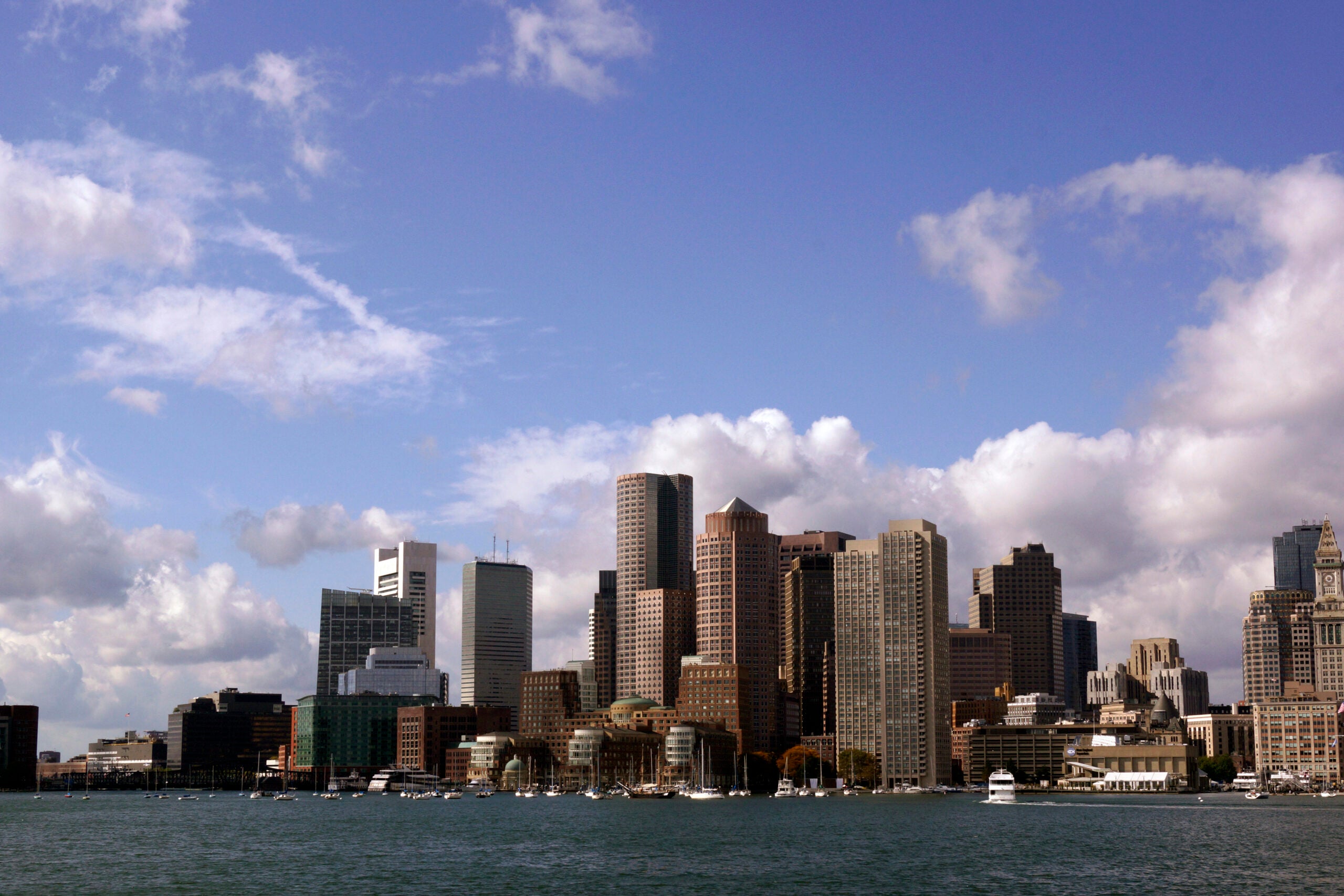
On Monday, the local organizing committee Boston 2024 submitted a proposal to make Boston the host of the 2024 Summer Olympics.
The bid goes to the United States Olympic Committee, which in January will choose one US city to be the country’s nominee. Then in 2017, the International Olympic Committee will announce its final choice for where the games will be held.
The following is one part of a series looking at what might be in store for Boston if it becomes the host of the 2024 Games.
There needs to be big stadiums, plenty of playing fields, a large Olympic Village for athletes and trainers. The Olympics would also disrupt a city’s delicate balance of housing supply and demand.
Land is valuable. Location is key. How would Boston fare?
“We believe Boston would benefit … in the form of new housing, improved infrastructure, smart urban planning, new green space and much-needed transportation upgrades,’’ Boston 2024 Executive Vice President Erin Murphy Rafferty said in a statement.
Each city is different, and some experts are saying that since Boston is quite developed already, the Olympics may not be such a big boon to local infrastructure and economy as the Olympic proponents claim.
City Infrastructure
The International Olympic Committee requires host cities to provide 30 to 35 competition venues, an Olympic Stadium requiring at least 100 acres, an Olympic Village requiring another 100 acres, and media facilities.
The Boston 2024 committee, chaired by John Fish, CEO of Suffolk Construction, says there have been no finalized plans for facilities and venues yet, but has brought up TD Garden, Gillette Stadium, the Boston Convention and Exhibition Center, Boston Common, among others, as potential sites. They are also thinking of building a temporary Olympic Stadium at Widett Circle in South Boston.
A temporary stadium might relieve the “white elephant’’ concern for host cities around building Olympic-sized facilities. White elephants are the moniker for venues that fall out of use after the games but are still costly to maintain. For instance, many of the stadiums in Athens, Greece are currently surrounded by chain-linked fences or covered in graffiti after the 2004 torch blew out. Athens, which suffered a huge recession beginning in 2008, is often regarded as one of the biggest failures in post-Olympic venue use.
Other cities have fared better. The last time the Summer Olympics were held in the US was 1996 in Atlanta, Georgia. The Centennial Olympic Stadium, the games’ main stadium, is now home to the Atlanta Braves. Georgia Tech took over the swim facility, and the Olympic Village now serves as housing in the city.
“Everything was well-planned,’’ said Sally Westmoreland, a real estate agent in Atlanta. “The government and the private sector did a fine job collaborating to figure out ways to make [the facilities] sustainable.’’
“Since the Olympics, Atlanta has had a return-to-the-city movement,’’ said Richard Martin, a University of Georgia business professor. In the 2000s, Atlanta grew in population for the first time in decades, he added.
When Salt Lake City, Utah hosted the Winter Olympics in 2002, it experienced similar benefits, particularly from exposure.
“In the long term, the Olympics put Salt Lake City on the map,’’ said Kevin Coyle, a long-time realtor in the area, adding that the city also scored expanded highways, renovated bridges, and a new light rail system.
The big caveat is whether that would all happen for Boston — a city that’s very much already on the map.
Factors like geography, size, relative maturity of the local property market, and the local economy are very important to whether the Olympics will be beneficial to the local real estate market, according to a 2011 report by Jones Lang LaSalle, a real estate investment management firm.
Smaller, undeveloped cities like Athens and Barcelona saw big property gains as a result of the games. But in relatively developed cities like Sydney and Atlanta, the effect on property prices were virtually none, according to the report.
Residential Units
The biggest impact would be on the local rental market leading up to the Olympics.
A 2011 study showed that in London, residential property prices adjacent to the main stadium went up about $300 a week since London was awarded the bid in 2005. Homeowners near the stadium saw the value of their properties increase $94,000 on average.
In Salt Lake City in 2002, vacancy rates for rentals were about as low as they can get, Coyle said. “Anything livable was rented, and rents definitely increased.’’
But within six months of the games ending, the vacancy rate jumped from about 2 percent to 10 percent.
Coyle, who worked for Coldwell Banker at the time, helped rent out their homes during the games. “The prices people were paying for one night was equivalent to what you pay for the whole month,’’ he noted.
Long-term effects on the market are unpredictable when the athletes, camera crews, event staff, and fans pack up and leave.
Atlanta saw a condo construction boom in the 2000s (mirroring a trend in many major cities at the time), and at the same time, baby boomers were turning into empty nesters and became drawn to city living. Though the Olympics added to the momentum for change, it’s hard to pinpoint the games as the single catalyst for growth at that time, Martin said.
“The city has definitely changed post-Olympics. But were they caused by the games? I don’t know,’’ he added.
Westmoreland said people began to rediscover neighborhoods closer to the city as a result of the Atlanta games. Property values did go up as people found these neighborhoods appealing and moved out from the suburbs. “The Olympics made those markets a little more recession-proof,’’ she said.
The opposite is true in Boston where buyers are often priced out of the city and look toward the suburbs.
Boston is up against Los Angeles, San Francisco, and Washington, D.C. for the US bid. The national committee is expected to make its decision in the coming months.
Check out how the 2024 Olympics might affect Boston jobs.




To comment, please create a screen name in your profile
To comment, please verify your email address
Conversation
This discussion has ended. Please join elsewhere on Boston.com