
McMansion trend is thriving, especially in a handful of suburbs
The mean square footage for a new U.S. home broke 2,600 square feet last year.
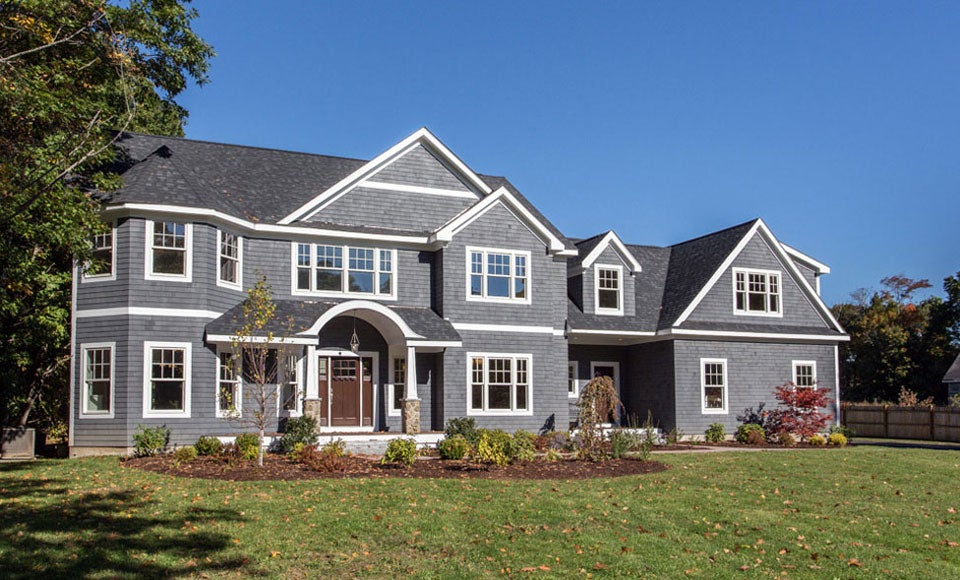
It seems McMansions weren’t just a passing fad of the housing boom.
According to CityLab, homes are being built larger than they were between 2000 and 2006, with the average square footage for a new U.S. home peaking in 2014 at 2,600 square feet for the first time.
The trend picked up steam between 2010 and 2011, with the average size of new homes growing from 2,392 square feet to 2,480 square feet, Census data shows. By 2014, three times as many homes were built in the 3,000 to 3,999-square-foot range as in the under 1,400-square-foot range.
Local builders say the trend holds true for Massachusetts, reporting a growing demand for huge luxury pads in communities west of Boston — Lexington, Concord, Needham, Wayland, Newton, and Wellesley.
“Over the past year and a half, our average house size has gone up by at least 1,000 square feet,’’ said Scott Jones Jr., vice president of custom home building firm James V. Caggiano & Son, based in Saugus. “People are more comfortable spending more money.’’
Jones says the average size home he currently builds in Metro West sits around 3,500 square feet, up from the 2,000 and 2,400-square-foot homes that were popular with clients between 2009 and 2013, after the housing bubble burst in 2008.
Story continues after gallery.
New England castles that used to be homes:
Jones attributes the trend to an improved economy. Even higher building costs haven’t deterred the growing scale of homes, as Jones mentioned carpenters, electricians, and plumbers are charging roughly 10 percent more than they did last year.
Other builders blame a lack of land for the McMansion construction boom.
Russell Busa, president of Sterling Homes Development Corp., based in Burlington, said when builders have to pay a premium for sparse land, they often up the size of the homes they’re constructing to capitalize on developable lots.
“It all comes down to dollars and cents,’’ he said. Busa charges clients $200 per square foot, but said the actual cost of the home could skyrocket depending on what goes into it. This price has slowly crept up, he added, saying just three years ago he charged $150 per square foot.
Jones said many of his clients were affluent couples in their late 40s to early 50s who were buying their second or third home. “Obviously, you’re doing pretty well if you’re buying a 3,500-square-foot home,’’ Jones said.
CityLab, on the other hand, points to a surge in minority and multigenerational households in the cities and suburbs as driving the trend, saying these buyers need the space for their large families.
How long will the boom last?
Jones said he isn’t sure, but he hopes it persists for the sake of his company. “This trend typically follows the economy, so there are ups and downs,’’ he said. “When the economy is good, people buy more luxurious homes. Hopefully, it doesn’t end for a little while.’’



To comment, please create a screen name in your profile
To comment, please verify your email address
Conversation
This discussion has ended. Please join elsewhere on Boston.com