
Can Comprehensive ‘Smart Home’ Systems Go Mainstream?
A New England company puts control of lighting, heating, home theaters, and more in the palm of your hand.
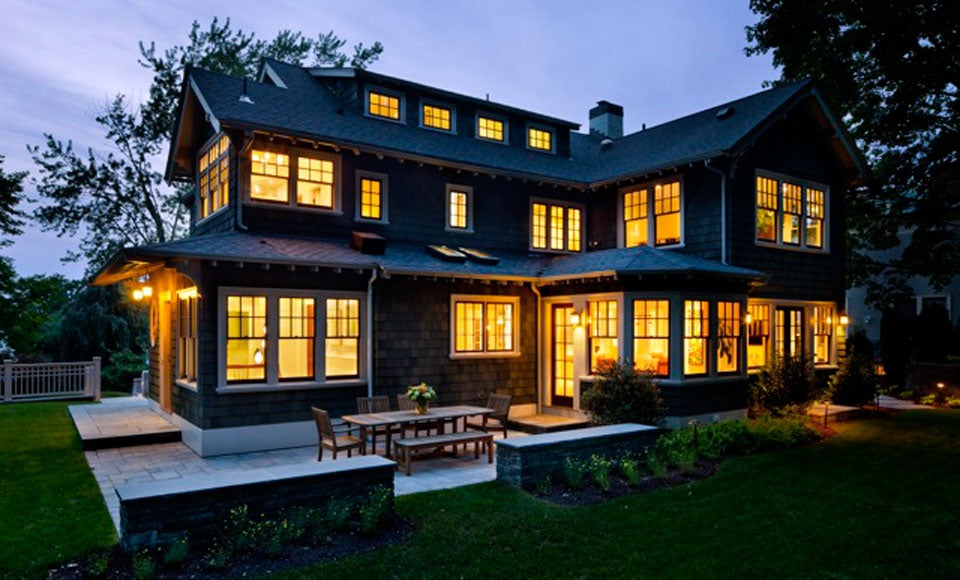
It is impressive to hear Steven Snider rattle off a list of all the things he can control from his iPhone: the ventilation in his garage, the music streaming to speakers in multiple rooms of his home, every light, the TV, the thermostat, even the Blu-Ray player in the guest house.
But Snider, who turned his century-old Newton home into a fully connected house during a major 2012 renovation, had no special knowledge before beginning the project.
“I’m not as tech savvy as it sounds,’’ Snider, who was profiled in Boston Globe Magazine in 2013, said. “This works just like any other iPhone app. You push a button and it brings you to the next menu, you select what you want to do and it brings you to the next menu, and you’re done.’’
Snider’s house runs the Control4 automated home system, which New England-based firm simpleHome installed and maintains. Both companies are championing a whole-house system, fully integrated with a homeowner’s smartphone or iPad, as a way to finally bring connected home technology into the mainstream.

Connected, or “smart,’’ homes have been a long time coming. Bill Gates’s mansion made news in 1997 for having a series of televisions that displayed artwork according to his guests’ preferences by communicating with a special pin each person wore.
The “Internet of things,’’ the network of physical objects injected with software and able to communicate with each other, has been adopted slowly by the general population.
In 2014, the Consumer Electronics Association found only 3 percent of homeowners had a smart thermostat, like the Nest. Of the people who didn’t own one, 61 percent said they never expected to.
The most familiar products bringing the Internet of things into our homes ask homeowners to take a DIY approach to installation.
“Ever installed a light fixture?’’ Nest’s website asks. “Then you shouldn’t have any trouble with Nest. In fact, 99% of the people who installed Nest themselves would do it again.’’
But to have the kind of complete control Snider has over his home with Control4 would require a dizzying array of DIY products and apps to control them.
“The trick of our business is that a lot of people think it’s do-it-yourself and it really isn’t at this point,’’ Eileen Komanecky, who cofounded simpleHome with her husband in 2004, said. “This kind of stuff takes experience and it’s a lot of integration and coordination with the different trades, like the HVAC guys, the electricians for lighting.’’
SimpleHome was purchased by Waltham-based Sounds Good Corporation in the fall of 2014.
Snider’s Newton home exemplifies Komanecky’s preferred method. SimpleHome worked with other contractors involved in the renovation to design and install the system of wires that is the foundation of a connected home.
“Even in rooms with no sensors, everything is wired, it’s just tucked behind the wall,’’ Snider said. That “backbone’’ can be easily built upon as Control4 or similar products develop new capabilities. “I wanted to build a house that was going to be functional for the next hundred years.’’
Despite all those wires, Snider can control everything – from lighting to heating to door locks – with a single Control4 app. If anything goes wrong, or if it’s time for a major software upgrade, his first call is to simpleHome/Sounds Good, which still oversees the system for an annual fee.
“I am hooked on the system now,’’ Snider said. “It’s very nice to have.’’

Comprehensive, professionally installed systems exist in an area with a lot of growth potential, according to Chris Ely, senior manager for industry analysis at the Consumer Electronics Association (CEA).
Ely said the biggest impediment to any new technology is making consumers aware that it exists and can be useful to them. Homebuilders who partner with companies like simpleHome can have a lot of influence over what technology a homeowner chooses to install.
“Many customers don’t come in the door with home automation in mind,’’ Ely said. “What builders are finding is they need to be more proactive in bringing up these technologies.’’
According to CEA data, 78 percent of builders already have the ability to install the type of wiring that undergirds a smart home system, and 93 percent of new homes built in 2014 had broadband internet, another key support for systems like Snider’s.
And the more people who spring for an automated home, the cheaper the technology is likely to become, Ely added.
“Like with anything, economies of scale help driver prices down,’’ Ely said.
“Back when we started it, was seen as something that only the super rich would get involved with,’’ Komanecky said about simpleHome. Prices for installation vary by size of house and scope of system, but Control4’s website gives $3,500 as a rough estimate for most homes.





To comment, please create a screen name in your profile
To comment, please verify your email address
Conversation
This discussion has ended. Please join elsewhere on Boston.com