
How Neighborhood Activists Are Fighting to Shape Alewife
Over the past decade or so, Alewife development has generated thousands of new apartment units in West Cambridge, but residents already there say they’ve been left out of the process.
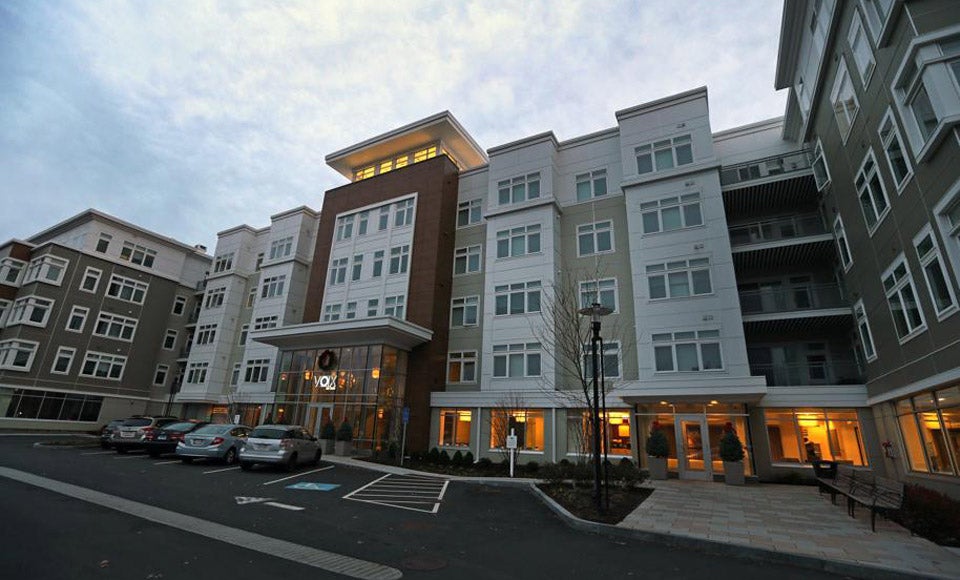
Over the past decade or so, Alewife development has generated thousands of new apartment units in West Cambridge. Neighborhood activist groups who say the city planning process is broken have criticized the housing boom as lacking balance—they worry that there has been little consideration of the construction’s broader impact on population, the environment, traffic, and the general quality of life for Cambridge residents.
Jan Devereux is a West Cambridge resident who founded the Fresh Pond Residents Alliance this year in response to the Alewife development, which she described as “zooming along in piecemeal fashion.’’
Over 1,000 luxury apartments were built near the Alewife T-stop this year, and 1,500 more units will pop up in 2015, according to a Boston Globe article.
“Before we started there wasn’t a resident group that was focused on planning in the West Cambridge and Alewife area,’’ Devereux said. Now, she oversees a Fresh Ponders’ listserv of over 350 people, some from other neighborhoods who are worried about how the Alewife development will impact the entire city, even surrounding towns.
Though activist groups like FPRA and the Cambridge Residents Alliance have influenced the city to start working on a neighborhood ‘master plan’ that will look at the new developments’ impact on infrastructure, neighborhood character, and other community values, this type of plan could take up to three years to produce, Devereux said. That leaves a lot of time for development in the meantime, so whether their efforts will change the situation on the ground remains to be seen.
Devereux and others would like to see the city’s planning agencies force developers to create a balanced neighborhood with open space, community centers, and mixed-use infrastructure.
“Our initial goal was to raise awareness and educate ourselves,’’ Devereux said of FPRA. “As we became more conversant, we opened up a big can of worms, and realized it would take a lot of resident involvement to get a seat at the table to discuss the big picture planning issues no one was talking about.’’
Devereux and other Fresh Ponders feel that developers have taken advantage of one of the largest undeveloped areas in the city, and have been plunking down housing developments without much input from local residents.
There has also been criticism that the Community Development Department, Cambridge’s planning agency, has not been doing its job.
Robert Simha, the former Director of Planning for the Massachusetts Institute of Technology and FPRA member, said the CDD has been acting as a responsive agency rather than a creative planning agency: “They wait for prospective developers to come forward with plans for the area, and then they respond to it.’’ Simha said this type of philosophy leads to “incremental,’’ rather than “comprehensive’’ planning.
He’s worried that might be the fate of The Quadrangle, a 130-acre parcel of land sandwiched between the Cambridge Highlands and the Fresh Pond Shopping Center. It used to be home to traditional industries, but now, its vacant land is divvied up between developers.
“The Quad should be developed in a way that’s balanced,’’ Simha said, particularly because of just how many people will flood the new developments. Simha estimates that more than 5,000 people will move there, making the Quad – population-wise – roughly the size of other neighborhoods in Cambridge. (There are 13 total.)
“If you add 5,000 people to an area and don’t provide a playground or recreational facilities, those people will simply move to areas that already have those things,’’ Simha said.
MIT Urban Planning professor and FPRA member Langley Keyes agreed with Simha, saying Cambridge has never pushed developers to collaborate with residents: “I hope everything changes,’’ Keyes said. “Developers want to maximize their return with a Special Permit. In exchange, the public should both push back on that assumption and get something in return. The planning board has not employed this principle of reciprocity.’’
Iram Farooq is the Chief of Policy and Planning for Cambridge. She said the notion that the planning board rubberstamps development projects is “not correct.’’
“The planning board for the city that approves large development projects is a really thoughtful group of people with a lot of integrity,’’ Farooq said. She added that early community engagement could be improved, but that’s why Cambridge has implemented a series of focus groups to figure out a more inclusionary planning process. There will be 50 community conversations that will ask residents what they value about their city.
Transportation and traffic issues are some of the concerns that might be raised.
Residents point to the horrible daily traffic jam on the Alewife Brook Parkway and the lack of a connecting bridge or underpass between the Quad and the Triangle as just some of the transportation problems Alewife faces. More people will just compound the problem.
Peggy Barnes Lenart, a FPRA member and West Cambridge resident, said the noise pollution from increased traffic coming down residential streets has prevented her from opening her home’s windows on summer evenings. “That affects my quality of life,’’ she said.
But Susanne Rasmussen, Cambridge’s Director of Environmental and Transportation Planning, said despite population growth over the past 15 years, the city has not exceeded or even met traffic levels anticipated in their last citywide plan.
“The amount of traffic on the street in Alewife has been pretty flat over the past 15 years,’’ Rasmussen said. “Because there’s a trend generally that people are driving less… I know it seems illogical that that could be the case but there’s been a general change in people’s traffic habits.’’
Car traffic might not be getting worse, but residents don’t see it getting any better either.
Simha says 2001 was basically the last time the city made a comprehensive plan, citing a study done by the Growth Management Advisory Committee. The report addressed concerns of the community about “future density and traffic growth, the need for more housing, including affordable housing units, and opportunities for public review of large projects.’’ This led to some downzoning, Simha said, but also allowed for housing in all city districts, which led to the current housing boom: “And here we are 14 years later and going in essentially the opposite direction, but without a comprehensive view of all the things that need to be considered,’’ said Simha.
In 2005, there was a planning study for Concord-Alewife, but it seems to have been ignored by the city and developers. In Alewife, the amount of development anticipated between 2006 and 2024 was surpassed this past year.
Farooq said despite the discrepancy between the size of development and the 2005 plan, the city has used many aspects of it as a framework for a mixed-use area with “improved walkability and better pedestrian and bike amenities.’’ She also cited the creation of a wetland in the Alewife Reservation as managing storm water and protecting the future neighborhood.
“There are definitely concerns we’ve heard and ones we share about the size of development,’’ Farooq said. “That’s something we will discuss in the next round of planning we anticipate will start later this year. We’re going to think about how we can better influence urban design and think about shared responsibility of the amenities.’’
Farooq said she expects the ‘master plan,’ or citywide plan, to take at least two years. It will be done by outside consultants working with city planners to analyze sustainable economic development, transportation, traffic issues, the environment, energy, and social equity. Cambridge is simultaneously working on a Climate Change Vulnerability Assessment, which Farooq said city planners would integrate with the citywide plan.
Still, Cambridge residents said they’d have to wait and see what aspects of the plans are implemented, and when. They are placing a lot of faith in the neighborhood activist groups.
Simha and others critical of the CDD and planning board commended FPRA for their “studious’’ and “careful’’ approach to reforming their neighborhood. In fact, Simha said, “citizens are now doing the planning and analytical work the planning board should have done.’’
“West Cambridge is the last major development sector of the city, and if it is done badly, the rest of the city will be hurt,’’ Simha said. “It could be a mixed-use community area modeled for many parts of the country. Whether it will be or not, we will have to see, but the possibility is there. But the possibility it will go the way other things have gone is also there and that’s a problem.’’
Editor’s note: A previous version of this story did not mention that Robert Simha and Langley Keyes are members of The Fresh Pond Residents Alliance.




To comment, please create a screen name in your profile
To comment, please verify your email address
Conversation
This discussion has ended. Please join elsewhere on Boston.com