
Sign up for the Today newsletter
Get everything you need to know to start your day, delivered right to your inbox every morning.
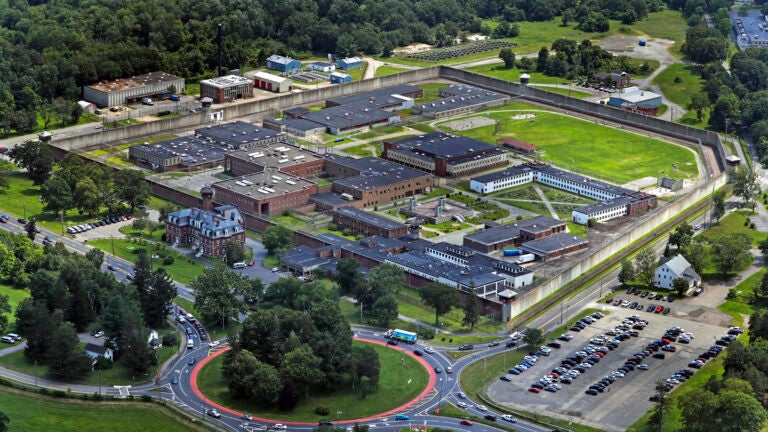
The Healey administration announced a new plan Monday to make more than 450 acres of state-owned land available for housing development.
The land could support as many as 3,500 new housing units, officials said. Vacant court buildings, hospitals, college facilities, and even the former site of the state’s oldest prison could soon be converted into housing. The administration is planning to make 17 new sites available to developers over the next 12 months, issuing 10 requests for proposals and auctioning off another seven sites in September.
The announcement comes as Massachusetts residents continue to feel the burden of exorbitant housing costs and as Gov. Maura Healey gears up for what promises to be a bruising reelection campaign. New polling results from the University of New Hampshire show that 21% of all Massachusetts residents believe housing is the most important problem facing the state, almost double the percentage garnered by the next-highest issue.
The same poll found that 49% of residents approve of Healey’s performance as governor, down from 54% earlier this year. Two Republicans with ties to former Gov. Charlie Baker, who was immensely popular, have announced gubernatorial campaigns. Healey has said she will seek reelection, but has yet to officially launch her campaign.
Healey frequently asserts that housing is the most important issue facing Massachusetts, and says her administration has taken considerable steps to build more units and lower costs. One such step is the State Land for Homes initiative.
“These 450 acres will be turned into thousands of new homes that families, seniors and workers can actually afford,” Healey said in a statement about the new properties being added to the initiative.
The properties being made available to developers are scattered throughout much of eastern and central Massachusetts. An interactive map showing the individual properties can be found online.
Officials said that many of the projects included in the new plan are already being redeveloped. This includes the former Boston State Hospital campus in Mattapan, the former Veterans Home in Chelsea, a former Department of Unemployment Assistance building in Brockton, and a 23-acre parcel at Salem State University.
Vacant court buildings in Lowell and Fitchburg, parcels at the former Westboro State Hospital and the former J.T. Berry Rehabilitation Center, properties at Middlesex Community College and Bridgewater State University, and the former site of MCI-Concord are included.
The Concord prison closed last year after more than 150 years in operation, with officials citing a low statewide prison population, declining recidivism rates, and maintenance costs as reasons for the closure. Concord leaders are currently leading a public engagement process to finalize plans for the prison’s redevelopment.
State officials worked throughout the past year to review state-owned properties and identify which ones could be most viable for new housing units. They also assessed environmental factors and excluded protected land from consideration.
The potential for public land to ease the state’s housing crisis is notable. The 2024 Greater Boston Housing Report Card, prepared by the Boston Foundation, included a deep dive into the idea of using public land for housing. If only 5% of vacant, non-conservation land owned by the state or municipal governments in Greater Boston could be redeveloped into housing, the region would see more than 85,000 new units, according to the report. But bureaucratic red tape and the potential for heightened public opposition remain major obstacles in many instances.
Get everything you need to know to start your day, delivered right to your inbox every morning.





To comment, please create a screen name in your profile
To comment, please verify your email address
Conversation
This discussion has ended. Please join elsewhere on Boston.com