
Ask the Remodeler: A messy job sealing fiber cement siding
Plus, figuring out how much to spend on a kitchen remodel.
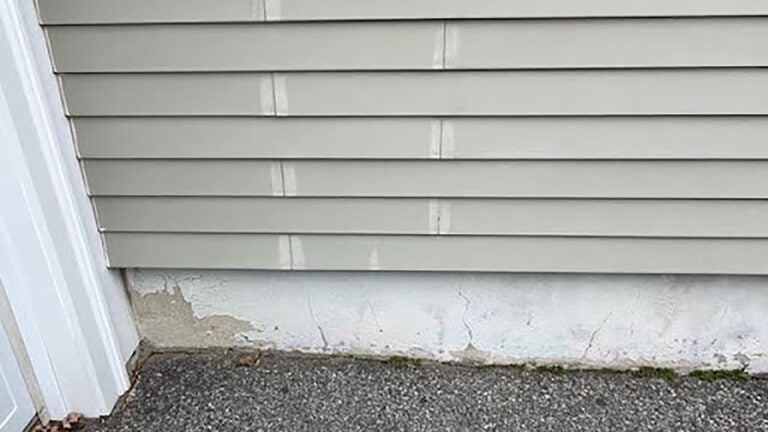
Q. I read your Globe article (“Ask the Remodeler: What side are you on?”) and hope you can give me some guidance.
We had James Hardie siding installed in 2012. The person hired to seal the seams and do finish painting was a painter, and admitted after he sealed the seams he had not used the product before. Now, with weathering and fading over time, you can see where he smeared the filler. How can that be cleaned up? We know not to power wash. We have read that maybe a solution of vinegar and water or mild soap may work.
Carole
A. Sorry to say that there probably isn’t an easy solution to cleaning an already dried product off the fiber cement siding. You are right to definitely not use a power washer, but also stay away from harsh chemicals.
I did check with our supplier, and he confirmed that really only warm soap and water or a mildewcide should be used. In your case, this is not mold or organic in nature, so a mildewcide is not relevant. He didn’t rule out a diluted vinegar/water combination, but cautioned to try it in an inconspicuous corner just in case. It could help, but based on your pictures, you will most likely wind up having to paint your house in order to make all those repairs go away. Prefinished siding takes an acrylic latex paint very well.
I wish I had better news for you, but one of the reasons I am answering this particular question is to illustrate proper installation with this and other products. Fiber cement siding should always have the end cuts sealed before installation, but they should never be butted into each other and then caulked and sealed. They need to expand and contract with the seasons. They should be left with a narrow gap between pieces and in areas where they butt into trim.
There should be a small piece of slip flashing behind the siding joint to prevent any leaks, but allow the pieces to move. It looks like yours, unfortunately, may have been butted tight or had a caulking or sealer applied in between the joints, or both.
The James Hardie website has a wealth of information on the dos and don’ts of installing this and other products. This could be a cautionary tale for readers who are considering re-siding their homes.
Q. I’m wondering how to estimate the cost of a kitchen remodel. Google searching suggests that 5 percent to 15 percent of my home’s current value is a good way to determine what to budget to get a good return on investment.
Are the Trump tariffs, building supply chain shortages, and housing market affecting that 5-15 “rule” for what to spend on a kitchen remodel? Is a budget of 20 percent of my home’s current value foolish if I hope to stay in the house for another 20 years?
The house is a 1950s 3-bedroom, 2-bath Cape, on a quarter-acre lot, just outside I-495 on the Rhode Island border.
Britt
A. That is an interesting question and does tie into concerns from our clients and from Globe readers regarding tariffs and their effect on prices and product availability. I wrote about this a little while ago, but given the unpredictable nature of our trade policies, I thought it might be worth revisiting.
I’ll address the cost of a kitchen remodel first. Kitchens will run the gamut from full gut jobs to simple cabinet/countertop and appliance replacement. While there is no hard and fast way to price a kitchen or bath remodel based on a home’s value, using your 20 percent guideline against the average cost of a house in Massachusetts sounds like a calculation that may have been derived from a financial adviser rather than a professional builder. In this case, it yields a fairly accurate result.
The average cost of a single-family home in Massachusetts is around $650,000, and using the 20 percent figure, you would expect to pay around $130,000. That is actually not a bad number for a professionally run full kitchen remodel, especially if you are going to stay there for 20 years.
That will sound like a lot of money, and it is. A typical code-compliant kitchen remodel will involve adding far more electrical circuits than they typically have. That often means a panel or service upgrade. More often than not, all the plumbing will be replaced, and that needs to be brought up to today’s codes.
There will be HVAC requirements, insulation upgrades, windows moved or added, and more, all before the cabinets even arrive. Half the cost of a kitchen renovation is work you will never see again once the cabinets and countertops are installed.
Close to Boston, it is not unusual to have a home valued at $2 million. Using the same 20 percent formula, that would bring the cost of a kitchen to $400,000. We have done kitchen remodels for that much and more, but those are rare.
Conversely, a home worth less than the average would pay a higher percentage for a professionally run, fully code-compliant kitchen remodel. So the bottom line is, do not get too hung up on formulas that wrap around home value and focus more on the quality of the kitchen design, materials used, and level of craftsmanship to complete the project.
Regarding tariffs, to date it would appear they have not had a major impact on prices or availability of products. Most cost increases this year have been created by seasonal and supply/demand factors in addition to rising labor costs. The on-again, off-again, loophole-riddled policies seem to have had most suppliers and distributors holding the line on pricing to not lose market share. It is hard to imagine that will last much longer as their bottom line shrinks with no end in sight.
So, I will give the same advice I gave not too long ago. Do not rush into a poorly planned remodel of any kind just to beat the tariffs that may not materialize until next spring. A poorly planned remodel will cost you far more money in the long run.
Mark Philben is the project development manager at Charlie Allen Renovations in Cambridge. Send your questions to [email protected].





To comment, please create a screen name in your profile
To comment, please verify your email address
Conversation
This discussion has ended. Please join elsewhere on Boston.com