
Address Newsletter
Our weekly digest on buying, selling, and design, with expert advice and insider neighborhood knowledge.
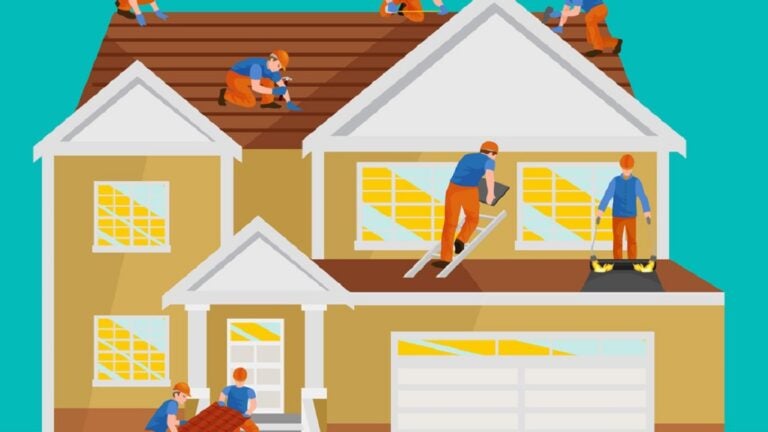
Although this week we’re exploring new home construction, I wanted to offer suggestions for those of you whose house needs have changed but who still want to stay in your current home and community.
There are a multitude of reasons why people want to stay in their existing homes even as they find that they really need the modern amenities that come with the newly constructed. They may have children in the local school system and don’t want to disrupt their education. They may live near aging parents and need to stay nearby. It could be work requirements or simply the love of their particular community that keeps people rooted in a particular home.
For a family that wants to stay in the community and do a whole house remodel (as opposed to a teardown and new construction), there are several routes to go and even some advantages.
One route that past clients have taken is a whole house interior remodel, where we essentially keep the exterior of the house intact, assuming the siding and trim is in good repair. From there we gut the interior down to the studs and start with a clean slate. With this level of remodeling, we can rearrange and/or eliminate interior walls and completely rework the layout to fit the owners’ lifestyle needs. Newer and more modern utilities can be run where we want them. New high R-value insulation can be installed along with new windows and doors that will help bring the house up to current energy standards. Accommodations can be made for guest suites in a basement or any other underutilized part of the house.
Reworking a home like this has several advantages. A teardown and rebuild on an existing lot often entails variances from the local zoning board. Depending on the city or town, this can be a long, drawn-out process — not to mention expensive. When you stay within the footprint of your home, these typically get permitted with little fanfare assuming your plans and permit application are in order.
Remodels of this size and scope would require the home to be upgraded to new energy standards, and some of those costs have rebates and tax incentives associated with them that help.
When the costs for such an undertaking are a bit too much, we have worked with clients where we planned and designed the entire space as if we were going to do a whole house remodel, but only bite off what is most pressing and also fits their budget. In this way, we can rough-in utilities for future phases of the work and not have to later open up parts of the house that have already been finished. More often than not, this is the route our clients take.
A slight variation to the whole house interior remodel is what is known as a deep energy retrofit. These often come with rebates and tax incentives. The biggest difference here is that the exterior of the house is also stripped down to the original frame. From there, the exterior would be sealed and typically insulated on the outside with rigid foam panels. This would include the walls and roof surfaces. All areas of the exterior would be sealed with foam and tape to eliminate drafts.
New construction high-efficiency windows would be installed, often with triple-pane glass. New energy-efficient doors finish off the air sealing of the exterior. A remodel of this type will require air exchange equipment to be installed to keep fresh air circulating inside the house. This exchanges inside air with outside air to keep a consistent indoor air quality. These homes are that tight.
Almost all of these retrofits have solar panels installed that — combined with all electric appliances and fixtures — can help bring the house close to or at net zero. This is when a building is carbon neutral, not adding harm to the atmosphere. An owner would need to contact and work with their local utility, which often provides the guidance and parameters that need to be met.
Note: Federal tax incentives are being phased out in various stages. Consult with your local utility and qualified professional to see what incentives are still in place.
Mark Philben is the project development manager at Charlie Allen Renovations in Cambridge. Send your questions to [email protected]. Questions are subject to editing.
Our weekly digest on buying, selling, and design, with expert advice and insider neighborhood knowledge.





To comment, please create a screen name in your profile
To comment, please verify your email address
Conversation
This discussion has ended. Please join elsewhere on Boston.com