
How to make a cedar closet repel moths again
Ask the Remodeler also offers the pros and cons of porcelain countertops for kitchens and baths.
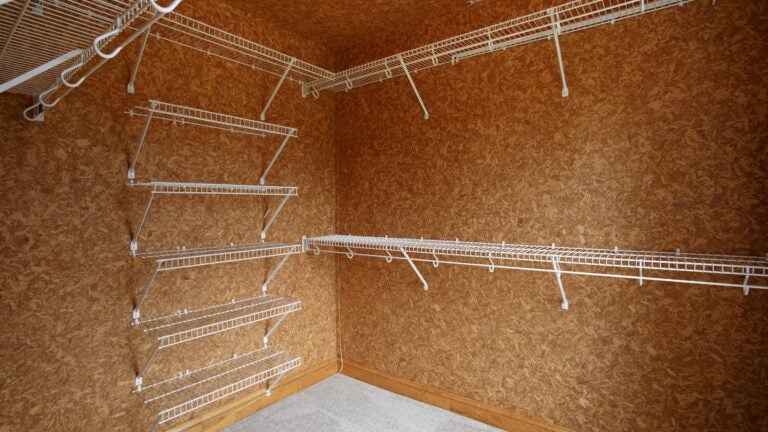
Q. I have a house that was built in 1960 and comes with a cedar closet. I put a lot of my winter apparel in there, including cashmere sweaters. To my disappointment, when I opened it, it was filled with moths! A couple of sweaters I left out in my regular closet and drawers were fine. What’s going on here? Is there anything I can do to make the cedar closet work again? Maybe the door, which isn’t cedar, was not completely sealed?
C. TUCKER
A. If nothing has been done to the cedar closet since the 1960s, then the oils in the wood have probably lost their effectiveness. Even if you have that cedar scent in the closet, if the oils have dried out and the wood’s open pores are clogged with dust, then the cedar will not work nearly as well.
Fortunately, there is something you can do.
Empty the closet completely, then use a fine-grit sandpaper on the wood to open up the grain. Be sure to wear a safety mask and goggles; cedar dust can be harmful to breathe in and can cause eye and throat irritation. Vacuum and wipe down the sanded surfaces, and then apply a cedar oil. Opinions vary on how often to do this, but every seven to 10 years would be sufficient.
Q. I love your Globe articles and the Address newsletter. Thanks so much for all you do to keep us informed. I saw an HGTV show the other night that showed beautiful porcelain countertops, which are much less expensive than quartz. The Address newsletter has an article titled “Your Help Desk guide to picking the right kitchen counters.” Unfortunately, it was written in 2019, so it has no information about porcelain countertops. What information do you have on them? We are thinking about replacing our kitchen and bath countertops, but the price makes a big difference for us in which materials we would choose.
JANET
A. We haven’t had much experience with it beyond prefabricated porcelain countertops, which are very cost effective. We have used it for shower panels, backsplashes, and flooring. Doing a kitchen usually means the countertops need to be templated and fabricated. Here, the cost difference between porcelain and quartz is not nearly as great as one might think. That is because a large part of the countertop cost goes into the template, fabrication, transportation, and installation. Those are all fixed costs and will be the same for either. The square-foot cost of the material becomes less of a factor when considering all the fixed costs that go into a custom countertop.
That said, one pro for porcelain is that it is more environmentally friendly than quartz: There are fewer resins and epoxies used in its fabrication. It also holds up better to heat if someone inadvertently puts a hot pan on the counter.
One con is that it chips more easily than quartz and stone. It can be repaired, but who wants to worry about that in a kitchen? A bathroom countertop takes less of a beating and may be a better fit for porcelain.
Mark Philben is the project development manager at Charlie Allen Renovations in Cambridge. Send your questions to [email protected]. Questions are subject to editing.





To comment, please create a screen name in your profile
To comment, please verify your email address
Conversation
This discussion has ended. Please join elsewhere on Boston.com