
Address newsletter
Get the latest news on buying, selling, renting, home design, and more.
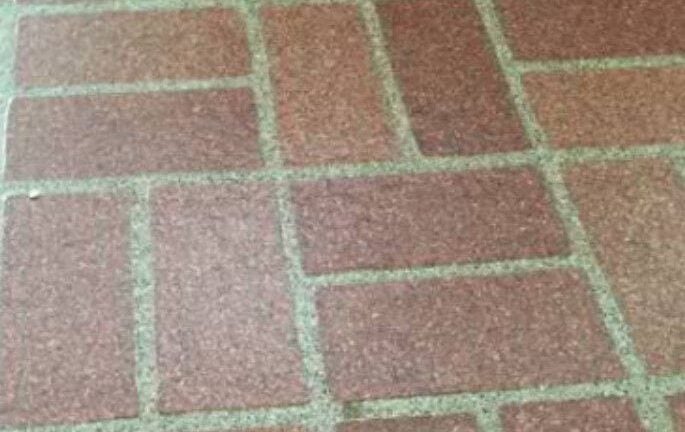
Q. I live in an old 1800s home and had the floors tested for asbestos. The results came back 8 percent chrysotile (white asbestos) in the 9-by-9-inch tiles (two rooms) and 50 percent chrysotile (two rooms) in the vinyl sheet flooring. We have heard that if the floor is not damaged, we can leave it alone or cover it up. Are there long-term concerns with leaving it in place? Is the surface of the sheet vinyl flooring at issue, or is it only the adhesive? I was surprised to learn that sheet flooring is an asbestos concern; I thought it was found only in tile.
J.D.
A. There are a lot of opinions on what to do when any asbestos is found in your home. To a certain extent, how it is dealt with depends on the owner: Some people don’t want it in their home regardless of its condition, while others are comfortable with it as long as it is not presenting issues. You have heard right that if the floors are not damaged, it should not pose a threat. Asbestos fibers are released into the air when the material (be it insulation or flooring) is damaged or removed. In other words, you can do more harm than good trying to rid your house of undamaged asbestos. The Environmental Protection Agency has accepted as good practice to encapsulate or cover undamaged asbestos, and we have done both in the past. Asbestos pipe insulation can have a sealer applied over it, and a floor can be covered with any number of materials. You asked about simply leaving it as is, which is possible but not recommended. The flooring does sound old enough that even if it appears undamaged, it is or will soon be failing. It sounds like a good candidate for a layover.
Get the latest news on buying, selling, renting, home design, and more.
Q. My daughter purchased a 100-year-old home in Rhode Island. It has clapboard siding, much of which I suspect is original. The house needs paint, and the existing finish is blistering and peeling in places, which I suspect is caused by moisture migrating through the walls. She is slowly scraping it off and plans to spot prime and paint. My concern is that without addressing the moisture issue, the new paint job will fail quickly. I want to suggest that she coat the interior first with a vapor barrier paint. It seems like the most cost-effective option short of gutting the interior and installing a proper vapor barrier. What should she do?
C.R., Billerica
A. It does sound as if there is moisture moving through the walls. That is a very common source of exterior paint failure, especially if you see bubbling or blistering. It is possible that a moisture barrier primer and a top coat could mitigate some of the problems; however, it is more common that uninsulated or poorly insulated wall cavities or even a roof leak is causing this type of exterior paint failure. A roofing contractor can spot leaks easily. With poorly insulated wall cavities, warm moist air will invariably get in and then condense on the sheathing, causing problems down the road. The only way to tell whether you have insulation issues would be to have a home-energy audit using a blower door test and an infrared camera. Many utility companies will offer this for free. We have always found that a smaller, private company will produce a much more comprehensive audit, as well as sound recommendations. They are affordable and will give you a wealth of information about what is going on behind the walls of your daughter’s house.
I am going to guess that you are dealing with insulation issues. One way we have tackled that when also dealing with an exterior paint job is to remove several courses of the clapboard siding and have the insulation blown in from the exterior. Unless they have really deteriorated, the clapboards should come off pretty easily and then can be reinstalled, prepped, and painted.
Mark Philben is the project development manager at Charlie Allen Renovations in Cambridge. Send your questions to [email protected]. Questions are subject to editing.








To comment, please create a screen name in your profile
To comment, please verify your email address
Conversation
This discussion has ended. Please join elsewhere on Boston.com