

Address newsletter
Get the latest news on buying, selling, renting, home design, and more.
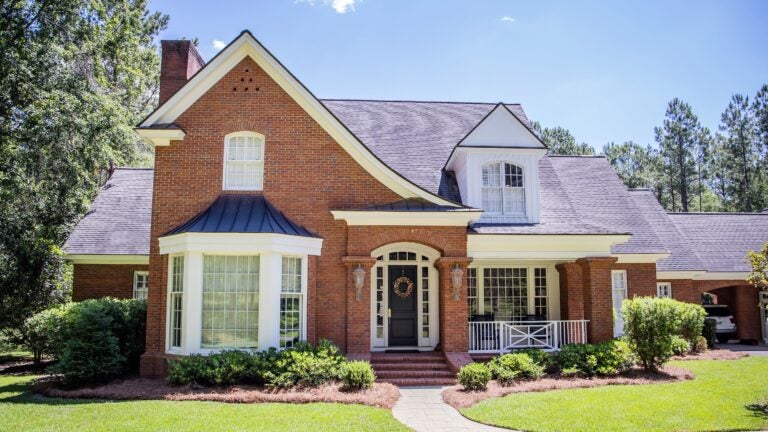
Q. Hoping you can help me with this question related to insulating a brick home. I have a brick house built in 1930. There is no insulation in the walls. I am going to replace the two sets of large windows in the living room that run along the front and back of the house and the glass door to our patio. The windows and doors take up at least 50 percent of the wall area. I am weighing whether to have spray-foam insulation added when the walls are open to put in the windows. It’s quite cold in this room in the winter. I have run into conflicting information about insulating a brick house, however. One insulation company said not to insulate brick houses because the brick needs to breathe. They said if you insulate, the mortar between the bricks comes out. I’ve also read online that it’s OK to insulate a brick home. Which is correct?
E.N., Newton
A. A lot of ink has been spilled on brick homes and insulation, E.N. I, too, have read articles that say you can insulate walls against the brick with closed-cell insulation. I definitely would not advise that, though. We used to run a chimney division within our company and have seen a lot of bad work being done on both sides of brick walls and chimneys. Your insulation company is spot on; the bricks and the mortar do have to breathe or the mortar will fail over time and the bricks will spall, losing their outer veneer. Moisture needs to move in and out of the brick wall assembly freely, and insulation sprayed up against the back side will retard that movement. A better solution that we have employed to maximize R value and preserve the brick is to use rigid foam insulating boards in the wall bays, leaving a space of roughly a ¾ inch between the rigid boards and the back side of the brick. Then you can insulate with Icynene closed-cell spray foam insulation in the bays from the inside to max out the R-value (the higher the R value the better the insulating properties) while still allowing the bricks to breathe. It’s a little more time-consuming but worth the effort.

Q. Mark, I cut out your column about mossy roofs (”Ask the Remodeler: Like sullen teens, these trees are throwing shade, and now there’s moss on the roof,” Aug. 4). The condo board president and I are meeting with a contractor to discuss remedies for our 50-unit complex. I am a bit confused by your recommendation to add a zinc or copper strip at the top of the roofline against the house. On my unit, the top of the roof is a V and is not against the house, so I wonder if you could be any more specific about the placement of this strip? Do you mean under the asphalt shingles? If that is the case, then that would be something we could consider when we redo the roofs. Thank you for any clarification you can give.
S.B., Bedford
A. S.B., that is a good question. Rooflines are all different. In your case, it sounds as if you are describing a pretty standard horizontal ridgeline on the top of your roof. This will have either a simple ridge cap or a cap and a ridge vent. In any case, the roofer would install the zinc or copper in such a way as to extend approximately 2 inches or so below the ridge cap and onto the roof shingles. You need at least that much exposed to be effective. Rain needs to wash down on the exposed strip and then down the roof. The roofing contractor should be able to install it this way and still ensure a good seal. For those readers with a roofline that may terminate up against a wall for an upper floor (such as a screen porch one), the same procedure would be applied. Any roof termination like this would also have flashing at the top where it hits the house, and this could have the same exposed 2-inch strip of zinc or copper to stem moss and lichen growth.
Mark Philben is the project development manager at Charlie Allen Renovations in Cambridge. Send your questions to [email protected]. Questions are subject to editing.
Get the latest news on buying, selling, renting, home design, and more.





To comment, please create a screen name in your profile
To comment, please verify your email address
Conversation
This discussion has ended. Please join elsewhere on Boston.com