
Need more storage and style? Try a banquette
Extra storage and extra seating are two elements that often top the wish lists for home buyers and homeowners.
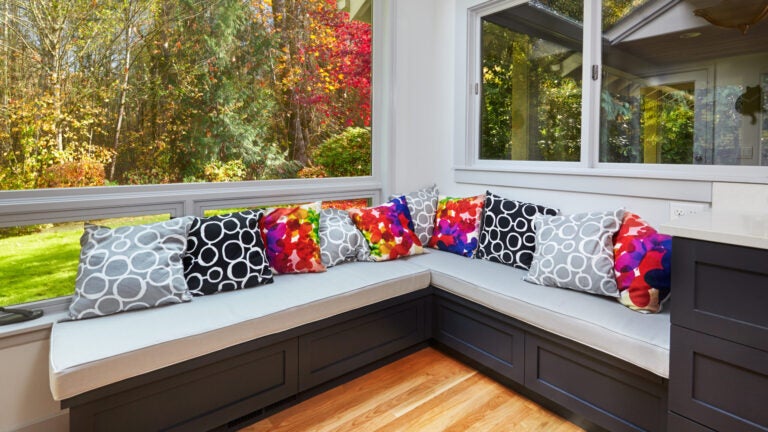
Etra storage and extaseating are two elements that often top the wish-lists for home buyers and homeowners. A banquette (or built-in bench) offers a solution to both issues, but not every home has the right space or location for one.
For advice about how and where to install banquettes, we turned to Melissa Sanabria, an interior designer and founder of Washington design firm Sanabria & Co.; Kelley Proxmire, owner of Kelley Proxmire Inc., an interior design firm in Bethesda, Md.; and Alison Giese, owner of Alison Giese Interiors in San Antonio. All three designers responded by e-mail, and their responses were edited for clarity and length.
Q. Where do you recommend adding banquettes?
Sanabria: We like to add them in rooms that are tight on space and where you might benefit from some extra storage or where you just want to increase the cozy factor. They could also be added below windows that are begging for a window seat.
Proxmire: While many people think banquettes are only for the kitchen or breakfast room, they can be great additions to other spaces, too. A banquette bench can be used to create a cozy reading or napping nook when surrounded by built-ins in a library or dining room. They’re even great for bedrooms. We’ve even been seeing an increase in banquettes in formal living rooms, essentially creating a separate, more intimate conversation area off in a corner of the room.
Giese: The most common place to add banquettes is in kitchens. Corners lend themselves to creating a cozy nook for cups of tea or corralling children, but banquettes can be used in unexpected places as well. We designed a custom banquette in the corner of a client’s sunroom that worked well to offer an alternative to kitchen dining.
Q.What are the pros and cons of installing banquettes?
Proxmire: (Pros): Banquettes are amazing, hardworking space-savers because they’re designed to fit into a corner or a small nook. And, when combined with a bench, you can really minimize the footprint of a dining area. For instance, you can place a banquette seat along a wall with a table in front of it, then tuck a bench under the opposite side of the table.
(Cons): Because they tend to be built in, there’s less flexibility and less mobility. You can grab a chair and reposition it easily, whereas a banquette seat, less so. Plus, getting in and out of bench-style seating involves a bit more effort — especially if you’re in the middle seat.
Sanabria: They are not inexpensive (con), but if you opt for a custom solution, then you can really maximize the space and get the added storage you seek (pro). We also love that they provide an opportunity for a fun custom cushion. Note: Remember to deduct the cushion height when determining the overall height of your banquette seat.
Q.How much do they cost?
Giese: The cost depends on the level of customization. I’ve seen people DIY Ikea “hacks’’ for less than $1,000, while full custom options would run significantly more than that depending on the size, materials, details, and customization.
Sanabria: This will range depending on the size, level of customization, and the storage solution. Keep in mind that drawers can really add to the cost, so opting for a seat that lifts via a piano hinge can deliver savings while offering storage.
Q.Who should you hire to install banquettes?
Sanabria: You can hire a contractor or handyperson. We like to use a carpenter unless it’s part of a larger project where a general contractor is involved. Then we may have the banquette made by a cabinetmaker or even by the lead carpenter on the general contractor’s team; it’s usually not built by a handyperson.
Proxmire: The benefit of going the custom route is that you can get the size perfect, so the result looks like it was always part of your home. But off-the-shelf varieties have really expanded their options in terms of offering more modular pieces that can fit together in many different configurations. Some companies will even work with a customer’s own fabric.
Q. What fabrics do you recommend for banquettes?
Proxmire: If you’re using one in a kitchen or dining room where you’ll be eating, you’ll want a performance fabric that can handle crumbs and spills. Crypton, indoor/outdoor fabrics like Perennials or Sunbrella, or any stain-resistant upholstery-weight fabric will be ideal. Another great trick is to “vinyl-ize’’ your fabric. The technology has come a long way, and it really does provide a wipeable, protective barrier to your fabric.
Giese: The best fabrics for cushions are performance textiles that repel stains and clean up easily. If the banquette is in a sunny spot, I’d also look for fabric that’s fade-resistant.
Subscribe to our free real estate newsletter at pages.email.bostonglobe.com/AddressSignUp.





To comment, please create a screen name in your profile
To comment, please verify your email address
Conversation
This discussion has ended. Please join elsewhere on Boston.com