
Globe Help Desk: The lessons we learned while shopping for a new roof
A windstorm two years ago made it painfully clear: Our house needed an expensive new hat.
A collaboration with The Boston Globe’s Help Desk:
I’ll never forget the windstorm that hit New England two years ago, knocking out power to 1.5 million homes and businesses as it caused trees to crash down on power lines, homes, and cars. There were sustained winds of up to 50 miles per hour — some as strong as 82 miles per hour on the Cape — and a 130-miles-per-hour monster gust reported at the top of Mount Washington.
It wasn’t quite that extreme at our 160-year-old farmhouse in Southern New Hampshire, but at times it sure felt like it was. We lost power for days, and trick-or-treating got moved to the following weekend so goblins and unicorns weren’t roaming the streets in the dark. I remember a friend from the next town over saying she had been oblivious to the destruction, sleeping like a baby right through the storm. I envied her home’s insulation job, the uninterrupted sleep she got, and most of all her roof, which held up perfectly under intense conditions.
Ours did not fare so well. Neither did I, for that matter.
I didn’t get any sleep that night. I lay in bed listening to the slapping of large patches of shingles becoming detached from the house as the wind howled. It was loud. BAM! BAM! BAM! The electricity went out. My husband begged me to try to sleep, but I just couldn’t. I kept getting up to check the attic for leaks. I’m glad I did, because we had one — right by the cardboard boxes of old family photographs. We moved everything away from the leak, and we caught the drips in plastic storage tubs. I brought our sleeping children into our bed, thinking that if a tree were to come down on us, at least we’d be smooshed together for all eternity. Those were long, dark hours.
By morning, our yard had been transformed into a graveyard for shingles. I spent an hour picking them up, and then I called around for help. A local roofer came quickly and patched us up using a pack of shingles the previous owners had left behind. Our 17-year-old, dull green roof now had ridiculous-looking bright green spots, as if the kids had pieced it together in Minecraft. And we had a mandate: A new roof had to be at the top of our to-do list within the year, the roofer said. The one we’d inherited when we’d bought the house a dozen years before simply wasn’t made to last.
(Read about the pros and cons of just adding on a second layer of shingles.)
So where to get started? Here are some things we learned while shopping for our new roof.
Get at least three estimates
As with most home improvement projects, experts recommend that homeowners get at least three estimates before making a decision, according to Angie’s List. Ask friends and neighbors, and if your town has a Facebook page, consider posing the question to your community: Who’s gotten a new roof lately, and would you recommend the company you used? This was extremely helpful to us. Our town has a robust community site, and people love to let their neighbors know when they made a really smart hire — or a terrible one. I was able to cross a few companies off the list just because they were universally disliked. I also added a few smaller companies I might otherwise have overlooked.
Before you sign on any dotted line, though, make sure your roofer is insured and licensed. Ask them to show you proof of verifiable worker’s compensation and liability insurance. In Massachusetts, you can check whether your contractor meets licensing requirements at the following websites: Mass.gov/check-if-your-contractor-is-a-registered-home-improvement-contractor; Mass.gov/construction-supervisor-licensing; Mass.gov/how-to/check-an-office-of-public-safety-and-inspections-opsi-license. (New Hampshire does not require licenses for roofers.)
What kind of roof do you want, and how long do you want it to last?
Our roof is large and complicated, so we knew replacing it was not going to be cheap or easy. But we needed to keep an eye on costs. While we like the look of the metal roofs that seem to be atop every picturesque farmhouse in rural New England, a quick Google search brought us back to reality. According to HomeAdvisor, metal roofs cost $250 to $1,500 per square (that’s 100 square feet) and are usually more expensive than asphalt shingles, which are in the $70-to-$160 range per square. So a metal roof was definitely not in the cards, despite the fact that they are highly durable (they can last 50 years without much maintenance) and can help keep your house cooler in the summer.
So we were focusing on asphalt shingles with a long life and a good warranty — and we knew we wanted to do away with the dated green that was on our yellow house when we bought it, settling on a charcoal gray for a fresh look.
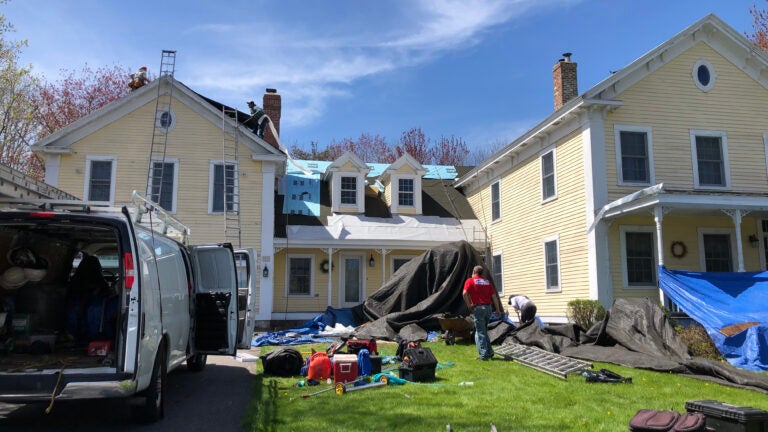
We have two dormers, a covered front porch, two chimneys, and six skylights. Half of the house is very old, so what’s underneath is barn board, which is sturdy and in great shape, but there are small gaps between them. The roofer who made the repairs after the windstorm said that whoever did the job last didn’t lay down plywood first, so many of the nails in the shingles never actually took hold in anything because of those gaps between the boards. Would we need to put down a new layer of plywood? That could jack up the cost further. We made a note to ask when we gathered estimates. (In the end, we didn’t need plywood sheeting. The company we went with used a thick underlayment they felt confident would grab and hold the nails. They even came back a second time with someone in the company who dealt with the same issue at his antique house. He took a look in the attic and confirmed he felt confident the underlayment would get the job done.)
Is the lowest estimate the best choice?
NerdWallet, the consumer website that tries to help people make smart financial decisions on credit cards and big purchases, warns to “be wary of extremely low bids, which could mean subpar work, and make sure they offer a warranty on materials and installation.’’ In the end, we went with the company we felt the most comfortable with, one with a good reputation and good reviews and whose sales rep showed up on time, appeared to know his stuff, and was not icky in the way that overzealous salespeople sometimes can be. It also happened to be the highest of the three estimates. But we were financing our project through the company, and the interest rate and terms they offered fit our budget and timeframe the best.
How long did the job take?
Our roofing job took two days and started a few weeks after we signed the contract. One morning we woke up to find a Dumpster in our yard. The next day a crew of about 10 people showed up, attached huge tarps to the house, and started scraping away the old shingles. Let me say this: The people who worked on our roofing crew were amazing. They were fast and fearless. As a few crew members scraped shingles and sent them sliding down the tarp, others were on the ground picking them up and loading them into the Dumpster. By the end of Day One, 3,000 square feet of roof was cleared, a few minor repairs were made, underlayment was put in place, and about a quarter of the new shingles were down. The next morning, work began early. It is mesmerizing to watch a roofer use a nail gun quickly yet gracefully and then stop and reload just as swiftly. I timed one guy: It took him less than 20 seconds to reload his nailgun and start using it again, barely missing a beat. By the time I got home from work on the second day, the job was done. There was not a scrap of waste anywhere in the yard. The cleanup was impeccable, as they had promised it would be.

It feels good to have a roof you don’t have to worry about
I no longer get shivers when the wind howls, or check my phone’s weather app obsessively to see how hard the wind is blowing. I do not dread heavy rains. And I won’t stress too much about this winter’s nor’easters — at least not about whether the roof will hold up. It’s a good feeling, even if the monthly payments are not. And our roof really does look amazing. The only downside to that? Well, that’s the final lesson we learned on this journey: Having a nice new roof really ages the look of a tired paint job. Want to guess what’s at the top of our to-do list now?
Chris Morris, the Globe’s Food, Travel, and Help Desk editor, can be reached at [email protected]. Follow her on Twitter @morrisglobe.com.




To comment, please create a screen name in your profile
To comment, please verify your email address
Conversation
This discussion has ended. Please join elsewhere on Boston.com