
Ask the Carpenter: Removing algae from a roof, cutting cabinets
Ask the Carpenter’s Rob Robillard takes questions about roofs and attic and kitchen renovations. Read more on realestate.boston.com.
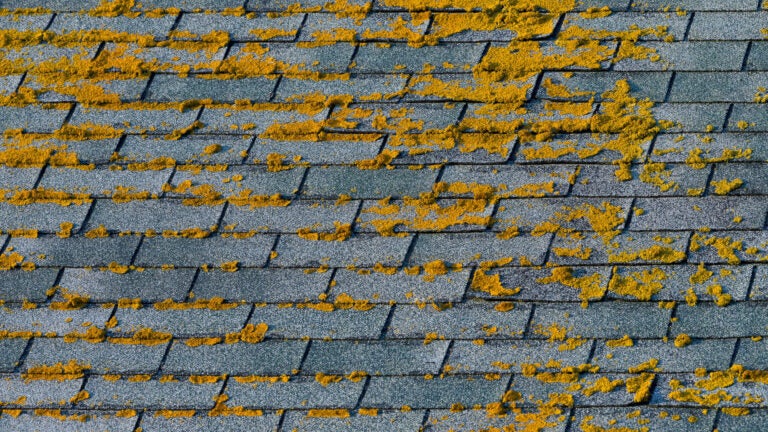
Q. The trees around my home have grown, limiting sunlight exposure and allowing green spores or algae to grow on the roof over the family room. About two years ago, I had several trees removed. Now what was clearly green growth is turning a burnt orange color and comes down in heavy rain. Is the problem solving itself, or should I be concerned about the change in color?
CHUCK, Wakefield
A. It sounds as if your roof algae is drying up in the sunlight. There are many reasons that cause mold, lichen, and algae to grow on a roof, but there are ways to eliminate these ugly stains.
You could hire someone who will clean your roof — many use pressure washers and a lift for safety — but there are all types of DIY consumer products that you can buy to remove algae stains. The best solution I’ve found is a mixture of two parts water to one part bleach. In your situation, using a cleaner and a brush may be enough to remove the growth.
Applying the cleaner is the tricky part. You need to be able to access your roof via ladder — safely. You should wear a respirator and protect your eyes from overspray. Covering the plantings below, or at least rinsing them before and after with water, will help prevent the bleach solution from damaging the vegetation.
It’s best to apply the cleaner using a garden sprayer. Make sure you allow the solution to soak in for about 10 minutes, and then spray it off your roof with a garden hose. Spray in the direction that water drains. Do not spray up and under the shingles; this can cause a roof leak or damage the shingles. Rinsing with a pressure washer (with a low pressure fan tip) produces better results than just a garden hose, but you’re more likely to damage the shingles if you do it incorrectly.
On stubborn areas, you may need to scrub the shingles with a push broom. It may take more than one application to remove the algae stains completely.
Shingles with copper granules help prevent algae growth, as do zinc strips. Copper, lead, and zinc kill it.
Q. I would like to install pull-down stairs for better access to my attic. I’ve found a contractor who is willing to do the job, but he wants to cut into the rafters. Is this safe? I don’t want to compromise my home’s structural integrity.
B.W.
A. Your contractor can cut through the ceiling or attic floor joists to accommodate the pull-down stairs as long as he or she properly transfers the floor load to the adjoining joists by adding headers. All headers should be nailed to the cut attic floor joists and their ends attached to two adjacent, uninterrupted floor joists. This will transfer the floor load.
Rule of thumb: A single header nailed to the cut joist and uninterrupted joists will work for openings less than 4 feet. If the header spans more than 4 feet, both the header and the trimmer joists should be doubled. The doubled trimmer and header joists must be nailed together properly with pairs of 16d nails every 16 inches. It’s also proper practice to install joist hangers on the cut joist and headers.
Q. I need to trim about ¼ inch from the bottom lip of a kitchen cabinet (two sides approximately 12-by-30 inches) to accommodate a refrigerator. I have an oscillating saw and a flat base spokeshave. My experience with these tools is little, very little. What should I do?
TONY
A. You should remove the cabinet and cut it with a track saw or circular saw and straight edge. I’ve cut cabinets in place using a router and an oscillating tool, and it was a terrible task.
Rob Robillard is a general contractor, carpenter, editor of AConcordCarpenter.com, and principal of a carpentry and renovation business. Send your questions to [email protected] or tweet them to @robertrobillard. Subscribe to our free real estate newsletter at pages.email.bostonglobe.com/AddressSignUp.





To comment, please create a screen name in your profile
To comment, please verify your email address
Conversation
This discussion has ended. Please join elsewhere on Boston.com