
‘This Old House’ wants to empower young people to train for skilled trade jobs
You can expect to see some new faces on the 39th season of This Old House, which airs this fall.
You can expect to see some new faces on the 39th season of This Old House, which airs this fall.
The PBS show recently launched an initiative called Generation NEXT with the goal of encouraging and empowering young people to join skilled trades such as construction, carpentry, and masonry.
This Old House held a casting call to select three up-and-coming trade students to work with show’s crew on the new season. Nathan Gilbert, 28, of East Bridgewater, Mass., Bailey Beers, 18, of Hermon, Maine, and Austin Wilson, 18, of Castle Hayne, North Carolina, are the lucky three.
“What I was most impressed with the interviews was there were people who really might have gone in the wrong direction, but they had the opportunity to use their hands and their skills.” said Norm Abram, a master carpenter for This Old House. “For a good builder or architect or designer, the more hands-on experience they have up front, the better they are.”
Each season, This Old House tackles two distinct historic home projects with the goal of providing viewers information on home renovations, whether they chose to do them themselves or hire contractors.
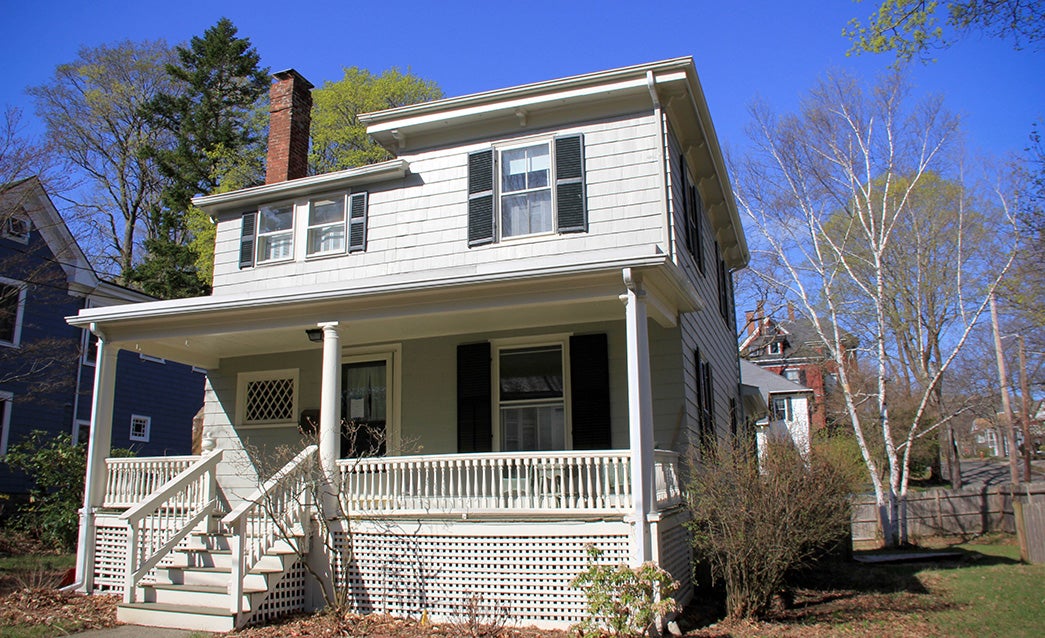
For the 39th’s season’s first project, Gilbert, Beers, and Wilson will work on a late-19th century house in Newton, Mass. Five other apprentices from the Boston area will help complete the renovation.
The second project features a home in Charleston, South Carolina, where the crew will get assistance from students at the American College of the Building Arts.
Though Generation NEXT, This Old House plans to raise money from companies and trade associations to donate to the mikeroweWORKS Foundation’s Work Ethic Scholarship Program. This charity, started by Mike Rowe of the Discovery Channel’s Dirty Jobs, aims to provide financial help for people who want to go into skilled trades.
“[Skilled trades] can be satisfying and financially to their advantage,” Abram said. “A lot of years went by [where it was emphasized] that everyone needs a college degree.”
Forbes recently reported on a labor survey produced by the National Association of Home Builders, which found a shortage in builders since the end of the Great Recession. The share of builders reporting a labor shortage has “skyrocketed” from 21 percent in 2012 to 56 percent in 2016, according to Paul Emrath, an economist with the association.
CNBC notes that many factors could be contributing to the shortage, such as permitting delays and land scarcity.
“I just hope that people now start to realize that these trades are very valuable to us,” Abram said. “The public needs to have more of an appreciation for skilled trades.”





To comment, please create a screen name in your profile
To comment, please verify your email address
Conversation
This discussion has ended. Please join elsewhere on Boston.com