
Ice dams: Advice on roof snowmelt systems
Contractor Rob Robillard weighs in on roof snowmelt systems, structural and ornamental beams, and cold rooms over garages.
Q. Do you have any feelings about ice-melt systems for roof areas where ice dams developed?
JONATHAN L. MOLL
A. For residential applications, try to eliminate the source that is causing the ice dam before resorting to an electrical device. You can prevent ice dams by sealing air leaks and with the proper amount of insulation and ventilation. If you can keep the roof cold, you will eliminate the melting that occurs and causes these dams.
The second best way to stop the damage is to rake your roof, removing the snow, which coats it like a blanket and is a key ingredient in an ice dam recipe.
Sometimes a building’s structure, such as a complex roof design, makes the cost of addressing the issue difficult. It is in these circumstances that I would recommend installing the snow-melt roof and gutter system. These systems can cost $5,000 and up and are high quality; they are not your box store off-the-shelf plug-and-play operations.
When installing snow-melt systems, I often advise my clients to consider the condition and age of the roofing material. These systems are best installed when the shingles are fairly new. The systems are smart, meaning they turn on and off based on temperature, moisture, and snowfall. They are complex and require an electrician’s expertise to install many of the interior electrical components and sensors.
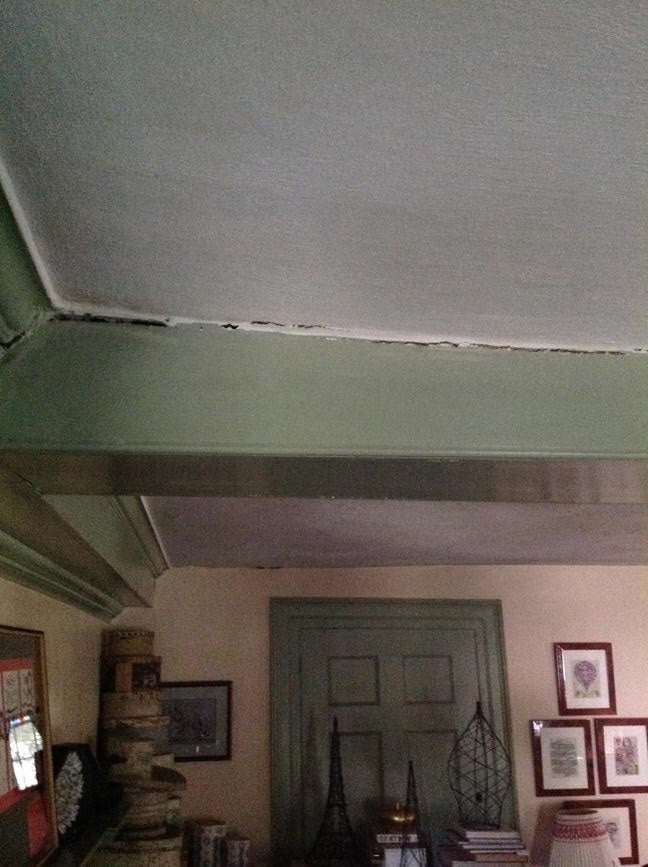
Q. Although I miss reading Handyman on Call by Peter Hotton, I am very much enjoying your advice and take on home solutions. My circa-1750 home has a ceiling beam that spans about 14 feet across a first-floor room. About 15 years ago I noticed it began to split away from the perpendicular wall a bit, and now it has progressed to about one-third across the span. An engineer friend looked at it and said this main beam is only ornamental and nothing to worry about. Is he correct? If so, how can I fix its appearance?
NANCY
A. You used the term “main beam’’ and then the word “ornamental’’ in the same sentence. A main beam is often a structural one; ornamental is simply for aesthetics. Either way, from looking at the picture you sent me, it appears that the plaster where it touches the beam has split. This could be due to changes in seasonal humidity, shrinkage of materials, or water damage. The beam does not appear to be structural; however, i’m looking at only a picture. If you are still concerned, I recommend having a structural engineer evaluate the beam and make recommendations for repairs.
Q. We have a split-entry ranch with bedrooms above an unheated but insulated garage space. The garage gets to about 35 degrees Fahrenheit when it’s cold out. My husband (an HVAC engineer) insists that we must use wall-to-wall carpet to reduce heat loss and keep the surface temperature warmer. I would like to explore other options such as a wood floor with an area rug. Your opinion will help our decision-making.
LESLIE
A. Nothing like being put in the middle of a marital debate. If this were my house, I would have no choice: We would be putting an area rug down on top of newly installed hardwood floors.
All joking aside, your husband is correct. Adding wall-to-wall carpet with a quality pad will reduce heat loss and keep the surface temperature of the floor much warmer. Of all the options that I’m about to talk about, this is the most cost-effective one.
I’m sure I don’t need to tell him this, but another option is to improve the heat delivery to the rooms and add a dedicated zone/thermostat. Many times this is a cost-prohibitive measure.
I have had two clients with similar issues. They had carpeting but wanted the room warmer, so they went with a third option: heating the garage. One installed a gas-powered heater and the other opted for a Runtal-style heating unit on the back wall up near the ceiling of the garage. They both heat the garage to just under 50 degrees. The key here is to make sure the garage and the doors are insulated and air leaks are sealed.
Keeping the doors down with the heat on is a concern. Installing a closer with an automatic setting — allowing you to close the door 1, 5, 10, or 15 minutes after you open it — helps. The key here is to keep the garage as warm as possible for as long as possible.
You mentioned the garage is insulated. How is the insulation in your bedroom ceiling space? Can you improve on it?
Rob Robillard is a general contractor, carpenter, editor of AConcordCarpenter.com, and principal of a carpentry and renovation business. Send your questions to [email protected] or tweet them to @robertrobillard.





To comment, please create a screen name in your profile
To comment, please verify your email address
Conversation
This discussion has ended. Please join elsewhere on Boston.com