
How to give cedar siding of various ages that uniform look
Contractor Rob Robillard offers tips on staining siding and exterior doors.
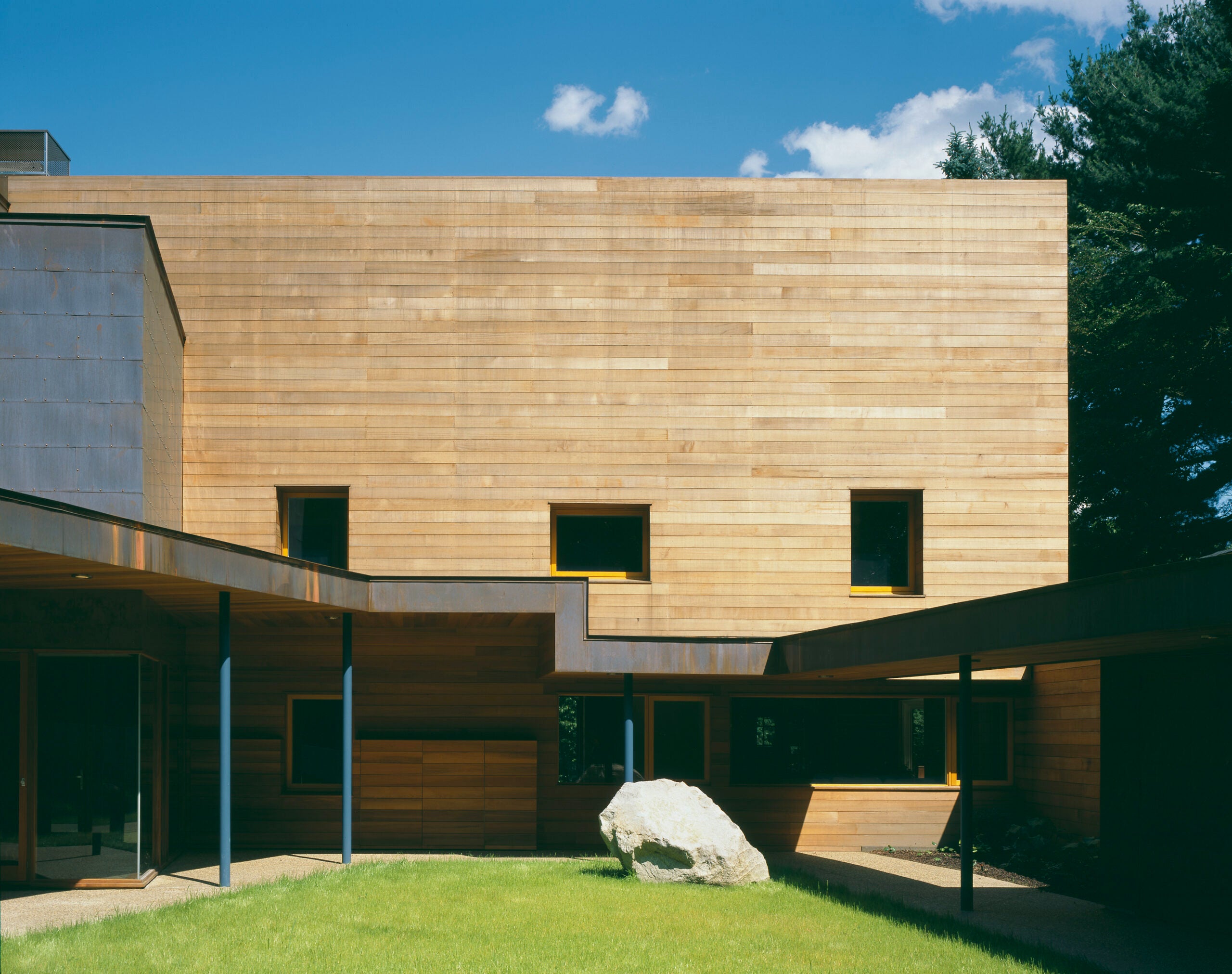
Q. We have a 30-something-year-old house with untreated fir vertical siding. We’ve lived here for nearly 20 years, and in the course of that time, we have practically rebuilt the whole house, including replacing the siding.
The siding is all different ages, and thus many colors ranging from brown to gray. My husband and I want a weathered-looking gray color for the whole thing and have obtained quotes to stain the house. Unfortunately, the quotes are sort of “apples and oranges.’’ One painter proposes a solid acrylic stain or a semi-sheer, although he warns that we will not have a uniform look afterward because of all the variation in our siding. (He recommends acrylic stains by Behr or Sherwin-Williams.) Another painter insists that the proper treatment is a bleaching oil stain, which, he contends, will transform the siding to a uniform gray and provide good protection. (He wants to use Cabot’s Bleaching Oil.)
My husband and I want to preserve the wood, but we don’t like the looks of the solid and semi-solid stains. Can we use a clear stain, like one for decks? Which product will give us the best protection for the greatest length of time? How often do we have to reapply each product? Finally, are there environmental concerns with either of the options? The painter who favors the solid stain wants to prewash the house with bleach; so both painters would use bleach.
The costs quoted are also pretty different: Oil is about 25 percent more expensive than stain. I don’t know whether that reflects materials, preparation, or time.
We’ve gone to stores to look at the different options. Each one pushes its own products, so it is difficult to find an objective comparison. Can you help us?
KATE, Dover
A. I reached out to one of my painting contractors, Bill at William F. Cooper & Co. Painting. He told me there is a great product for this, Poly Blend by Seal-Once. It is water-based and seals and protects wood used for decking and siding. It comes in many semi-transparent colors. They just updated their colors, and there is a weathered gray (“Atlantic Gray’’).
The first step would be to get the siding to look reasonably close to uniform on the areas being coated. This may require washing with various cleaning or brightening products, sanding, or both.
Next do the necessary caulking, filling, and repairs. Once the surface is prepped, all it takes is two coats — applied by brush is best. Work all the way across the boards, keeping the surface wet to avoid lap marks. The second coat will make it look more uniform and can be applied the same day. Do not coat in direct sun.
There is a slight sheen to this product. It varies depending on the wood itself.
Fir can be difficult to get to a uniform appearance if it has weathered for a long time, but it can be done. It may take a little trial and error.

Recoat every two to four years, depending on the sun and rain exposure. The product is very low on volatile organic compounds, so it is not harmful to humans, pets, plants, or livestock, according to the manufacturer.
Q. A mahogany exterior door was installed on the front of my home 22 years ago. At the time, we were told to treat it with oil wood stain. The finish is getting dull in places, and I would like to treat it again. I kept the can with the original stain used, but when I went to buy a fresh one, I was told the product isn’t sold anymore in the United States because of environmental issues. The salesman couldn’t offer any suggestions for a substitute. Your thoughts?
DEBBIE, Andover
A. My painter recommends Cabot Australian Timber Oil or Sikkens Door and Window. Try it first in an inconspicuous area. If it bonds, sand with a fine-grit paper (like 220). Coat it and let it dry well. It can be recoated if needed to blend the color.
The key to a nice-looking finish is always in the preparation of the surface. Painting is the easy part and probably takes up only 30 percent of the actual work time performed on any given project. Sand well!
Rob Robillard is a general contractor, carpenter, editor of AConcordCarpenter.com, and principal of a carpentry and renovation business. Send your questions to [email protected] or tweet them to @robertrobillard.





To comment, please create a screen name in your profile
To comment, please verify your email address
Conversation
This discussion has ended. Please join elsewhere on Boston.com