
What to think about before buying your next lighting fixture
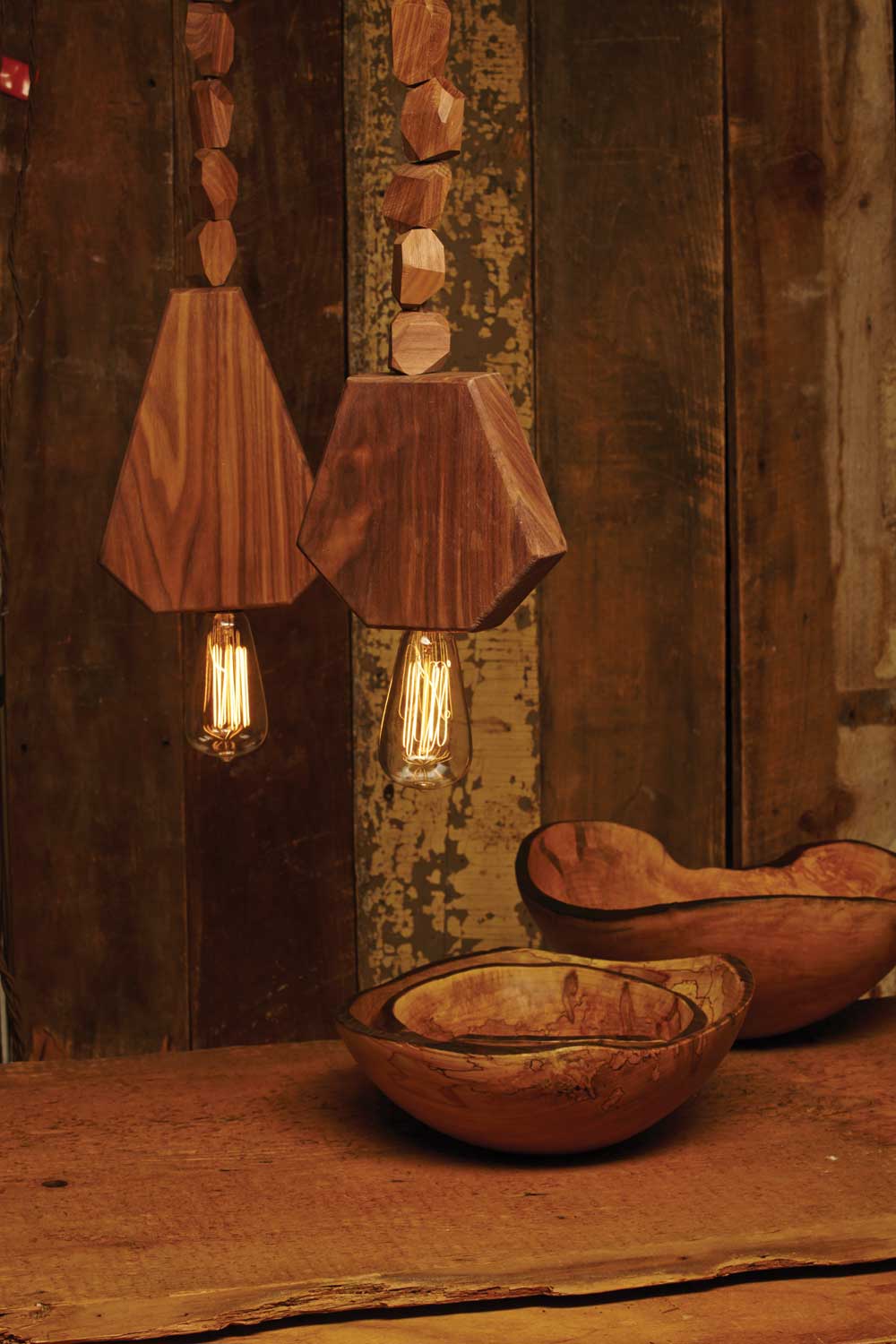
Are traditional chandeliers dead? Perhaps so if recent trends continue.
“Lighting is a place where you can really have fun and do different things, not just the traditional chandelier with the candles and light bulbs,” says Winchester-based interior designer Kristen Rivoli. “There are a lot of smaller companies that are doing different things, like where the light source is hidden but it glows, LED lights are coming in. It’s just amazing what’s out on the market now.”
So, how exactly do you navigate the new lighting fixtures market? We’ve got you covered!
First, think about scale.
“There’s been so much exposure to design, whether it’s from television programs or online, people definitely get it,” says Rivoli. “They want their homes to be beautiful and they understand that when you’re all sitting around the table, having a beautiful light fixture to look at is really nice.”
So how big is too big and how small is too small? Rivoli advises measuring your room from floor to ceiling, then moving backward from there. “The distance from the tabletop to the underside of the light fixture should be about 36 inches,” she says. “That’s a good measure to go by, though some people may want to do a little higher or lower. The most important thing is to make sure it’s not in the way or blocking everybody’s view.”

Designer Kristina Crestin, owner of Kristina Crestin Design, says she always pushes for a significant lighting budget with the customers she works with. “Decorative lighting can be a real differentiator in the space,” she says. “I’m up front with clients: If you think your lighting budget is X, do X times five, OK?”
For her, the scale of your lighting fixtures should be relative to the kind of impact you want to make in the space. “I think people do lighting that’s too small all the time,” says Crestin. “If you’re doing a big, round dining table, you might want to anchor it with a big, volume piece in the middle versus one small thing.”
Determine the aesthetic of the room.
“Go to Pinterest, look at a room and think about what you’re reacting to,” suggests Crestin. “Are you reacting to a cleaner idea and you just want to supply light? Or are you into impact?”
As for what’s trending in Boston and the surrounding area? Crestin says hand-blown glass is still big in the North Shore market. “People tend to look for something slightly coastal or transitional,” she says. “We’re also doing a lot of fifties chandeliers with metal arms and Edison bulbs that are almost like a mobile. They fill a big space without being a typical chandelier.”

Don’t be afraid of volume or doing multiples.
“It’s been my thing for years, but now the general public is also starting to use bigger fixtures,” says Crestin. “Before it was a typical pharmacy light or, ‘Oh, let’s do a shaded light.’”
It can be a challenge to fill spaces larger than a dining room, however. “Foyers are one of the biggest places where people undersize,” Crestin said, “because it’s hard to find big lighting that’s good or even remotely affordable.”
So how do you make an impact without breaking the bank? Crestin suggests buying smaller lighting in multiples and cascading them to fill the space instead. “I had a client with a big foyer,” she says. “We couldn’t find one big thing that was interesting enough, so we ended up doing bubble lights in different sizes and shapes and cascading them, almost like a more commercial application. It had nice light disbursement, but it also added a ton of visual interest. And the glow with the lights dancing up there at night was amazing.”

Try before you buy.
Crestin says she once built a mockup of a fixture using a 2×4 frame and chicken wire. “We literally had a guy on a ladder staging, trying to figure out where to put the holes for electricity,” she says, acknowledging that the prep time and investment required for installing multiple fixtures can add up, though it doesn’t have to be pricey. “Somebody could totally DIY weekend warrior this and figure it out on their own.”



To comment, please create a screen name in your profile
To comment, please verify your email address
Conversation
This discussion has ended. Please join elsewhere on Boston.com