
5 things to consider before choosing a kitchen faucet
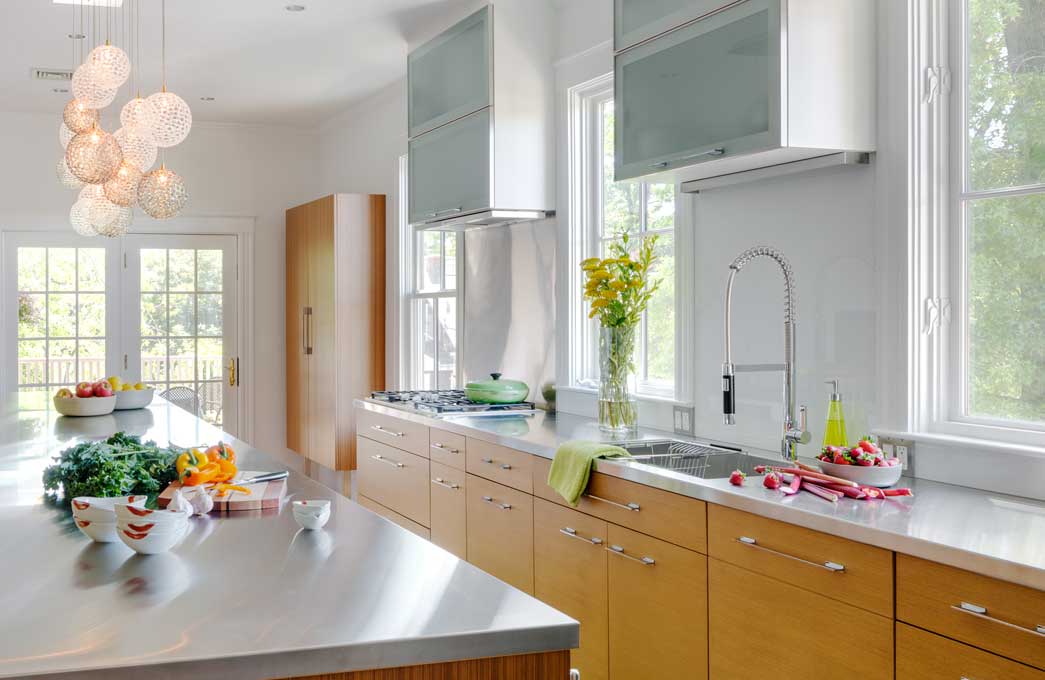
Whether you’re doing a complete kitchen remodel, or just want to give your favorite room a little refresh, selecting a new kitchen faucet should be one of the easier tasks, says Kristin Crestin, of Kristin Crestin Design. “By the time we’re shopping for plumbing we’ve already figured out where the aesthetic [of the kitchen design] is heading,” she explains.
So what do you need to know? We’ll let her explain.
First, decide if you want a bridge faucet or a pull-out faucet.
“Some [clients] want a pull-out faucet with the spout,” says Crestin, “some people want the beautiful bridge faucet. Usually someone has a knee-jerk reaction to what they’re used to, and how they want it to function—start with that.”


If it’s a pull-out faucet, consider how you’ll use the spray.
“There are some goosenecks that pull-out, and there are some that pull down,” says Crestin. “So how in their everyday use are they used to grabbing a spray and using it? Are they cleaning big trays and pots and need more height and reach? If so, a taller gooseneck faucet would create more clearance for those sort of things.”
Then choose your finish.
Crestin says she selects her lighting fixtures first, then limits her faucet search to those that will coordinate. “It’s better to have the visual of the faucet and lighting be on the same page, especially if the faucet is on an island with lighting above it,” she says. “But it’s not a hard and fast rule.” Which means…
Yes, you can mix finishes
“When you want to get into a more eclectic and layered kitchen, bringing in another finish is a good way to do that,” says Crestin, though she typically doesn’t use more than two. “One of the last restaurants I was in, it was great, but I counted, like, seven finishes and I was having a designer meltdown.”
And if you’re a technology person, plan ahead.
“People might want to consider whether they want sensor faucets or touch technology,” suggests Crestin. “One of my clients bakes a ton and had a faucet in her island and [another one on her countertop]. The one on the island is near [where she rolls out dough], so she wanted that sink to be where she could wash her hands without having to get the handle dirty … But it is an upcharge, and they do have to think in advance as some faucets need to be wired in.”
Of course, as anyone who’s ever washed their hands in an airport bathroom can attest, sensor faucets are not for everyone. “We have a touch faucet in our office bathroom,” says Crestin. “And I will say that when you have lots of people using it, it gets really confusing: Is it on? Is it touch? Is it not? The technology has come a long way, but it comes down to human error.”





To comment, please create a screen name in your profile
To comment, please verify your email address
Conversation
This discussion has ended. Please join elsewhere on Boston.com