
Address Newsletter
Our weekly digest on buying, selling, and design, with expert advice and insider neighborhood knowledge.
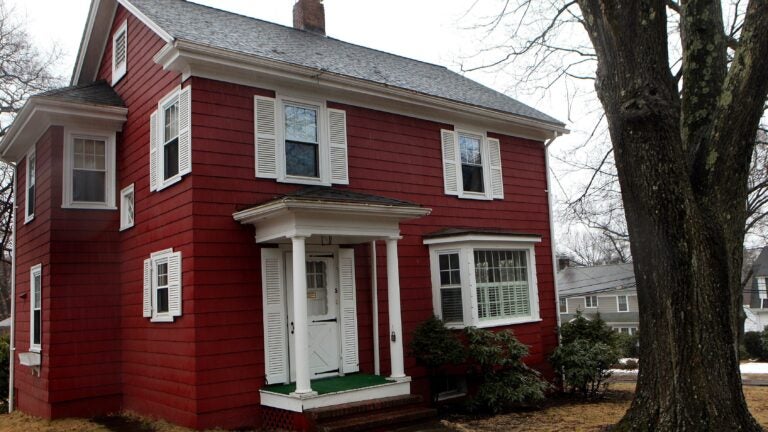
It’s a tale as old as time, and, no, this has nothing to do with “Beauty and the Beast.”
It’s the age-old question of how much to budget for a home. In a costly market like Greater Boston, the answer can seem beastly and daunting unless strict parameters are put in place.
First rule of thumb: Manage expectations early to avoid getting your hopes up in a case of online listing wanderlust.
“Buying a home is a very emotional experience,” said Kara Ng, a senior economist at Zillow. “This might come down to personality, but I try to have the numbers in front of me before looking at homes.”
As to what those numbers might be? Depends on who you ask, but there is a general percentage band that experts use.
Rocket Mortgage notes the so-called 28/36 rule, where buyers spend no more than 28 percent of their before-tax income on housing expenses and 36 percent of their entire before-tax income on debt such as mortgages, student and auto loan payments, and monthly credit card bills.
Fidelity similarly advises buyers to limit monthly debt payments to 36 percent of total income.
Those interviewed for this story said it’s wise to keep total monthly housing costs to around 30 percent of monthly income.
“Anytime a household spends more than 30 percent of their income on housing, we consider them cost-burdened,” Ng said.
But there are other factors at play. While 30 percent might be the desirable number to manage costs, the economic climate today is uncertain. Recession risks have dropped from 60 percent earlier this year to 40 percent, according to economists at J.P. Morgan, but tariffs could have a greater impact.
That means it’s more important to have emergency funds available in the event of unexpected layoffs and a loss of steady income.
“The thing people need to consider right now is whether they can afford the down payment and monthly mortgage and still have money left over for emergency savings in case they lose their job because of a recession,” said Daryl Fairweather, chief economist at Redfin. “People should always be prepared for a stretch of bad economic times.”

But also keep in mind just how hefty the roughly 30 percent-of-income advice can be in a market like Greater Boston.
Last year, Zillow estimated a median-income household across major US metropolitan areas needed to put down 35.4 percent to “comfortably” afford a typical home under the 30 percent rule.
But in Greater Boston, where the typical home value is $980,000, that would mean putting down 61.7 percent — or $604,660 — for those making around $100,000 a year.
“The thing about Boston specifically is a new homeowner making the median area income [and] who puts down a 20 percent down payment would need to spend almost half of their monthly income on mortgage, taxes, insurance, and maintenance,” Ng said. “Homes in [Greater] Boston are quite unaffordable for the median household.”
Boston’s younger, often fresh-out-of-college buyer pool already arrives to the home-buyer market with a variety of headwinds.
Those fortunate enough to graduate debt-free might have no credit history — meaning it’s harder to get approved for a mortgage. Zillow’s advice on this front is to either pay in cash or make at least a 20 percent down payment to show a bank the buyer is less of a lending risk. Keep in mind: The 61.7 percent down payment that would be required locally to abide by the 30 percent rule more than fits the bill on that down payment recommendation for those with no credit.
Similarly, those with bad credit are also advised to put up more for a down payment; though, also note lower credit scores often mean higher fees and interest rates to offset the risk banks view this type of borrower of carrying, Zillow noted.
Many potential buyers in Greater Boston — a bastion of higher education — also carry a student loan debt load, meaning there’s less available income to put toward a home purchase. Further, there are costs associated with a home that go beyond a mortgage: insurance, maintenance, taxes, and possible homeowners association fees.
Both Fairweather and Ng advised the roughly 30 percent rule in terms of housing costs to income should include all housing costs — not just the mortgage — to avoid becoming cost-burdened. Keep in mind: Unlike a 30-year fixed-rate mortgage — where rates currently hover around 6.77 percent — the other associated housing costs are variable.
“Everything else, like maintenance and HOA fees, can all go up over time,” Fairweather said.
With so much to keep track of, there are tech tools to help buyers figure out how much home they can afford in the current environment. Redfin and Realtor.com both offer affordability calculators that let you enter your personal financial details and desired debt-to-income ratio before providing a list of homes in the area that match your buying power.
Zillow’s BuyAbility tool is an enhanced version of the various affordability calculators out there in that it also connects one’s financial situation with current mortgage rates and will adjust its recommended listings based on changes in rates and personal finances.
Such tools can help at a time when there is so much uncertainty in the market ahead, but also in one that experts like Ng and Fairweather said is still worth considering, especially in a supply-constrained market like Greater Boston that doesn’t usually see price relief amid persistent demand.
“If you feel like you can afford to buy a home, now is a perfectly good time to do it. I don’t think buying a home is going to get more affordable moving forward,” said Fairweather, who added any potential home price relief amid economic choppiness would be short-lived.
“Maybe we’d have one year where prices fall by 1 to 2 percent and then, the year after that, they start going up again,” Fairweather added. “That’s why, in the long term, say more than five years, you’re probably going to be better off owning versus renting.”
Our weekly digest on buying, selling, and design, with expert advice and insider neighborhood knowledge.





To comment, please create a screen name in your profile
To comment, please verify your email address
Conversation
This discussion has ended. Please join elsewhere on Boston.com