
A classic mismatch: New buyers, old homes
With rising costs of purchasing and renovating, antique charm is not always a selling point.
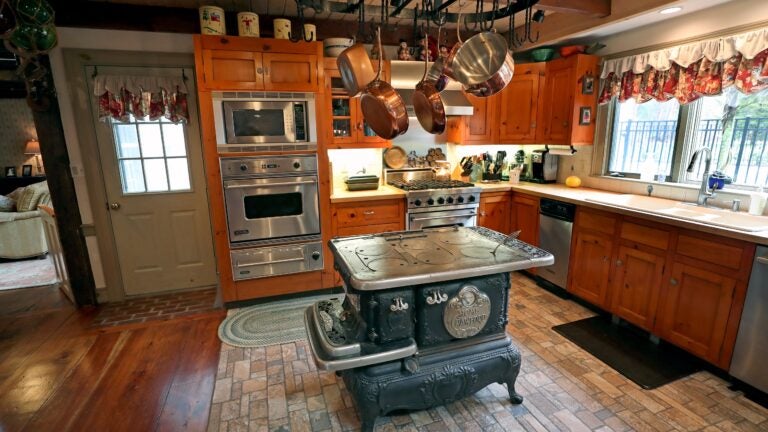
Put yourself in the shoes of a first-time home buyer.
In this market, not only are prices high, but so are interest rates, further tightening a budget. After several competitive open houses, you come across a beautiful antique Colonial for sale in Dedham, built in 1801. During your tour, you’re drawn to its historic charm, but take note of the foundation problems and outdated electrical system, both of which will cost a pretty penny to remedy. Is this a house you’re going to put in an offer?
The answer, increasingly, is no.
“Antiques aren’t for the faint of heart,” said Pamela Bathen, a broker associate with Oak Realty in Ashland. “They’re not ‘DIY grab some paint’ type homes.”

First-time buyers don’t necessarily have the budget to spend updating and maintaining a centuries-old house. Even for those who do, finding time to make those upgrades can be tough.
“Antique homes clearly need to be puttered with, because they’re 200 years old,” Bathen said. “They can be hard to sell, and I get it. If you’re two software engineers who leave for work at 6:30 in the morning and get home at 5:30 at night, you don’t want to putter with your house.”
According to data from the Multiple Listing Service (MLS) for the past six months, homes built before 1880 sold within 25 miles of Boston remained on the market for an average of 58 days. Homes built between 2010 and 2015 stayed on the market for 45. Antique homes also averaged 2,755 square feet while new homes skewed larger at 3,256 square feet.

– Pat Greenhouse/Globe Staff
Dana Bull, a real estate advisor with Compass in Marblehead, has sold dozens of antique homes on the North Shore. She said that historically, older homes always were the ones that sat on the market the longest. Then there was a shift: Millennials entered the market and started prioritizing living in walkable downtowns, where many antique homes were built. They continued buying antiques through the pandemic, but now the market has changed.
“Inventory is up 20 percent,” she said, explaining buyers have more choices. “People are going back to really thinking, ‘Do I actually want an antique?’”

In the real estate industry, an antique is most often defined as a home built before 1880. It’s also a house that is highly romanticized, with wood-burning hearths and rambling front porches clouding the visions of buyers. Instagram accounts like @cheapoldhouses — which became popular in the mid-2010s — highlighted beautiful discounted properties across the country, continuing to bolster the idea that living in an old house is a charmed existence.

But recent data from Zillow shows that buyers are willing to pay almost 4 percent more than expected for a home that is already remodeled. In fact, remodeled homes get 26 percent more daily saves and 30 percent more shares on Zillow than similar homes.
Another key factor at play? A sprawling Illinois home featured on @cheapoldhouses for $145,000, for example, is a far cry from a comparable one for sale in Massachusetts. New England is full of old and expensive homes. It’s part of the reason open houses for antiques are well attended, but not flush with offers afterward.
“People are generally pretty upfront about the fact that, ‘No, I just wanted to see it,’” Bathen said. “But we do get great turnout because people recognize that they’re fabulous.”
Potential antique homeowners must weigh the price of renovations when purchasing, as the cost of labor and materials is on the rise. A 2024 Houzz report shows that the median spend on home renovations shot up 60 percent since 2020, from $15,000 to $24,000.
Conventional wisdom says homeowners should set aside approximately 1 percent to 4 percent of their home‘s value annually to pay for repairs and maintenance. With antique homes, it’s more like 5 percent. For a $700,000 home, that’s $35,000 per year.
“Buyers who are already stretching their budget to afford a home in today’s market may not be willing or able to spend more on renovations or repairs,” said Amanda Pendleton, Zillow’s home trends expert. “A remodeled home may come with a higher price tag, but a buyer would get to spread that additional cost over the course of a 30-year mortgage versus paying cash upfront to make similar upgrades themselves.”
Aside from the cost, an antique homeowner must also vet all kinds of contractors and home professionals, from plumbers to woodworkers. Plus, if a home is located in a designated historic district, there may be renovation specifications to follow.
Old homes, while time, money, and labor-intensive, can be incredibly rewarding to those who purchase them. “One of my favorite sellers from Boylston said it best: ‘We don’t own antiques — we steward them,’” Bathen said. “She turned an outbuilding into an Airbnb that attracted — you guessed it — antique lovers.”
Bull recommends carefully considering an antique’s location when buying. An older property in Marblehead, for example, is deemed highly desirable, while an antique in Littleton, where there are many more contemporaries, may not be as desirable or valuable.
“In order to be an owner of an antique, you have to be comfortable with imperfection. You’re never going to make it perfect, no matter how well you maintain it or fix it up,” Bull said. “It’s impossible, and you have to actually like that.”




To comment, please create a screen name in your profile
To comment, please verify your email address
Conversation
This discussion has ended. Please join elsewhere on Boston.com