



Address newsletter
Get the latest news on renting, buying, selling, home design, and more.
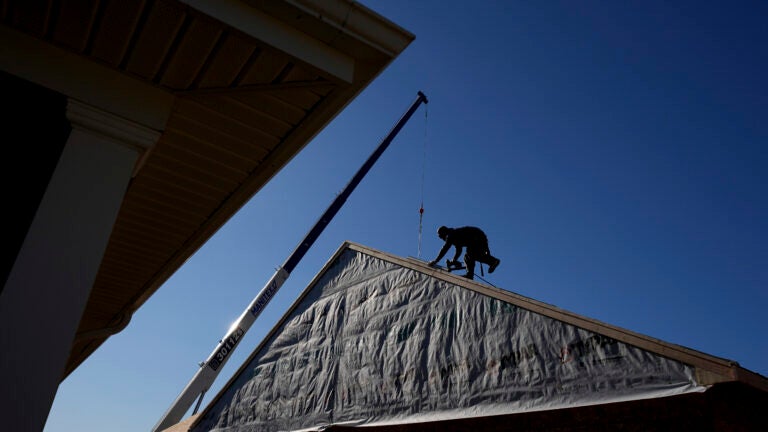
The average rate on a 30-year mortgage in the United States eased for the second week in a row, but remains just below 7 percent, offering little relief for prospective home shoppers looking ahead to the spring homebuying season.
The rate fell to 6.95 percent from 6.96 percent last week, mortgage buyer Freddie Mac said Thursday. A year ago, it averaged 6.63 percent. Five years ago, it stood at 3.51 percent, according to the Federal Reserve Bank of St. Louis.
Here’s what that means for your purchasing power. These calculations are based on a 30-year fixed mortgage on a $500,000 loan with no down payment:
| DATE | MORTGAGE RATE |
MONTHLY PAYMENT |
INTEREST OVER LIFE OF LOAN |
|---|---|---|---|
| 1/30/2020 | 3.51% | $2,248.02 | $309,285.55 |
| 1/23/2025 | 6.96% | $3,313.09 | $692,712.90 |
| 1/30/2025 | 6.95% | $3,309.74 | $691,506.23 |
Borrowing costs on 15-year fixed-rate mortgages, popular with homeowners seeking to refinance their home loan to a lower rate, also eased this week. The average rate dropped to 6.12 percent from 6.16 percent last week. A year ago, it averaged 5.94 percent, Freddie Mac said. Five years ago, it stood at 3 percent, according to the Federal Reserve Bank of St. Louis.
Here’s what that means for your purchasing power. These calculations are based on a 15-year fixed mortgage on a $500,000 loan:
| DATE | MORTGAGE RATE |
MONTHLY PAYMENT |
INTEREST OVER LIFE OF LOAN |
|---|---|---|---|
| 1/30/2020 | 3.0% | $3,452.91 | $121,523.48 |
| 1/23/2025 | 6.16% | $4,262.63 | $267,272.86 |
| 1/30/2025 | 6.12% | $4,251.77 | $265,318.32 |
Mortgage rates are influenced by several factors, including how the bond market reacts to the Federal Reserve’s interest rate policy decisions. The average rate on a 30-year mortgage briefly fell to a 2-year low just above 6 percent last September, but has been mostly rising since then, echoing a sharp rise in the 10-year Treasury yield, which lenders use as a guide for pricing home loans.
The yield, which was at 3.62 percent in mid-September, reached 4.79 percent two weeks ago amid fears inflation may remain stubbornly higher than the Fed’s 2 percent target.
Get the latest news on renting, buying, selling, home design, and more.




To comment, please create a screen name in your profile
To comment, please verify your email address
Conversation
This discussion has ended. Please join elsewhere on Boston.com