
Urban farming grows along with (and on top of) Boston’s development boom
Developers are starting to understand how much residents value community gardens.
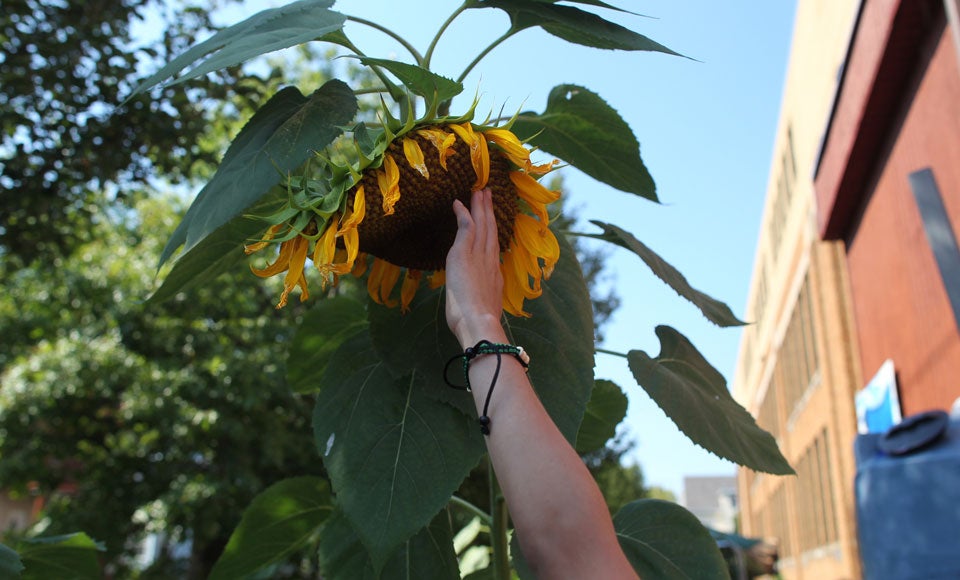
You’d probably be hard-pressed to find someone who wouldn’t want to live by a community garden.
Aesthetic value aside, communal gardens and greenhouses can provide residents with fresh fruit and vegetables, a new outdoor hobby or even jobs. Urban agriculture is taking many cities by storm, and according to a recent article in Citylab, large-scale developers are starting to take notice.
“As both urban agriculture and real estate boom in a number of U.S. cities, real estate developers are looking to small-scale local growers to augment their plans,’’ Citylab writes. “At the same time, food activists are beginning to recognize how even luxury builders can advance their cause.’’
Greater Boston is no exception to the trend.
Jessie Banhazl, founder and CEO of Somerville-based urban farming company Green City Growers, reports that much of her business of late has shifted from families wanting backyard gardens to major developers and architects asking for rooftop gardens and farms worked into their blueprints.
Green City Growers installs and maintains urban farms and vegetable gardens around Boston, while teaching residents how to grow their own food. In addition to transforming individuals’ backyards or rooftops, the group has converted unused spaces for schools, restaurants, and municipalities all over Eastern Massachusetts.
Besides companies like Google and Akamai, a Cambridge-based content delivery network, neighborhoods like Mission Hill are now incorporating public gardens and solar farms into their communities, giving residents the opportunity to experience green space and a closer relationship with healthy food and clean energy.
Story continues after gallery.
Fresh ideas for redesigning your outdoor space:
Some are concerned urban agriculture is just a fad among those who can afford it, but many food justice advocates think a permanent solution is just a matter of having collective support from developers, city planning departments, politicians, and residents. Boston seems to be on the right track: This summer, the city commenced a two-year planning initiative to create more urban farming opportunities across public, private, and nonprofit sectors, with many proposals geared toward low-income residents.
If you simply can’t wait for a community garden to be developed near you, here’s a helpful guide to create your very own “apartment-friendly oasis.’’ You’ll probably be surprised by how many types of fruits and veggies you can grow indoors – just make sure to share your bounty with neighbors.
Read the full Citylab article here.




To comment, please create a screen name in your profile
To comment, please verify your email address
Conversation
This discussion has ended. Please join elsewhere on Boston.com