
Harvard report says millions more families will spend half their income on rent
A new Harvard study reports that “severely cost-burdened’’ U.S. families could increase 25 percent over the next decade.
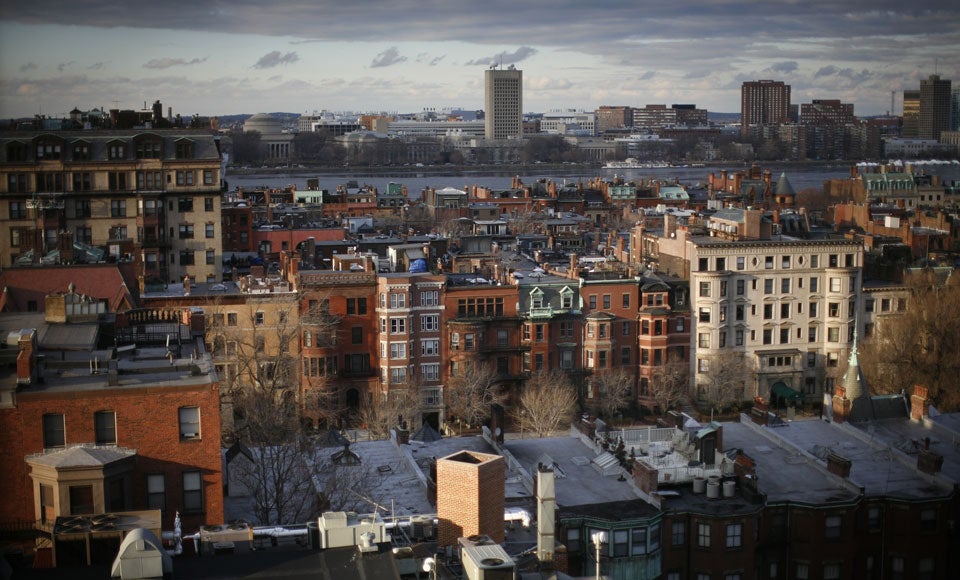
As bad as rent is now, Bostonians should know it could get worse.
“Severely cost-burdened’’ U.S. families (those who spend over 50 percent of their income per month on housing) could increase by a staggering 25 percent over the next decade, from 11.8 million homes to 14.8 million households, according to a new report from Enterprise Community Partners, an affordable-housing nonprofit group, and Harvard’s Joint Center for Housing Studies.
To reach this conclusion, researchers considered various scenarios for wage and rent growth over the next decade, Bloomberg Business reports. In the best-case scenario, wages grew a full percentage point per year faster than rents, causing the number of severely-cost burdened households to just barely fall from 11.8 million in 2015 to 11.6 million in 2025.
The baseline scenario saw wages and rents grow by two percentage points per year, causing severely cost-burdened households to rise to 13.1 million. In the worst-case scenario, the number of homes spending over half their income on rent rose to 14.8 million families for a 25 percent increase.
Though the report didn’t break down how this would affect severely rent-burdened households by income, earlier studies have shown poorer families are more likely to spend half their income on rent.
In Boston, the struggle to find affordable rent is harder than in most U.S. cities. This spring, a study by New York University’s Furman Center for Real Estate and Urban Policy ranked Boston as having the nation’s third-highest median rent in 2013, just behind Washington D.C. and San Francisco. Finding out our average rent was worse than New Yorkers’ was probably pretty traumatic for Boston renters, but the news was slightly better for low-income renters because the share of renters found to be severely-burdened was the lowest out of the 11 metros studied, at 60 percent.
Story continues after gallery.
What the Back Bay used to look like:
The Enterprise/Harvard study also projected that the increase in renter households spending half their income on housing would disproportionately affect Hispanics and the elderly, with more than a million households per category passing into the severely rent-burdened ranks by 2025.
In Boston, a lack of housing at various income levels is partially to blame for the rent crisis. Mayor Marty Walsh announced his plans to curb this in spring 2015 with “Housing a Changing City: Boston 2030.’’ The housing plan aims to develop 53,000 new units by 2030 with 5,000 units reserved for senior citizens and 6,500 for low-income families.
But lack of wage growth is just as much to blame. Wages in the U.S. grew just 0.2 percent in the second quarter of this year, the slowest pace on record. If wages don’t rise to meet rent hikes, renters have a pretty bleak future.





To comment, please create a screen name in your profile
To comment, please verify your email address
Conversation
This discussion has ended. Please join elsewhere on Boston.com