
Why Boston’s housing market is not as healthy as it could be
High energy costs, delinquent mortgage holders, and affordability are the factors that bring down the health of Boston’s housing market.
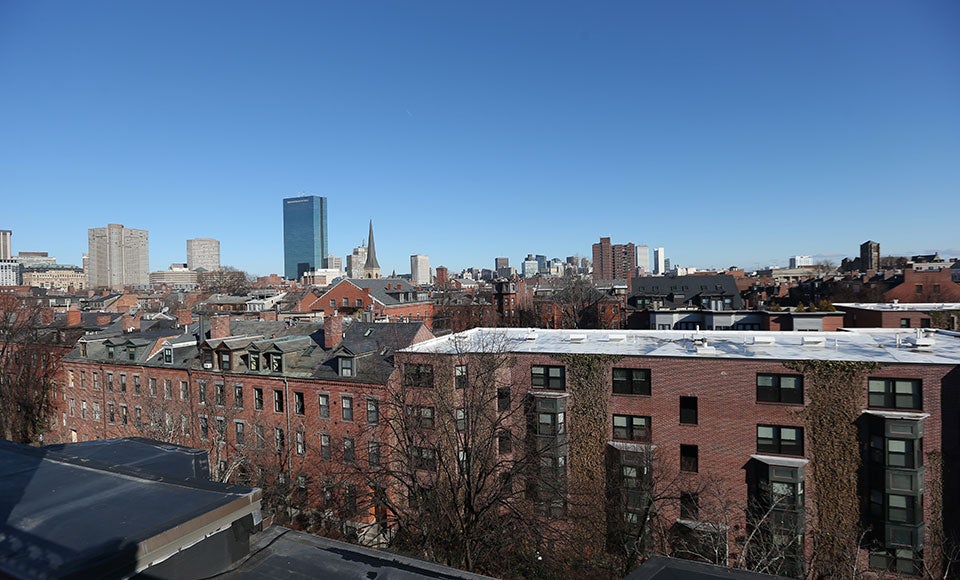
The United States housing market is the healthiest it has been in close to 15 years, according to Nationwide Insurance. And home prices are up 5 percent from a year ago, following a month that saw the fastest annual sales rate since 2007.
But how does that recovery look in different spots around the country? The economists at WalletHub set about analyzing the data on a city-by-city basis and uncovered some telling facts about Boston’s housing market in the process.
Missing the first tier
According to the WalletHub report, Boston ranked 59th in terms of healthiest housing market on a list of 300 U.S. cities. (The Hub ranked 13th among 62 large U.S. cities.)
WalletHub looked at 14 different metrics for the ranking, including the percentage of homes underwater on their mortgage, the percentage of homes selling for a gain, the median home-price appreciation, the vacancy rate, and home price as a percentage of income.
Austin, Seattle, and Denver were at the top of the large cities list. There are a few factors that brought down the “health’’ of Boston’s housing market, according to spokesperson Jill Gonzalez, the first of which were home maintenance costs, including total home energy costs and gas prices.
Story continues after gallery
These are the safest towns in Massachusetts:
Gonzalez said that total home energy costs in Boston are $230 on average, while in cities in Texas and Washington it can be as low as $120.
The data also showed that for Boston the average number of days until a house is sold after being put on the market is 67, which put it at 106th out of the 300 cities on the list. There is also a high percentage of mortgage holders delinquent on their mortgages, at 5.11 percent.
“For big cities Boston did really well and excelled more on median home price appreciation,’’ Gonzalez said. It ranked 12th of all the cities with a 32.5 percent median home price appreciation.
But, the homes are generally very expensive as a percentage of income (though not, as we have written, compared to what renters pay).
“That’s what pulled Boston down,’’ Gonzalez said. “Its home price as a percentage of income is 894 percent.’’ A city like Rochester, New York is at about 222 percent.
What about other Massachusetts cities?
Cambridge, which ranked 50th, had many similar ratings to Boston, but gained points due to their low percentage of mortgage holders delinquent on their mortgages, at 0.74 percent.
Overall the Bay State did poorly in regards to highest maintenance costs as a percentage of income. The bottom six cities for this metric were Boston, Lowell, Cambridge, Brockton, Quincy and Lynn, as energy costs are high across the state.
Fall River, Massachusetts ranked 291 out of 300, as 12.5 percent of homes are vacant, which Gonzalez said was a “huge number.’’




To comment, please create a screen name in your profile
To comment, please verify your email address
Conversation
This discussion has ended. Please join elsewhere on Boston.com