
All the ways in which Boston housing is too expensive
Recent housing studies by the Martin Prosperity Institute and Harvard University show just how expensive renting and home buying is in Boston.
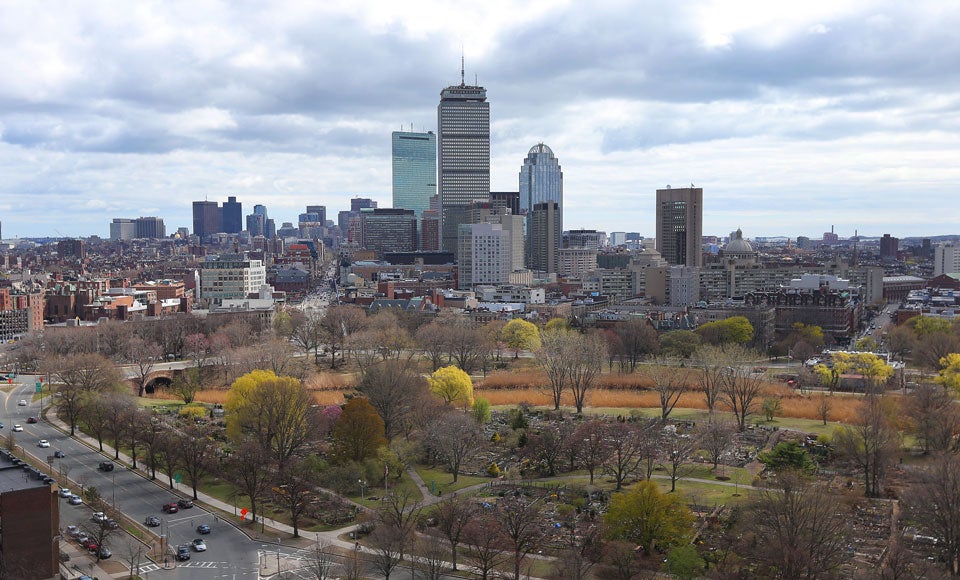
Living in Boston is really expensive, no matter how you do it, according to recent studies from the Martin Prosperity Institute at the University of Toronto and the Joint Center for Housing Studies of Harvard University.
This may not surprise Bostonians, as rental listings site Zumper named Boston the third most expensive city in the nation in March 2015, with the median rent for a one-bedroom apartment in the Greater Boston area clocking in at $2,280.
Houses and condos were similarly expensive this spring. Even though the median sales price of single-family homes across Massachusetts fell 1.5 percent this May, home prices in Greater Boston continued to rise, with Cambridge’s median home price leading the way — jumping more than 34 percent to $1.3 million.
These prices can seem exorbitant to anyone in the Hub, but the most recent studies showed that Boston workers aren’t affected evenly.
Story continues after the gallery.
The safest towns in Massachusetts:
If you want to buy…
Richard Florida, Director of Cities at the Martin Prosperity Institute and co-founder of CityLab, looked at how many years’ worth of savings U.S. employees would need in order to buy a home in 300 different metro areas, and found that affordable Boston housing is out of reach for many types of workers.
Using data on estimated home values from Zillow and on wages from the Bureau of Labor Statistics, CityLab calculated how many years of working wages it would take to cover housing costs for highly paid creative workers, lower-paid service workers, and blue-collar workers. Unsurprisingly, service workers and blue-collar workers need many more years of work to buy a home.
While the benchmark price of an affordable home is about 2.6 times one’s yearly take-home pay, the average worker in Greater Boston would need to devote 6.2 years’ worth of wages to buy a home. But if you’re a highly paid creative worker in Beantown, that number becomes less scary at 4.1 years. (This is still higher than the 2.5 years of wages it takes the average U.S. creative class worker to afford a home.)
But blue-collar workers need nearly twice that time to afford a home, with the average home requiring 4.5 years’ worth of wages. In Boston, this number jumps to 8.3 years’ worth of wages for blue-collar workers.
Service workers, which make up roughly half the nation’s workforce, have the hardest time affording a home, with the average service worker needing 5.5 years’ worth of wages to pay for a home in the average metro area.
As for Boston’s service workers, they’ll need a whopping 9.4 years’ worth of wages to buy a home.
If you want to rent…
A 2015 report “The State of the Nation’s Housing’’ by The Joint Center for Housing Studies (JCHS) of Harvard University showed renting doesn’t look much better for city dwellers, with high levels of rental-unit demand and cost-burdened renters like we’ve seen in areas such as Allston, Fenway, Longwood, East Boston, Roxbury, and Dorchester.
According to the JCHS report’s count, the amount of Americans renting homes has risen by about 770,000 households annually since 2004, just as apartment-building prices have also risen by 15 percent for the fifth consecutive year in 2014. The report also showed that 20.8 million Americans (just under half of all renter households) are spending more than 30 percent of their income on housing, and about 25 percent have rent that exceeds half of their monthly pay.
Narrowing in on Boston paints an even darker picture, with roughly 40 percent of moderate-income Boston renters and 60 percent of low-income workers feeling severely rent-burdened, meaning they face rent and utility costs equal to half their income or more.



To comment, please create a screen name in your profile
To comment, please verify your email address
Conversation
This discussion has ended. Please join elsewhere on Boston.com