

Address Newsletter
Our weekly digest on buying, selling, and design, with expert advice and insider neighborhood knowledge.
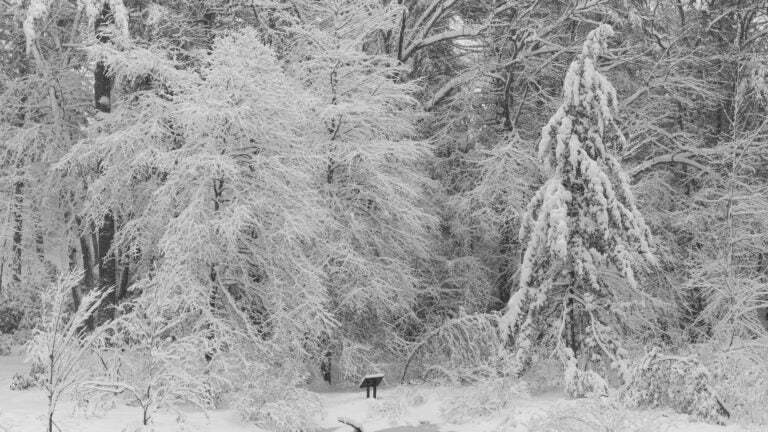
The recent heavy snow and Arctic temperatures have me thinking about how gardens react to winter conditions. Can too much snow harm or help my plants? What steps can I take to ensure my trees and shrubs are prepared for the stresses of winter?
This week, I will discuss the benefits of snow cover, which provides stable conditions for dormant plants. I’ll also consider how proactive tree and shrub care can greatly help mitigate risk from heavy snow loads.
When I was a child, snowstorms meant one thing: days off from school, outdoor play, and sledding. As an adult, my relationship with snow has changed. I find great beauty in an expanse of unbroken snow, the way drifts reflect wind patterns, the stems and seedheads of last year’s perennials still standing proud, and the dampened silence that accompanies a snowstorm. I delight in seeing the intrepid and ever cheerful black-capped chickadee out and about during and immediately after snowfall, determined not to let the flakes affect its outlook. Snow is inspiring in its many forms, both as a physical substance and as a backdrop for art, ritual, and spirituality.

In its physical form, snow is also a fantastic insulator, with flakes trapping air in countless small pockets. As with the R-value of home insulation, the thickness of the layers determines how well it insulates — a few inches won’t provide much protection against the freeze-thaw cycle, whereas 6 inches or more begins to stabilize soil layers from the surface down to deeper depths. The best insulation is provided by light, fluffy, loosely packed snow, which can maintain up to twice the ambient temperature of the air above it. When snow cover is lacking, plants’ surface roots and the crowns of perennials are subject to frost heave and temperature swings between day and night, which can cause water loss.
Ironically, winter can be among the driest periods for plants, even though they are not actively growing. Evergreens, above-ground plant structures, and surface structures can lose water to desiccating winds. With water frozen in the soil, there is no way for the plant to replace it. Gardeners will remember last spring when many rhododendrons — even mature, well-established shrubs — suffered severe winter burn and drought stress. Drought in the fall of 2024, followed by a cold but mostly snowless winter of 2025, resulted in those plants showing signs of stress. A deep snow cover can be thought of as a crystalline mulch, stabilizing the temperatures below the layer and mitigating the stress on plants.

As snow melts in the spring, it delivers slow, deep, even moisture, quite different from the largely surface penetration of a summer thunderstorm. Some even consider snow a form of low-concentration fertilizer. As snow falls, it captures atmospheric nitrogen, which is deposited into the soil during spring melt, providing plants with a gentle boost.
Snow can help moderate climate change by keeping plants fully dormant and preventing them from initiating growth on warm winter days. It has the same effect on seeds, allowing the full dormancy to occur and for sensitive seedlings to emerge when the worst of winter stresses have passed. Clean, salt-free snow can even be piled onto planting beds to provide additional insulation, water, and protection for your plants.
Lastly, deep snow cover can help us fight plant pathogens and harmful insects. During the day, snow reflects sunlight and heat back into the atmosphere, while cloudless nights help draw even more heat from the surface. Arctic-like air temperatures kill off more pathogens and insects — such as the hemlock woolly adelgid — than mild winters. This is a cruel irony of climate change: milder winters may allow gardeners to grow more borderline-hardy plants, but they also allow more insects and pathogens to survive. We need properly deep snow and cold temperatures to keep these landscape-level threats at bay.

Being a woody plant (those with trunks and branches) has advantages and disadvantages. Pros include long life spans and the ability to produce seeds and disperse them year after year. But for this, the above-ground parts of these plants need to survive the dryness, wind, and sub-zero temperatures of winter. Rhododendrons curl their leaves to reduce surface area and look awfully miserable in the process. However, the approach works as long as moisture is available come spring. In evergreens and deciduous trees and shrubs, sugars are incorporated into their cells, lowering the freezing point significantly.
Despite ingenious strategies to avoid freezing to death, trees cannot escape the physics of heavy snow loads and wind. If you hear groaning or popping noises from your trees, be sure to move yourself well away. The behavior of tree limbs under snow is unpredictable. This is why I strongly recommend proactive tree care through annual inspections by licensed arborists. There are several approaches, including cabling, canopy reduction, and retrenchment pruning that improve tree structure and strengthen their ability to withstand failure under snow and wind loads.
For shrubs, structural pruning during the growing season is recommended — and simply knocking snow from branches before stems crack. It doesn’t take much force to dislodge the snow, so you don’t need to practice your baseball swing!
Ulrich Lorimer is the director of horticulture at the Native Plant Trust in Framingham. Send your gardening questions, along with your name/initials and hometown, to [email protected]
Our weekly digest on buying, selling, and design, with expert advice and insider neighborhood knowledge.




To comment, please create a screen name in your profile
To comment, please verify your email address
Conversation
This discussion has ended. Please join elsewhere on Boston.com