

Address newsletter
Get the latest news on buying, selling, renting, home design, and more.
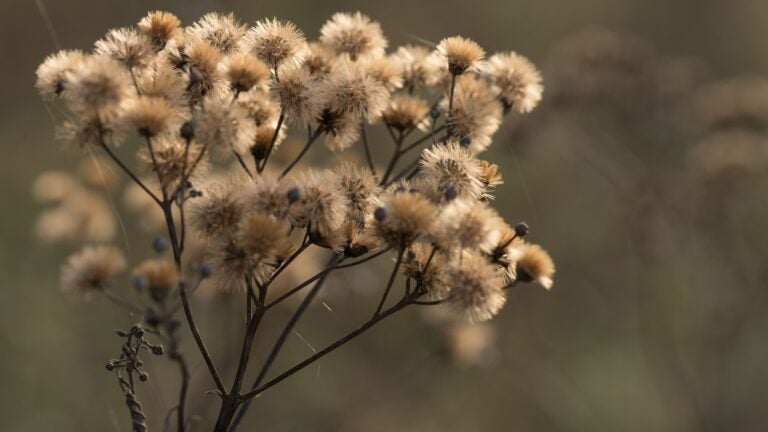
The day upon day of gorgeous, sunny weather was a blessing, enabling me to enjoy my garden. I am particularly enthralled by the seasonal quality of morning and afternoon light. It is simply glorious, especially the way it captures the seeds of my little bluestem grasses, the tawny tufts of ironweed seedheads rising 8 feet from the perennial border, and the radiant stems of my red twig and silky dogwood shrubs. I am also struck that we are still in drought. Those silky dogwoods should be loaded with juicy blue-colored fruit, yet nothing is left; the fruit has been eaten, or it shriveled like a raisin. Our feathered friends also feel the water stress, gobbling up any seed and fruit available, even ones that would normally have lasted well into winter. With this in mind, I am approaching fall cleanup slightly differently. Getting a headstart on cleanup in the garden is tempting when the weather is mild this deep into autumn. With so many plants entering dormancy, why not start the winter season with a clean slate? There are plenty of reasons to resist that urge. A multi-season garden can provide positive benefits for us and much-needed resources for year-round wildlife. The goal is to find the right balance between your sense of tidiness and order in the garden while leaving enough plant stems and seedheads standing for birds and humans alike to enjoy over the coming winter months. Everyone has a slightly different threshold for that balance; the key point is to remember that gardens are not just for us but for wildlife, too. The best approach is to be intentional and not embrace either extreme. Gardens where nothing is cut back can appear unkempt or neglected. Those with completely clean beds and nary a leaf in sight seem sterile and rigid.
This week, our readers seek guidance on finding the right balance with fall cleanup.
Q. I’d like to know which perennials should be cut down to the ground as winter approaches and which ones can be left alone. Thanks.
M.B., Cambridge
A. Here are a few things to consider when deciding which perennials to leave and which to cut entirely. First, assess the plant’s health; any stems that appear to be diseased or broken should be cut down and removed completely. Last year’s diseased leaves can be a source of next year’s infection. Perennials with softer stems like lobelia, phlox, iris, and daylilies are good candidates to be cut down as they will collapse under the weight of snow and don’t have much wildlife value. I leave groundcovers alone and focus on garden plants with stout stems and seed heads that provide winter interest AND a food resource for wildlife. Many beneficial insects overwinter or lay their eggs inside hollow and rigid stems, another reason to leave some standing. Coneflowers, beebalm, mountain mints, Echinops, Agastache, black-eyed Susans, asters, and goldenrods all fit the bill. If leaving the entire plant stem seems too messy, especially tall perennials, reduce them to 18-24 inches instead. That length of stem still provides a habitat for beneficial insects. You can cut those stems back once temperatures are above 50 degrees in April.

Q. We have ornamental grasses in the flower bed that grow 3 to 4 feet during the season. I cut them back to about 1 foot in mid-November when tidying up for the winter. My friend said I should leave them long, that the birds eat the inflorescence. What do you think?
J.D., Brookline
A. Many birds eat grass seeds in the fall and winter. Northern cardinals, mourning doves, dark-eyed juncos, song sparrows, white-throated sparrows, and black-capped chickadees are a few songbirds that shift their diet to include more plant-based seeds during the winter months. In addition to supporting birds, ornamental grass seedheads have an ethereal luminosity in the winter light, and the thin stems of the inflorescence are a place for tendrils of frost to accumulate. In the later winter, the remaining tufts are used as nesting material for the next generation of songbirds, a beautiful example of the relationships between plants and wildlife. However, some grasses are prone to flopping over or splitting apart after heavy snow. To prevent this, assemble the grass and tie it together with twine. More artistic gardeners braid the grass stems together to keep them from falling apart. Like other perennial stems left over winter, they can be cut back in spring before new growth resumes.
Uli Lorimer is the director of horticulture at the Native Plant Trust in Framingham. Send your gardening questions, along with your name/initials and hometown, to [email protected] for possible publication. Some questions are edited for clarity.
Get the latest news on buying, selling, renting, home design, and more.





To comment, please create a screen name in your profile
To comment, please verify your email address
Conversation
This discussion has ended. Please join elsewhere on Boston.com