
Address newsletter
Get the latest news on buying, selling, renting, home design, and more.
Greetings fellow gardeners. Our winter was a boon for everyone who loves spring flowers, with temperatures here in Hopkinton never dipping below 9 degrees Fahrenheit, thereby qualifying us for a USDA Zone 7 plant hardiness zone rating. Yale Climate Connections cited January 2024 as the “Earth’s warmest January since global record-keeping began in 1850. Thanks to these statistics, along with last year’s ample rainfall, our springtime is among the most colorful I’ve ever experienced, including many generally less hardy trees and shrubs in glorious bloom. But along with the appealing changes like these, climate change is bringing problems, including expanding the range of many invasive plants that are becoming a challenge in our gardens.
I appreciate your kind responses to my first column last month; I’ve received many questions, some of which I’ll address here and in future columns. I cannot reply to all of you, but promise to do what I can.
Q. Two years ago, my very big butterfly bush appeared dead, but it finally poked up one little sprig among the dead branches. Then two little butterfly bushes sprang up, one about 5 feet away from the mother plant and the other about 10 feet away. Should I dig them up and replant them? Can they survive winters in big pots?
P.H., Mission Hill
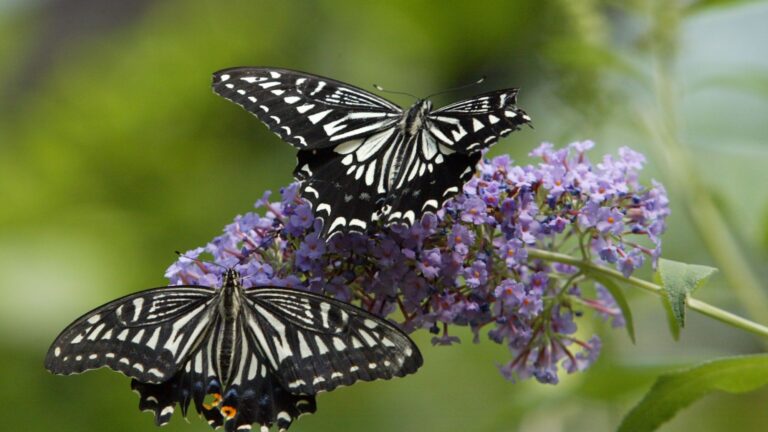
A. Butterfly bush (Buddleia davidii and cvs.) is a woody shrub that typically dies to the ground over the winter in this climate, but it usually sprouts new growth from roots, which survive the cold. When you see new shoots, cut back all the dead branches to encourage growth for the surviving parts.
It’s likely that those new, smaller plants are seedlings, not root sprouts from your original bush. Volunteer seedlings like these won’t be the same as your original plant, but you can transplant them now if you want to save them. Because they seed-in so readily, some localities now classify butterfly bush as an invasive species. A better choice might be one of the newer Buddleia cultivars offered at your garden center that are less fertile and produce fewer seeds.
Buddleia grows well in containers, but you’ll need to bring the pots into cold storage (like a garage or root cellar), where temperatures stay above 25 degrees in the winter.
Q. Rabbits have decimated so many things I love to grow in my garden. I’ve spent at least $100 (surely more) on things like coyote urine, Liquid Fence, and Rabbit Scram, to little or no avail (except to gross me out). This takes a lot of the joy out of the warm months for me. Outside of building fences, which seems difficult and unattractive for our many separate garden areas, is there any way of eliminating this scourge?
E.B., Medford
A. Once rabbits get a taste for something they enjoy, changing their habits is difficult, so start your efforts early in the season: Some of this year’s rabbits are a new next generation and may not have inherited their parents’ knowledge, so those smelly repellant applications may be more effective in the new season. The best solution is a physical barrier. I use chicken wire hooped over susceptible crops, spiked into the ground to deter digging, or mounted on a portable frame that can be moved as each crop matures. Surrounding delectable crops with plants that rabbits don’t enjoy (like mint, hot peppers, garlic, onions, and rhubarb) can encourage them to forage elsewhere. My wife has successfully spread old coffee grounds around herb plants as an effective deterrent. We consider our cat part of our management team, too.
Please keep your questions coming. If you can, please include a photo. Thank you for your support!
R. Wayne Mezitt is a third-generation nurseryman, a Massachusetts Certified Horticulturist, chairman of Weston Nurseries, and owner of “Hort-Sense,” a horticultural advisory business. In addition to serving as editor-in-chief for the Massachusetts Horticultural Society Leaflet, an electronically published monthly member newsletter, he chairs the Massachusetts Invasive Plant Advisory Group. Please send your questions to [email protected].
Get the latest news on buying, selling, renting, home design, and more.




To comment, please create a screen name in your profile
To comment, please verify your email address
Conversation
This discussion has ended. Please join elsewhere on Boston.com