
Address newsletter
Get the latest news on buying, selling, renting, home design, and more.
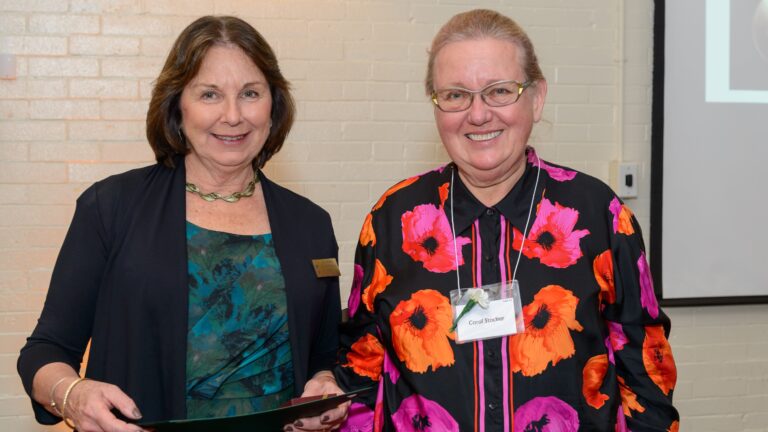
This is my last garden column for Address. My superb editor invited me to continue, but at age 74 I am getting tired. One of the region’s foremost nurserymen, Wayne Mezitt of Weston Nurseries in Hopkinton, will capably take on the job of answering your questions. I will probably contribute articles from time to time.
Your appreciation for my garden columns has been the most heartwarming surprise of my long newspaper career. You have far exceeded any recognition I received from readers during two decades of reporting on more difficult subjects such as AIDS, abortion, and the nuclear weapons freeze movement. When people have asked me how they can land their ideal job, I tell them to do good but unrelated work for 10 or 20 years until their boss feels they have earned a reward, and then ask to become a garden writer. I met another one from the Long Island newspaper Newsday who did that after winning a Pulitzer Prize for news! This is such a happy job that you have to create it for yourself and then find someone to pay you a salary. As a garden writer I have met really nice people, seen a lot of beautiful spots, won many national awards, and appeared on local television often enough to impress my housekeeper. As a general reporter, the rewards were, uh, not so much. Just this week a gushing reader said that meeting me felt “like meeting Martha Stewart.” And so I tiptoed from hard-news journalism, a noble but maligned profession, into the sunlit and expanding world of celebrity journalism. Wayne, tell them to photograph your good side.
Gardeners I have met are usually wonderful people, and many got started as children taught by their grandparents. But my own obsession with gardening was ignited at age 29, when I rifled through a Burpee catalog at a friend’s house in Michigan one frigid February. It took only about 15 minutes of gorging on luscious photographs of flowers before I thought: I could grow this stuff! I had no idea how, but I was dazzled by the sheer multitude of choices that seed packets offered. Little did I know that after a few false starts, I would seldom actually grow anything from seeds again. Bulbs, tubers, starts, cuttings, divisions: Yes. Seeds: No. I wanted gardening to be easy, like most of you. And so what if I didn’t know much to begin with? I learned with the rest of you by interviewing top experts.
After I planted my first garden in Michigan in 1978, I moved to Boston to work for the Globe before those plants had even sprouted. That was my first false start. I was hired as a reporter but soon volunteered my first garden column about suffering from “garden interruptus.” I bought my home here in Milton without even entering the old farmhouse because it had an acre with an orchard and a garden. That was enough for me. We still haven’t built a second bathroom.

Since then, I’ve learned that gardening is good for you physically and even better for you mentally. Start weeding, and anxieties melt away. That’s why gardening became as popular as baking during the pandemic. Gardening as a hobby is less about growing food than about healing your nervous system after hours of traffic, computers, and cellphones. Many people still see their yard as an extension of the indoors, with weatherproof furniture and loud mow ‘n’ blow lawn companies serving as an outdoor cleaning service. But many of you readers have come to see your yards as extensions of the vanishing natural world instead. Some of you have even replaced turf with scruffy meadows of native plants. There’s a cultural war being waged in suburbia between the Denatured Modern Man who thinks that the solution to global warming is air conditioning and those who want to protect the natural world.
Though I ran toward garden writing in middle age as an escape from covering depressing topics, I unwittingly jumped right into the arms of one of the scariest issues of them all: climate change. When I started garden writing in 1979, I could weed without worries about invasive species and pathogens like Lyme disease. Stinking hot days were rare, and snow covered the ground through winter. April showers actually did bring May flowers. January thunderstorms were unheard of, and the first day of spring on the calendar was an annual joke. Now people actually expect it to be warm on March 21. If the seasonal cold returns, the TV meteorologist complains, “Where did spring go?” — as if it were stolen. Why do people have no memories of the climate from only a few decades ago? Probably because most of them are younger than I am.
In terms of real estate, our next migration issue could be waves of Southerners moving north to escape the hottest states. But even a fast-changing climate is too gradual for most daily journalism to cover. Writing about gardening gave me a way to bear witness that the weather was changing in a meaningful way. True, 20 years ago a Bush White House press officer angrily threatened me with retribution when I asked about delays to updating the Department of Agriculture’s plant hardiness zone map. After his 2000 victory, President George W. Bush dropped his campaign promise to cap carbon emissions, following in the footsteps of his father, President George H. W. Bush, who in 1989 thwarted the signing of an international commitment by 67 countries to reduce carbon emissions by 2005. That Dutch-hosted Noordwijk Conference is now regarded by many experts as the closest that negotiators ever came to heading off disastrous climate change. Bush Sr. and his climate skeptic chief of staff, John H. Sununu, also helped politicize what had previously been a scientific issue. Debate replaced action. Despite their family name, the Bushes were OK with getting rid of the real-life bushes, and the trees, too.
I leave you readers, particularly you parents and grandparents, with the suggestion to plant more trees, which are way more efficient at planet cooling than bushes. Native white, black, or red oaks have deep-enough roots to survive weather calamities without falling on your house. White pines are natural carbon sinks. Willows and alders help control flooding. All these native species produce lots of pollen and caterpillars to feed our struggling pollinators and birds. Choose a sunny site, water them weekly for the first three summers, and keep your fingers crossed.
It is a scientific question mark how many trees will survive the changing climate. Grown trees with their large root systems have a much better shot than saplings, so it is even more important not to cut down mature trees. We need to keep the trees we already have, just in case they prove irreplaceable.
Goodbye and good luck!
Editor’s note We are shaken to our roots over Carol’s semi-retirement and will hold her to that promise to write for us from time to time. You’ve earned the break, Carol, and our unwithering admiration.
Send comments to [email protected] for possible publication. Send your questions to [email protected]. Follow Address on X @globehomes.
Get the latest news on buying, selling, renting, home design, and more.





To comment, please create a screen name in your profile
To comment, please verify your email address
Conversation
This discussion has ended. Please join elsewhere on Boston.com