
‘They can make horror movies about this’: Invasion of the biodiversity snatchers
Neighbors form weeding groups to keep invasive plants, once desirable and sold in catalogs, from taking over.
What inspiration we can find in plants: The vines that bend but won’t break. The brave little sapling pushing up through a crack in the pavement. The rhizomes that propagate and send their nasty little tendrils out to choke our nice plantings and turn us into Sisyphean weeding machines and … nevermind. Not every plant deserves a poem. When it comes to rooting out invasive species, some plants deserve a search party.
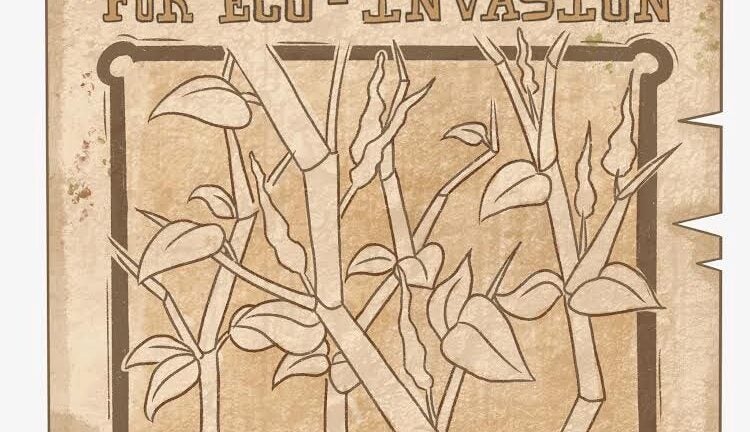
Invasive plants use an array of methods to take over more than their share of the landscape, squelching biodiversity and contributing to climate change. But fed up neighbors who know how damaging they can be are also staying nimble, teaming up to combat invasive plants through social media, pop-up plant-pulling days, and even designing “Most Wanted” posters.
“They can make horror movies about this,” said Jen Hunter, a Medford-based artist and administrator of a Facebook group dedicated to managing invasive plants, who described a multiyear tangle with a local stand of Japanese knotweed. That species, which evolved at the edges of active volcanoes, grows rapidly, and its hollow-stem structure can compromise building integrity. It can feel impossible to kill.
The Massachusetts Invasive Plants Advisory Group, a volunteer organization made of public and private plant-minded advisers, makes periodic recommendations to the State Department of Agriculture and maintains a list of chief offenders. Knotweed, black swallow-wort, Oriental bittersweet, and “Tree-of-Heaven” all top the list.


Some plants now considered invasive were once popular nursery plants, said R. Wayne Mezitt of Weston Nurseries, chair of MIPAG, and the Globe’s onetime Ask the Landscaper writer. Burning bush (drought-tolerant and easy to grow) with its blazing fall colors, Japanese barberry (shade-tolerant, deer-resistant thorns), and Norway maple (grows quickly, tolerates adverse conditions) were all once common store-bought plants.
More on Mother Nature
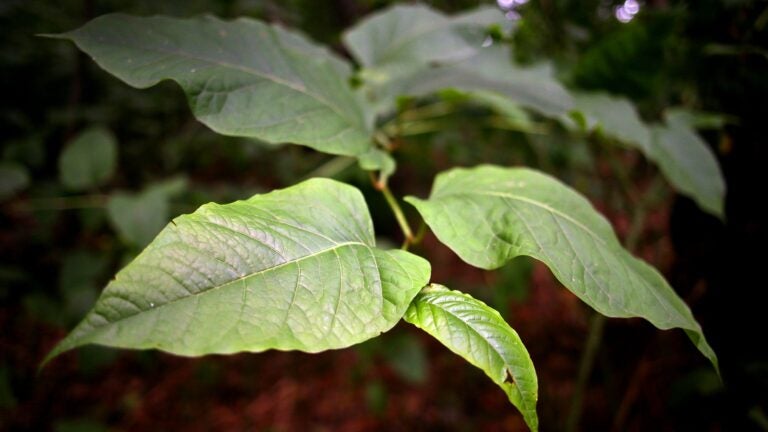
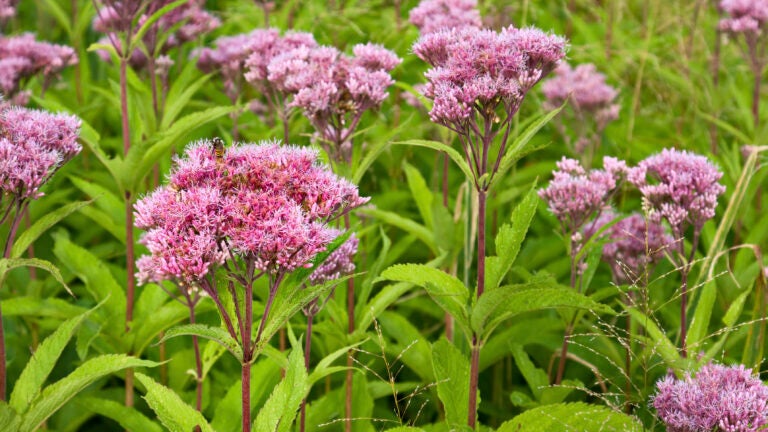
“Then when we see how it’s spreading, it becomes pretty evident that it’ll grow almost anywhere,” said Mezitt — for better and then for worse.


Invasive plants (often once commercially available ornamental species or accidental transplants) threaten our native plant ecosystems, said Erica Holm, urban ecologist for Mass Audubon. From a lack of native predators to quick distribution methods, invasive species adapt too well in a competition-free arena.
“They’re really smart,” Holm said. “They figured out 20 different ways to disperse and spread and really take over wherever they’re at. And biologically and population-wise, that is fantastic for them.”
But not for native species, which can find themselves decimated. Biodiversity matters because many species cannot survive in a monoculture. That’s why movements to plant pollinator meadows instead of lawns have sprung up. Invasive species tend to be generalists, happy to grow in a variety of conditions, and they’re first to move into disturbed soil, which is common in built environments. That means removing them often isn’t enough; it means having a plan to replace them.
“The earth does not want bare ground,” Holm said.
And knotweed can threaten entire forests.
“The trees will fall down one by one,” Holm said. “There will not be a seed bank of native trees that can actually punch through the shade there.”
A coalition of garden groups helped mobilize local government in Cambridge and Somerville against black swallow-wort, a prolific vine toxic to monarch butterflies. The result: a Facebook group called “Pod Patrol” has planned community weeding days, and one faction, Earthwise Aware, maintains a citizen science-based invasive species tracker tool. In Medford, Hunter suggested hanging signs “shaming” dangerous plants at a block party, and their daughter Ilana designed “Most Wanted” posters on shirts.

In Somerville, the city distributed door-knockers educating residents about the vine. Unlike some garden waste, invasive species must be bagged up as trash for disposal. Denise Taylor, a spokesperson for the city, said the effort was so effective, the city added an additional trash pickup day to keep up with the volume.
Collaboration is key.
“You’re not going to get rid of invasives if you pull them off municipal lands but they’re still on private lands, and then a bird comes and flies down the street with a seed and drops it,” said Luisa Oliveira, Somerville’s director of Public Space and Urban Forestry. “It has to really be a pretty comprehensive effort.”
The next important step is to understand each species’ life cycle. For example, it helps to nab black swallow-wort when it sprouts pods around mid-summer.
“You want to do that before they fully mature and split open and distribute their seeds via the wind everywhere,” said Cynthia Stillinger, president of the Somerville Garden Club. Or, cut vines at ground level to deny them photosynthesis.
Some plants, such as knotweed, are difficult to eradicate without the use of pesticides, but it’s a controversial topic. Holm advises gardeners to avoid off-label uses of chemicals and said the best plan is to hire a professional.
Managing an invasive plant overgrowth can feel like trying to hold back the tide, but experts say it matters. Biodiversity, even in our backyards, is considered a defense against climate change.
Hunter, once a professional home organizer, advises gardeners to commit to keeping a small area free of invasive plants — just as one might reduce clutter.
“You just hold the line,” they said.
It’s like any seemingly insurmountable problem — even global ones, Hunter said.
“That’s all we can ever do. If you want to improve the world, we all just have to do something and just not lose hope.”
Lindsay Crudele can be reached at [email protected]. Follow Address on Twitter @globehomes. Subscribe to the free real estate newsletter at Boston.com/address-newsletter.





To comment, please create a screen name in your profile
To comment, please verify your email address
Conversation
This discussion has ended. Please join elsewhere on Boston.com