
Ask the Gardener: Drought takes its toll on rhododendrons
Award-winning garden writer Carol Stocker offers tips on rhododendrons and drought and a woodchuck invasion. Get more gardening advice at realestate.boston.com.
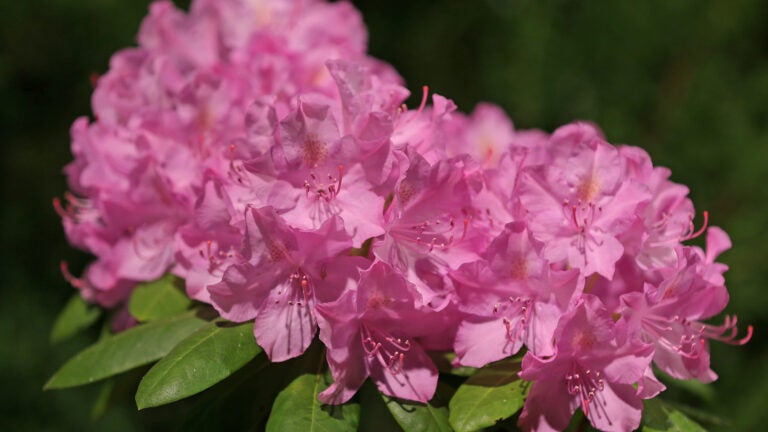
What to do this week: Summer and fall have been very dry. Deeply water all trees and other plants that haven’t dropped their leaves yet, following your community’s water restrictions. Plant spring bulbs. Scatter bulb fertilizer on top of the soil after planting, not in the hole. Overseed lawns for patching. Bring house plants back indoors for the winter along with clay pots so they don’t freeze and crack. Pot culinary chives and rosemary for indoor use. (Basil will not survive long inside because it needs a lot of light.) Selectively cut and bag (instead of compost) disease-carrying foliage from iris, phlox, and peonies, but leave most of the garden standing for now. Continue to plant trees, shrubs, roses, and perennials. Did I say water? Pot annual geraniums and bring them inside to a sunny spot to bloom all winter.
Q. I have several 50-plus-year-old rhododendron shrubs that are dropping their green leaves. We have never experienced this before in the 20 years that we have lived in this house. Some leaves yellow and drop, but we see this every year and are not worried about that. But the severe dropping of the green leaves during this drought is very upsetting. Can you give us any input?
M.J., Duxbury
A. Broadleaved evergreens are especially vulnerable to the increased drought we are seeing because they never go dormant. They need to be fully hydrated to make it through the winter. Weekly watering until the ground freezes may become an annual necessity. With the onrush of climate change, we have to garden defensively. Rhododendrons, mountain laurels, evergreen hollies, and their kin may just prove a poor long-term investment. I don’t think I’d plant new ones in my garden after this year’s weather. Needled evergreens don’t get as dried out by winter winds, so they may have an easier time surviving. But water them, too, so they can store up moisture before the ground freezes.

Q. I live in a neighborhood of old houses that have barns, garages, and front and side porches. These make wonderful living spaces for woodchucks. Three of my neighbors and I have large vegetable gardens. We have built fences, higher and higher, but the woodchucks have learned to climb them. What can you tell me about electric fences, like the ones farms use to keep cows in the pasture? Do these really work to keep woodchucks out? Can I install one over my existing fence? I think I still need a fence to keep out rabbits. Love your column.
G.E. Wakefield
A. All my woodchuck families suddenly disappeared. I think they were eaten by the hungry coyotes I hear howling on full moon nights. If you don’t have coyotes, then electric fences work best. Before next spring, string two wires, one 4 inches off the ground and a second at 8 inches outside (but not touching) your existing fence. If you can step over them, you won’t even need a gate. The University of New Hampshire Extension says you should use one of the many Underwriters Laboratories-approved (UL) battery-powered or plug-in chargers available at garden supply centers. Your electric fence needs to be clear of plants and other obstructions so it doesn’t short out. Early next spring, you can celebrate the grand opening with peanut butter on strips of aluminum foil to introduce critters to experience the charge.
You can also retrofit your existing fence at the top and bottom without electricity. Attach mesh with a grid less than 2 by 2 inches to the bottom of your fence. You can dig it in a foot deep straight down or lay it on the ground horizontally, the point being to prevent critters from digging under the fence. To deter climbing, bend the top foot of your fence outward at a 45-degree angle as if it were outside a federal prison. Focus extra attention on the gate, often a weak spot. This would also help deter the bunnies.
Send questions and comments, along with your name/initials and community to [email protected] for possible publication. Subscribe to our newsletter at pages.email.bostonglobe.com/AddressSignUp. Follow us on Facebook and Twitter @globehomes.





To comment, please create a screen name in your profile
To comment, please verify your email address
Conversation
This discussion has ended. Please join elsewhere on Boston.com