
Why is the corpse flower so stinky?
The stench is a combo of garlic, sour sweat, cheese, boiled cabbage, and dead fish.
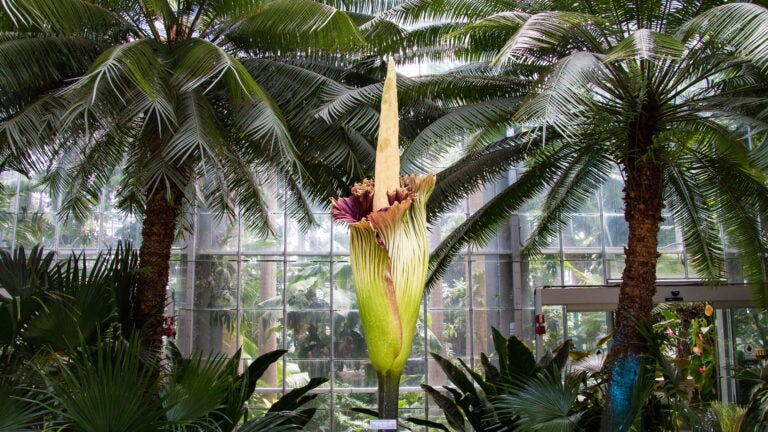
Q. What are the chemicals that make the corpse flower that just bloomed at the New York Botanical Garden smell so bad?
A. Japanese researches have identified the main chemical that makes the giant bloom of titan arum, also called Amorphophallus titanum, so odoriferous when it first emerges as a sulfur compound called dimethyl trisulfide. Their study was published in 2010 in the journal Bioscience, Biotechnology, and Biochemistry.
Dimethyl trisulfide is implicated in the notorious odor of boiled cabbage, emerging when all the more pleasant odors have been cooked away. It is also associated with cancerous lesions.
In the lily, the volatile odor is dispersed by the heat the flower generates as the phallus-like bloom emerges, attracting carrion beetles and similar connoisseurs.
There are other culprits as the bloom continues, including dimethyl disulfide, which strikes a garlic note; isovaleric acid, which contributes to the smell of sour sweat; and methyl thiolacetate, with an odor that blends garlic and cheese.
Late in the blooming period, trimethylamine emerges, providing a reminder of dead fish, a chemical that elsewhere in nature is produced by the decomposition of both animals and plants.
Subscribe to the Globe’s free real estate newsletter — our weekly digest on buying, selling, and design — at pages.email.bostonglobe.com/AddressSignUp. Follow us on Facebook and Twitter @globehomes.



To comment, please create a screen name in your profile
To comment, please verify your email address
Conversation
This discussion has ended. Please join elsewhere on Boston.com