
How to fertilize your garden organically
Plants are most hungry for three nutrients — nitrogen, phosphorus, and potassium — and organic fertilizers can supply them just as synthetic (chemical) fertilizers can.
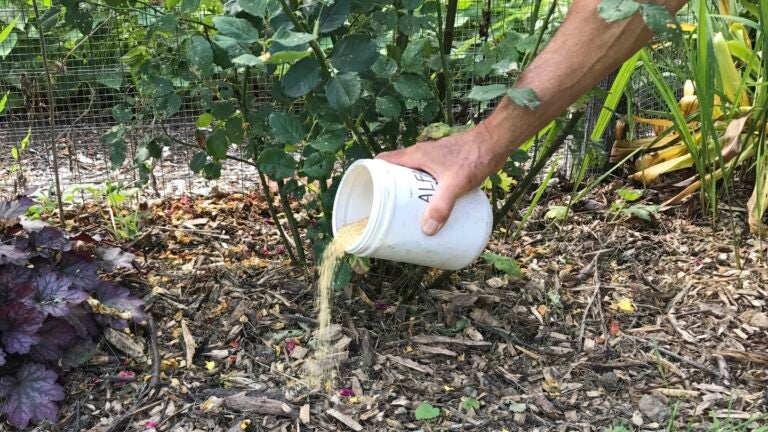
In gardening, whether you’re talking about pest control or fertilization, ‘‘organic’’ generally means natural. The word ‘‘organic’’ refers to ‘‘organic matter,’’ the linchpin of organic gardening and, traditionally at least, all good gardening. ‘‘Organic matter’’ is material derived from what is or was once living.
Plants are most hungry for three nutrients — nitrogen, phosphorus, and potassium — and organic fertilizers can supply them just as synthetic (chemical) fertilizers can. The three prominent numbers on any fertilizer label indicate the percentages of these three nutrients that the bag contains. In the world of organics, many different sources exist for each of these major nutrients.
Nitrogen
Let’s begin with nitrogen, because it’s the nutrient needed in greatest amounts and the one most readily lost from the soil.
The richest organic sources of nitrogen are manures, ground-up animal parts (blood meal, feather dust, and leather dust), and seed meals (soybean and cottonseed meal). The nitrogen concentration in any manure varies not only with the kind of animal, but also with the type of bedding used, the age of the manure, and how it was stored.
Ground-up animal parts and seed meals generally have the highest concentrations of nitrogen. Because they undergo some processing, they are more consistent in their nitrogen concentration.
Organic sources for phosphorus and potassium
Major organic sources of phosphorus include, again, certain manures, as well as bone meal and pulverized rock phosphate.
Rock phosphate is a phosphorus-rich rock that is ground into fine particles that release their phosphorus over the course of many years. Hence, only infrequent applications are needed — I spread some every 10 years. Colloidal phosphate is especially fine, so it releases its phosphorus somewhat more quickly.
Manures contain some potassium, as well as nitrogen and phosphorous, but richer sources of potassium include seaweed, wood ashes, and the minerals greensand and granite. Wood ashes are alkaline, so they should not be used on rhododendrons, azaleas, camellias, mountain laurels, and other plants that thrive only in very acidic soils.
Some commercially available organic fertilizers are blends of one or more individual organic fertilizers, so they can offer a balance of all three major nutrients. Particular blends vary in their nutrient concentrations and in how quickly these nutrients are available to plants. For instance, blood meal, bone meal, seaweeds, and wood ashes release their nutrients into the soil relatively quickly, while leather dust and pulverized rocks do it slowly. Read the label carefully if your plants need food quickly.
Compost for all
The Cadillac of balanced organic fertilizers is compost. Besides offering a wide spectrum of nutrients, especially when made from a wide spectrum of raw materials, compost also is a good source of organic matter. So good, in fact, that its nutrient concentrations are not high enough for compost to be legally sold as ‘‘fertilizer’’; it must be classified as a ‘‘soil amendment.’’
Nonetheless, compost spread over the ground can provide all the nourishment that even the hungriest plants need for a season. All that organic matter that hitchhikes along with the nitrogen has far-reaching benefits, indirectly bolstering biological activity in the soil and helping it retain air and moisture.
Sometime each year, usually in autumn or early spring, all the beds in my organic vegetable garden get blanketed with an inch of compost. Nutrients in compost are available slowly over the span of a number of years, so yearly additions keep my plants very well nourished.
Subscribe to the Globe’s weekly real estate newsletter at pages.email.bostonglobe.com/AddressSignUp.



To comment, please create a screen name in your profile
To comment, please verify your email address
Conversation
This discussion has ended. Please join elsewhere on Boston.com