
How to fix winter damage to your trees, shrubs
Q. I have an old Japanese maple that now has a large crack in the main stem. Is there a glue or tar I can use to fix it? Thank you.
TERRANCE
A. You might be able to repair cracked and split stems, depending upon how serious the damage is. Gently pull the split parts together, hold them temporarily with tape or twine, drill a small hole, and insert a bolt, tightening the nut to hold the two split sections securely together. This enables the cambium layers to “self-graft,” and, with hope, repair the split in a year or two. You’ll know this is successful when new growth on the split branch persists all summer. Don’t use tar or another coating, and it’s questionable whether glue would work. New bark will eventually, and harmlessly, envelop the bolt.
Winter’s wrath revealed
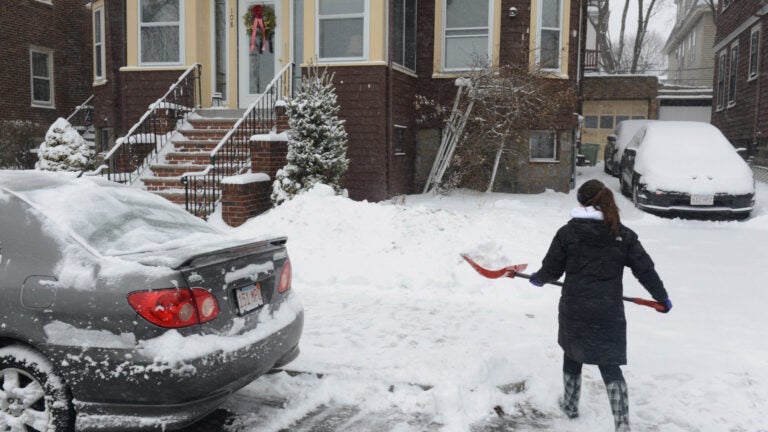
As our record snowpack melts away, a lot of tree and shrub injury is becoming evident. For boxwood, rhododendrons, hollies, yews, and similar shrubs, flexible branches that were weighed down by snow and ice might not be as severely damaged as they initially appear. Bent but not broken branches might be able to recover by themselves when they spring back up or you pull them up. If they need additional support, securing them with rope or twine might be sufficient to restore their desired shape. Cut broken branches below the damage to enable latent interior buds to grow once the warm weather returns. You might need to cut back more seriously damaged shrubs drastically to restore their shape. Be sure to always envision a wide “A” (rather than a “V” or “I”) final shape: wider bottom branches and narrower tops encourage a stronger structure that will stand up better to next year’s snow and ice.
Wind-, sun-, and salt-damaged evergreen foliage looks unattractive, but chances are new growth by midspring will restore its appearance, as damaged leaves drop off or are hidden by new growth. The same wait-and-see approach applies for foliage and buds browsed by deer and rabbits. Most broadleaf trees and shrubs will tolerate a single defoliation and recover normally by summer. But repeat damage can cause dieback, so consider how you can protect susceptible plants from next winter’s challenges; the experts at your local garden center should be able to make helpful recommendations.
Unfortunately, deer-browsed foliage on needled evergreens like arborvitae, yew, and hemlock do not recover well. Consider pruning off those now-bare branches back to the trunk and under-planting with “face-down” deer-resistant shrubs like Leucothoe, boxwood, and Andromeda (Pieris) that help hide the missing lower branches.
Under deep snow, hungry rodents can chew on the stems and trunks of maples, fruit, and other soft-barked trees. Bark slightly gnawed or notched should heal and recover naturally, but cut off below the damage any branches girdled more than two-thirds of the way around. Multistemmed plants that retain some undamaged stems should regrow, but trees with all their trunks girdled probably will not recover.
NOTE: Don’t fertilize winter-damaged trees and shrubs until they have recovered and regrown this summer: Too much fertility causes excessive soft growth that can weaken the plant.
Losing plants to winter damage is unfortunate and disappointing. But with all the exciting new brands of trees and shrubs coming on the market, those gaps in your garden offer a good opportunity to make some welcome changes that update your design.
R. Wayne Mezitt, a third-generation nurseryman and Massachusetts certified horticulturist, is chairman of Weston Nurseries of Hopkinton and Chelmsford and owner of Hort-Sense, a horticultural advisory business. He currently serves as trustee chairman for the Massachusetts Horticultural Society at Elm Bank in Wellesley.




To comment, please create a screen name in your profile
To comment, please verify your email address
Conversation
This discussion has ended. Please join elsewhere on Boston.com